Combining Multiple Funding Sources
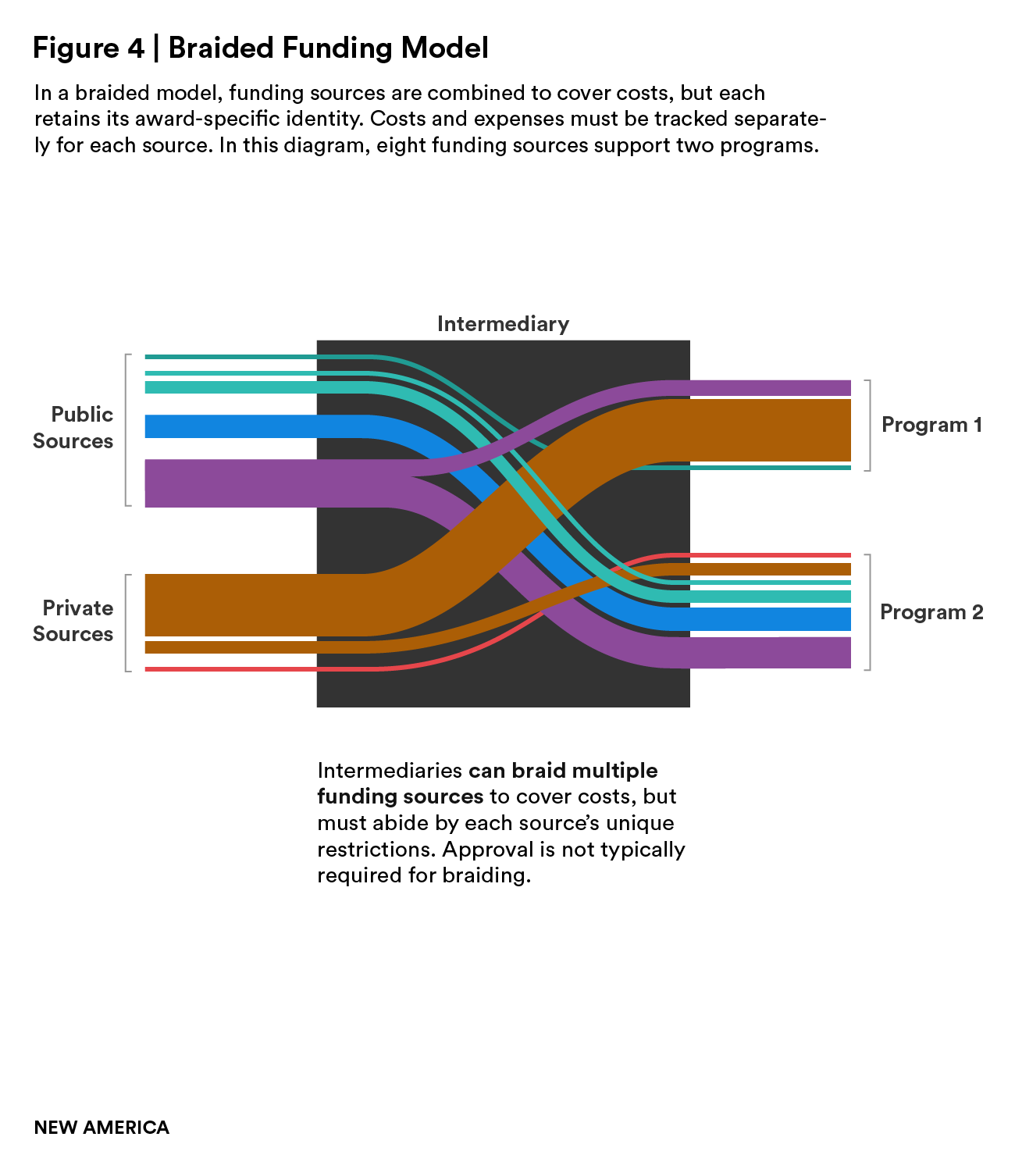
Though intermediaries’ funding models vary considerably, they share a reliance on strategic (and often creative) techniques to combine and administer multiple funding types (Figures 4 and 5). These techniques are commonly referred to as braiding and blending funding strategies, which are often framed as ways for nonprofit organizations to achieve sustainability, especially as they grow. The thinking is simple: an organization that combines multiple funding sources can protect itself from the risk posed by the disappearance of any one individual funding source. Having several funding sources can indicate a successful, diversified organization or initiative, which can in turn make it easier to attract or compete for additional funds.
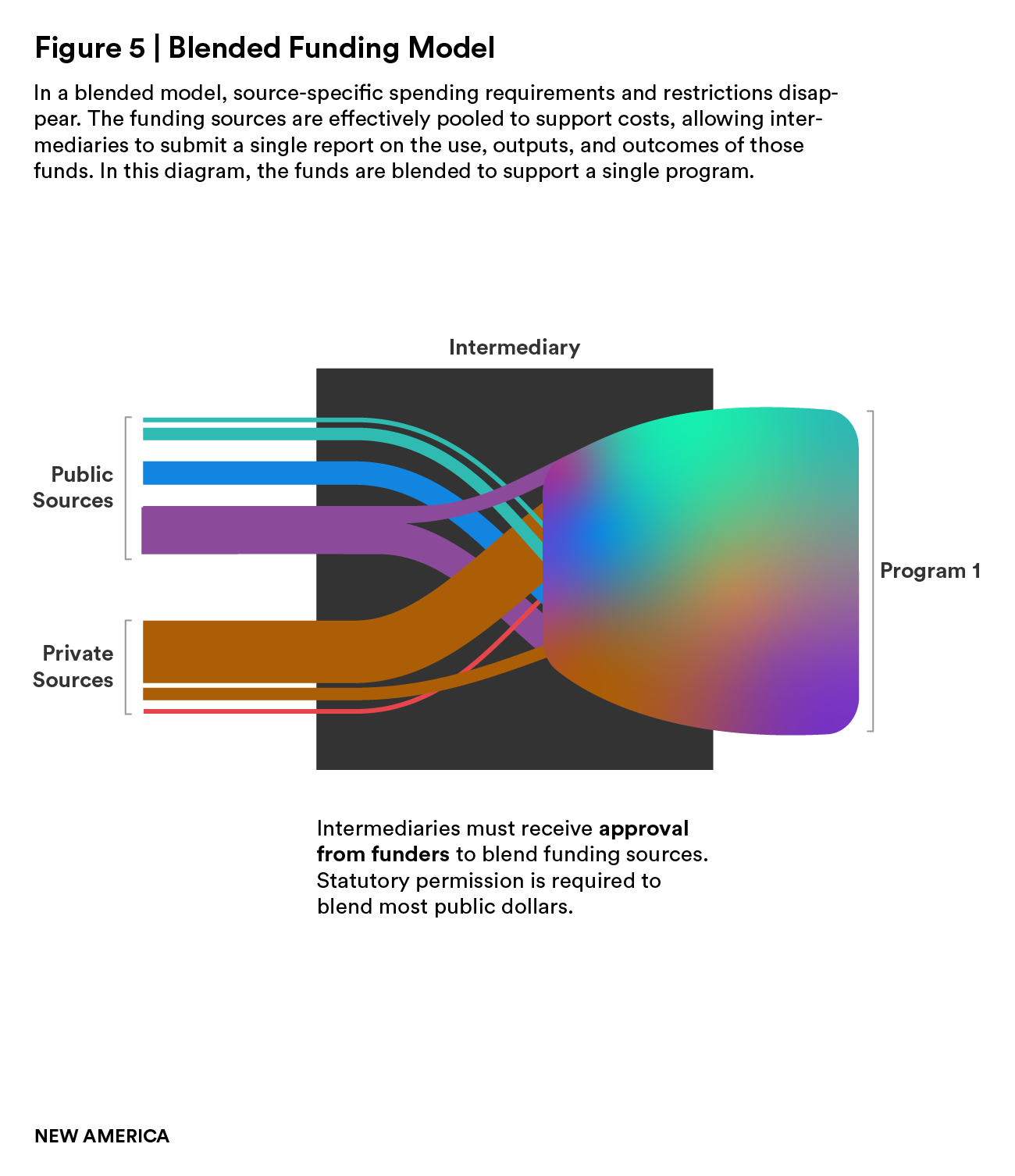
When an intermediary blends funds, the different funding streams lose their award-specific requirements when merged. Any restrictions or accountability measures associated with the money are no longer in effect. While blending offers more flexibility than braiding, it is a less common approach. Statutory permission must be granted to use most public funding sources in this way. Even in cases where a philanthropic funder provides flexible general operating funds, the nonprofit recipient typically tracks the use of those funds as it would for any other type of grant, whether or not it is required to do so. This was the case for at least one intermediary in this analysis that reported general operating support. We found no clear evidence that true blending was taking place for the intermediaries in this analysis.
Braiding was, however, ubiquitous. When intermediaries braid funds to support a program, they use multiple sources of funding to cover program costs, but each stream retains its award-specific identity. This means that the intermediary must adhere to the particular restrictions or reporting requirements for each funding source. In practice, this means that finance and development staff must diligently track the use of funds individually; collect different data and information according to each funders’ requirements; and submit regular reports—sometimes as often as four times a year—on activities and expenditures.
Two of the seven intermediaries that submitted intermediary-level revenue information through our survey braid philanthropic grants only. Both of these were nonprofit intermediaries and were among the youngest in the cohort, launching in 2020 and 2021. One of the seven combines fee-for-service revenue with philanthropic funding but does not receive any public dollars. (Notably, however, many of these programs leverage public funds that do not appear in their budgets. See below for additional discussion.) The other four braid different mixes of philanthropic and public funds. Of these, two—both embedded within public education systems—rely almost entirely on public funds, with small philanthropic grants (ranging from $20,000 to $154,000/year) supporting special projects or initiatives.
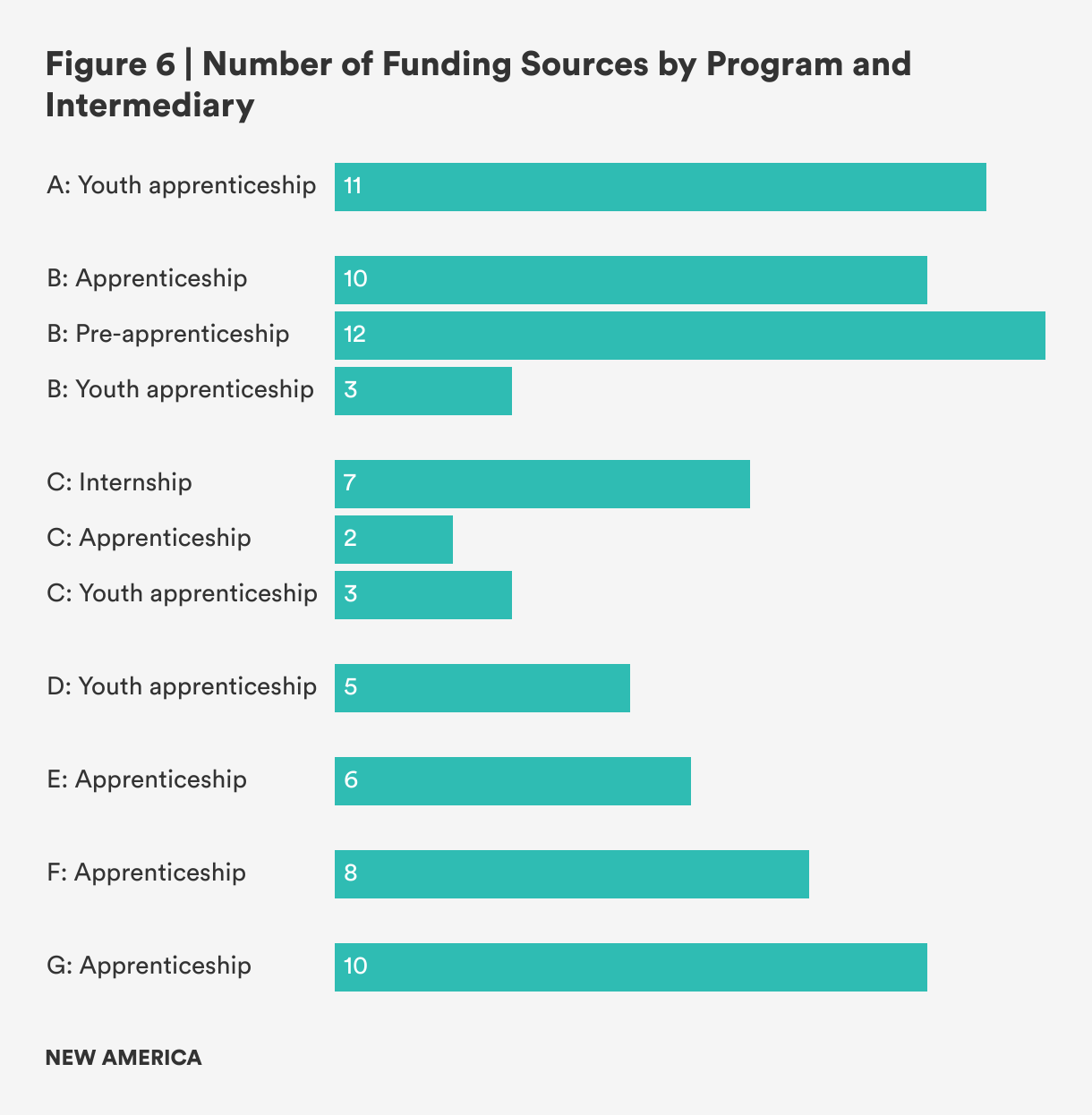
Braiding is especially complex at the program level (Figure 6). On average, intermediaries in this analysis braid seven sources to fund individual WBL programs. Some drew on as many as 12 distinct sources; others relied on just two. Even within the same intermediary, programs draw on different combinations of funds, adding complexity to these budgets.
Research suggests that braiding and blending can offer benefits beyond financial sustainability, by enhancing equity, program impact, efficiency, and flexibility. 7 It also can provide a return on an initial investment in the form of additional support, exposure, and appeal to funders.
It is unclear from our analysis the extent to which intermediaries’ efforts to braid funds have yielded these auxiliary benefits. (As we saw no evidence of blending, we can draw no conclusions about this practice.) But it is clear that the intermediaries in this analysis braid funding streams out of necessity. While they recognize that having diversified revenue sources is critical to achieving sustainability as they grow and mature as organizations, they braid funds to survive, first and foremost.

Citations
- See for example, “Blended and Braided Funding: A Guide for Policy Makers and Practitioners,” AGA, December 2014, https://www.agacgfm.org/AGA/Intergovernmental/documents/BlendedandBraidedFunding.pdf; and U.S. Department of Labor, “Funding Inclusive Apprenticeships: Strategies for Braiding, Blending, and Aligning Resources,” U.S. Department of Labor, https://www.dol.gov/sites/dolgov/files/ODEP/pdf/FundingInclusiveApprenticeshipsStrategiesforBraiding%2CBlending%2CandAligningResources.pdf.