
Rachel Fishman
Director, Higher Education
This year, Secretary Cardona and the Department of Education (ED) will continue working to improve the higher education landscape through a regulatory process known as negotiated rulemaking, also known as “neg-reg.” On March 24, 2023, ED’s Office of Postsecondary Education announced its intention to establish a negotiated rulemaking committee to address a number of issues related to higher education. These negotiations will have significant implications for improving accountability for institutions of higher education by revising regulations related to accreditation, state authorization, and several other areas.
This website is devoted to tracking the process and providing information about ED's 2024 neg-reg, including background papers on the key issues, data, and more. New America’s higher education team will continue to update this website as the process progresses.
To view information on previous rulemaking in 2021 and 2022, you can view the Affordability and Student Loans Committee on this page. For the Institutional and Programmatic Eligibility Committee, visit this page.
We updated this website on February 29, 2024, with the transcripts from the first two weeks of negotiations, the new issue papers published by ED and submitted by negotiators ahead of the third negotiating session, and the registration information to watch the third round of negotiations.
We will update this page as the official agendas and session summaries become available.
Session One
Session Two
Session Three
While Congress passes laws, it is up to the executive branch (usually in the form of federal agencies, like ED) to implement the laws. To do so, ED needs to resolve ambiguity or clarify the meaning around certain terms in order to make implementation possible. It does this by creating “rules,” through a process known as regulation.
While most other federal agencies are allowed to issue regulations without going through a “negotiated rulemaking” process, ED is different. The Higher Education Act requires that ED obtain “the advice of and recommendations from individuals and representatives of the groups involved in student financial assistance programs” before issuing regulations on federal financial aid programs (e.g., grants, loans, and work-study). ED must convene a group of stakeholders to provide input on the proposed set of issues, topics, and regulatory language ED is considering for regulation. According to the law, these representatives, or negotiators, may include “students, legal assistance organizations that represent students, institutions of higher education, State student grant agencies,” and more. If the stakeholders and ED negotiate and reach agreement, or consensus, on what the proposed regulatory language should look like, ED is required to propose that language when developing its regulations. If an agreement is not reached, ED is provided wide latitude in developing its regulations. This process is known as negotiated rulemaking, or “neg-reg.”
To help inform the rulemaking, ED held a day of virtual hearings to get public input on the rulemaking agenda and committee makeup on April 11 and 12 in 2023. You can find the official notice of the hearings in the Federal Register.
Public hearing transcripts and recordings:
The department also received written comments to inform this rulemaking.
New America submitted public comments highlighting priorities the committee should consider to ensure that students and taxpayers are properly protected by federal regulations.
This rulemaking will focus on a variety of issues related to enhancing program integrity in higher education, as well as a subcommittee tasked with focusing on TRIO-related issues. The agenda will cover:
For frequently asked questions about negotiated rulemaking, please visit ED's Negotiated Rulemaking FAQ page.
The negotiated rulemaking hearings will take place during three separate virtual sessions. These hearings are open to the public. However, you must register in advance to watch the rulemaking. You can register to watch the sessions using the links below for each week of negotiations.
The negotiating sessions for the full committee will be held on the following dates and times:
The TRIO Subcommittee will meet on these days:
There will be 30 minutes for public comments at the end of each day for the full committee, except for the final day of the final negotiating session. The subcommittee sessions will not have public comments. Anyone who wishes to provide public comments should email their request to [email protected], and include their name and the name of the organization they represent.
The Department released its call for negotiations for this rulemaking on November 29, 2023. Nominations had to be submitted on or before December 13, 2023.
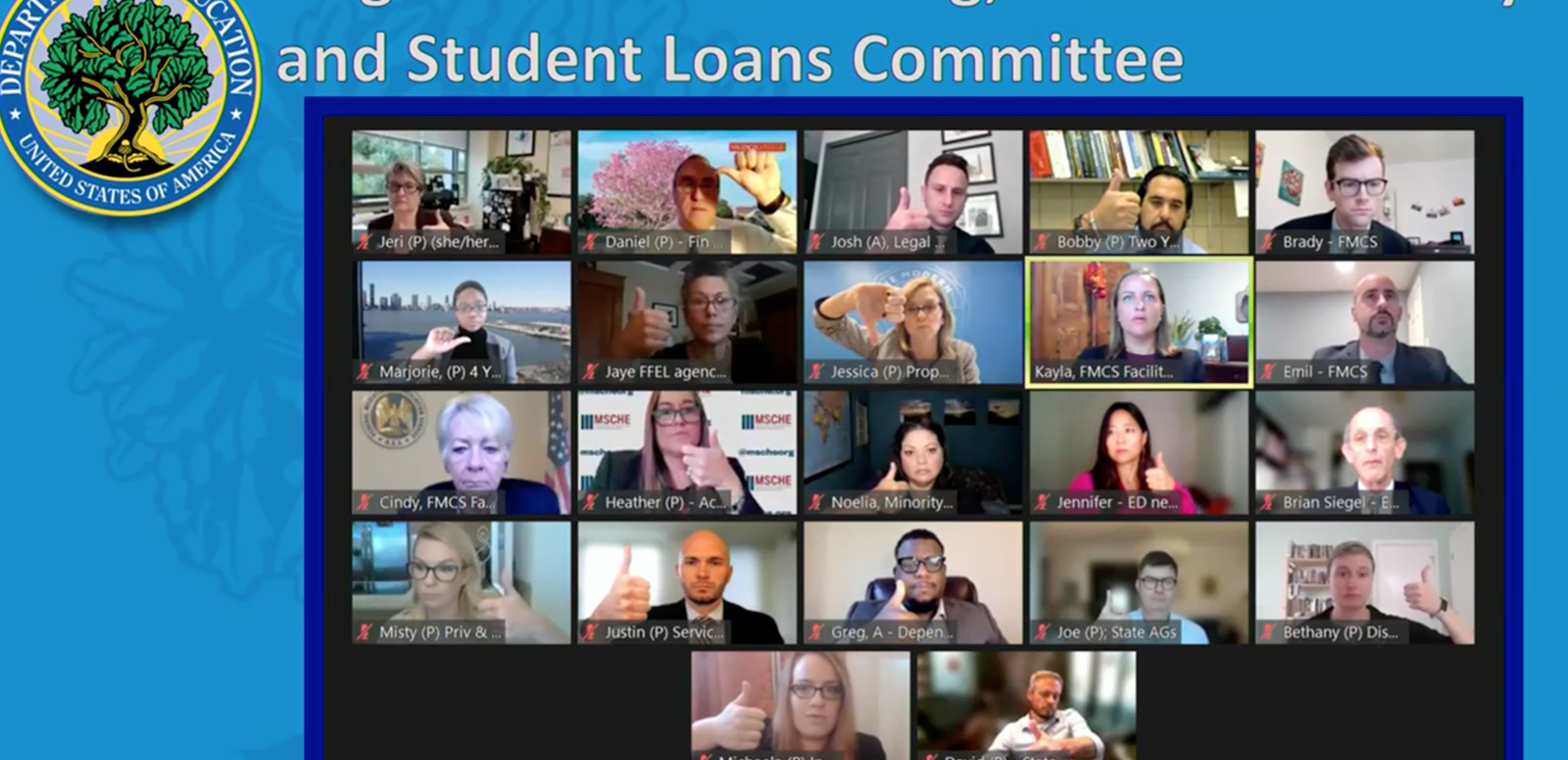
Negotiator information is now public. We have listed the negotiators below.
Negotiators usually are knowledgeable about the topic, represent the interests of those significantly affected by the topics proposed for rulemaking, and reflect the diversity of program participants. ED generally selects one negotiator and one alternate negotiator for each constituency. The primary negotiator participates in the neg-reg discussion and votes to reach consensus. The alternate negotiator does so only if the primary negotiator is absent.
ED has identified several constituencies that they would like to see represented at the negotiation table, listed below.
ED has listed the following constituency groups and negotiators for the full committee:
For the TRIO subcommittee, these are the negotiators and the groups they represent:
We will upload recordings and transcripts of committee meetings once they become available.
Session One
Session Two
Session Three
ED usually provides issue papers that contain background information on the topic under consideration, along with regulatory text and other resources. ED also provides other resources, and negotiators have their own opportunity to submit resources and suggested regulatory text. We will add these resources to this page as they are published.
Session One
Materials distributed by the negotiators during session 1:
Materials distributed by the negotiators after session 1:
Session Two
Materials distributed by the Department prior to session 2:
Materials distributed by the negotiators prior to session 2:
Materials distributed by the negotiators after session 2:
Session Three
Materials distributed by the Department prior to session 3:
Please follow the conversation using #NegReg. Follow our negotiated rulemaking official account @HigherEdNegReg, and @amylaitinen1, @higheredrachel, and @e_conroy1 for further commentary.
Director, Higher Education

Senior Director, Higher Education

Senior Policy Manager, Education Policy Program