A Chapter of: Designing Better Small Dollar Loans
Appendix B: Session Design
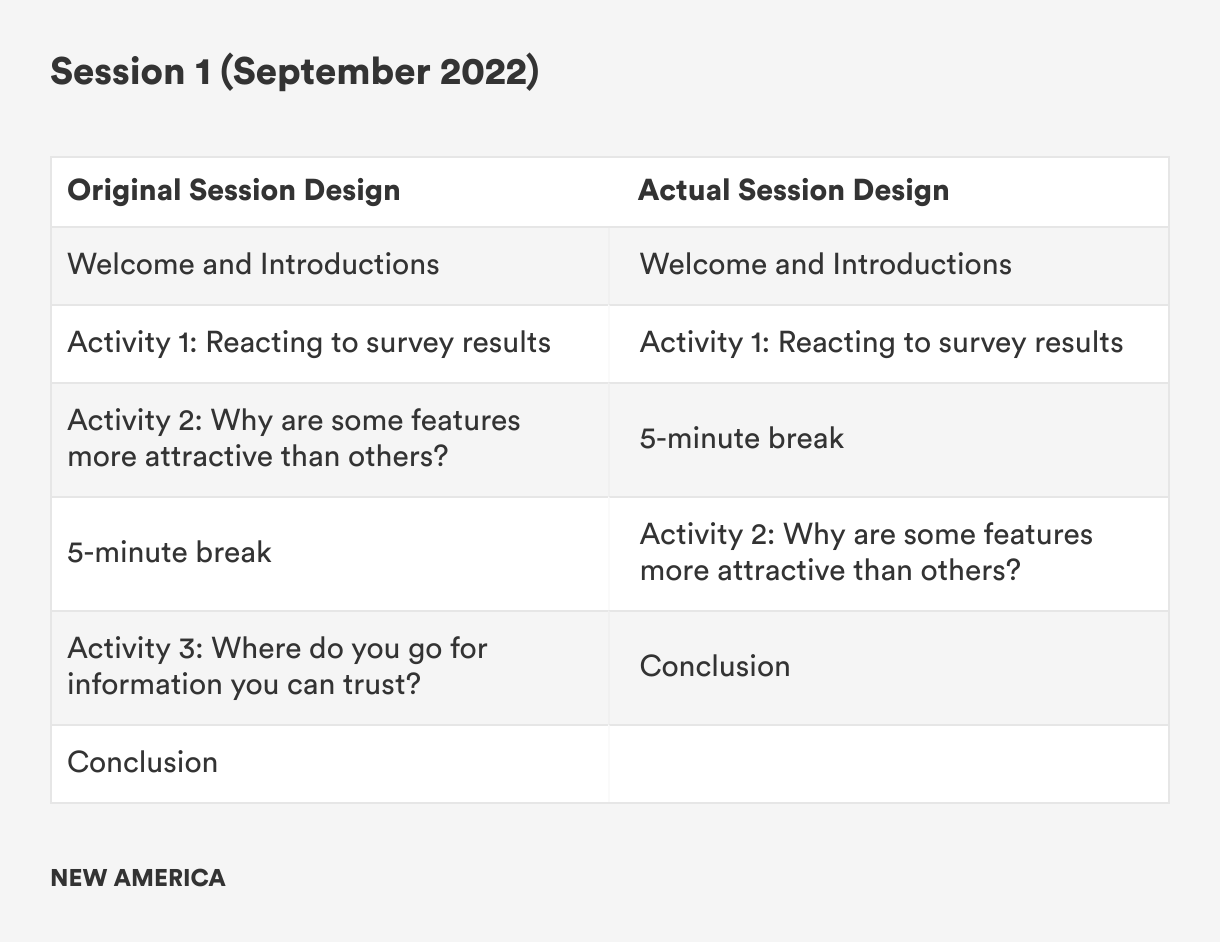
The CivicSpace team wanted the community sessions to use human-centered design principles, so a New America colleague with this expertise helped with planning and facilitation. For the first session, we planned on having a welcome and introductions portion, where we described the purpose of the group and the research questions of the session; three interactive activities; and a conclusion, where we held space for final comments to be either said or written down by participants and then discussed next steps.
The first activity was to gather reactions to our 2021 community survey findings from Chicagoland residents on their experiences with small dollar lending after the passage of the PLPA, to spur discussion about where people had found out about loans in the past. The other two activities focused on answering our research questions related to trusted messengers and what features make those loans safe and useful. However, this proved to be too much for 90 minutes and we had to cut the final activity. Allowing the participants to lead the session and have room for discussion was more of a priority than trying to rush through all of the planned activities. For more on the rationale and planning process of our first session, see our first publication on our process.
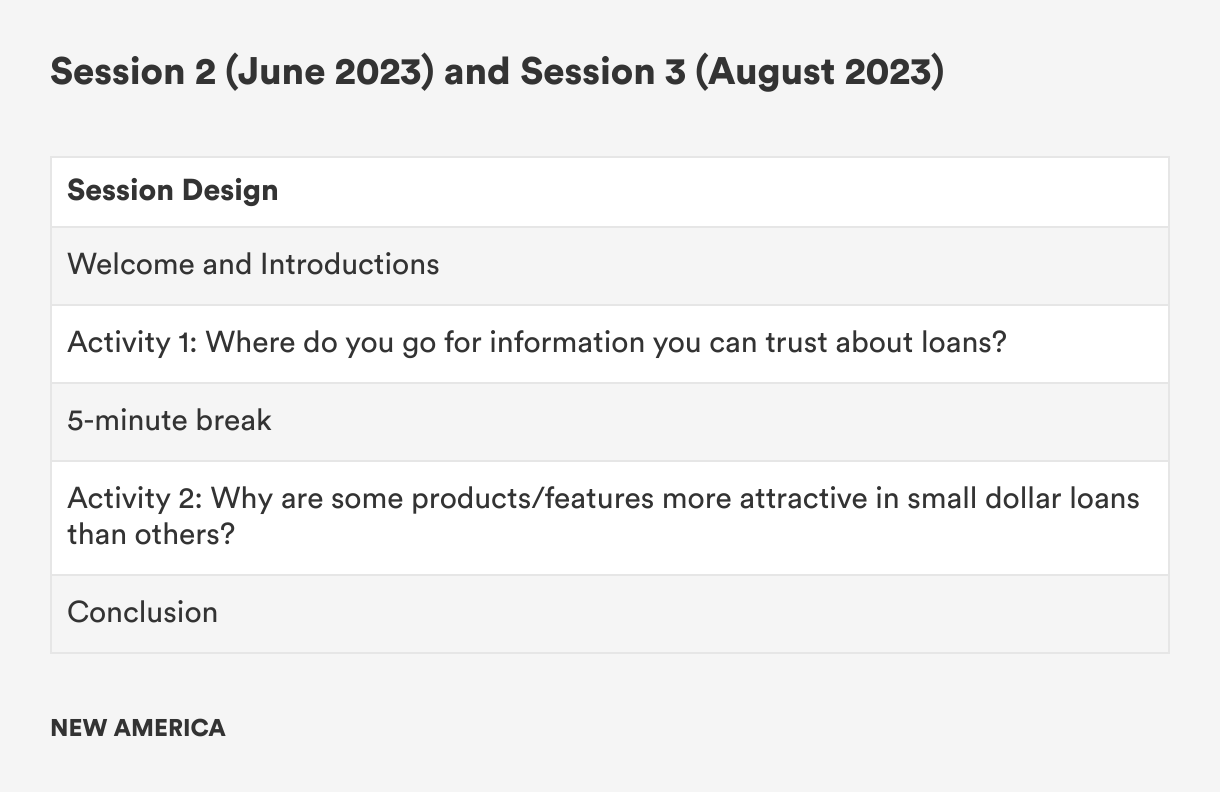
When it came to planning the second and third session the following year, the CivicSpace team knew we would have to cut down the agenda. We got rid of Activity 1, since it had already been over a year since the survey and we wanted to focus our time. We also switched the order of the two activities so they could more closely reflect participants’ actual lending process.
In the new Activity 2, rather than have the residents design their own small dollar loan and vote on a favorite, we used three loan products currently on the market in Chicago (a credit union lending product, an app-based loan, and a traditional bank loan) and removed all of their branding so that participants would not be biased. We split the residents into two scenarios, asked them to write down their questions and preferences, and had them vote on their favorite and least favorite products and discuss why. As a follow-up to our discussions with credible brick-and-mortar and fintech lenders, we wanted to learn more about why session participants chose certain products over others. Being able to adapt our research design after the initial session yielded rich insights that helped answer our research questions in more depth.