Recommendations for Improving Diia and the eRecovery Program
Ukraine’s suite of e-government services, including the eRecovery program, has the potential to transform post-conflict recovery. For these services to live up to their promise, program administrators must continuously iterate them to ensure they are designed and implemented in the public interest.
With respect to eRecovery: The limitations in Ukraine’s property compensation laws, inconsistent administration and incomplete recordkeeping, functionality issues of the portal, and the necessity for better interoperability with existing property rights records are key areas that require sustained attention. Addressing these challenges is crucial for maximizing the effectiveness of the Diia portal and eRecovery service.
Ukraine’s Ministry of Digital Transformation can build on the proven nimbleness and responsiveness of the Diia portal to remove practical barriers to filing compensation claims and to increase eligibility. Reforms could include revising the legal framework to account for a broader range of property damage and ownership scenarios, improving the technical aspects of the portal to accurately reflect property rights and ownership, and finding inclusive solutions for groups currently excluded due to religious beliefs and other reasons.
More broadly: Boosting transparency measures could improve trust in the government and signal to external partners that Ukraine is committed to countering corruption. Diia has received significant support and international attention. If Diia’s trustworthiness or cybersecurity measures are compromised, the efficacy of all programs and services administered through the tool, including property damage compensation, could be jeopardized.
The following recommendations are designed for Ukrainian administrators and outside partners supporting recovery efforts. Recommendations fall broadly into two categories: Some are specific to Diia and the eRecovery platform, and others encompass recommendations to support a trusted and efficient recovery ecosystem.
- Improve transparency by opening data on impact to homes and other civilian infrastructure. Publicly share the status and number of damaged and destroyed properties, as well as compensation claims filed and paid, while securing sensitive information. Open data is a significant tool to rebuild the country and its economy. Creating an eRecovery dashboard with metrics available in real time or through regular updates could help both claimants and partners invested in the recovery of Ukraine better understand the scope of recovery and compensation needs. The Ministry of Digital Transformation aims to identify priority datasets in different spheres—from health to education and infrastructure—that are all vital pieces of overall recovery efforts. The more Diia and the Register of Damages and eRecovery data are compatible with standard format open data and the more government datasets are managed in a way that can be harnessed by Diia, the more effective it can be as a tool for the provision of services.
- Expand the ways in which claimants can prove their property rights and register property damage while demonstrating a commitment to combating the potential for fraud. Ukraine’s property registry, which Diia relies on for property verification, is only 40 percent complete. At the same time, many Ukrainians have hard (or scanned) copies of official property records. Expanding Diia’s functionality to allow it to process these documents could enable many more potential claimants to use the system. Acknowledging that many property records may be inaccurate, lost, or destroyed is important to allow claimants to submit a broad range of proof of property rights. The United Nations’ Pinheiro Principles provide international guidelines for housing, land, and property restitution and recommend that states accept a wide range of evidence regarding property ownership post-conflict. Two-thirds of Ukrainians own smartphones, meaning that they increasingly live their social and economic lives online and create digital trails that can help prove where they live. By innovating to accept these alternate proofs, referred to as tapestry credentials, the government can expand the pool of victims eligible for compensation and also process compensation claims more rapidly.
- Protect the safety and privacy of users. Diia’s capacity for identity verification has been crucial in safeguarding Ukrainians, especially those displaced by the war, from fraud or corruption. Digital identity verification is notoriously difficult and dangerous to implement, but Ukraine, based on usage, has deployed a system that apparently works for its users at this time. When Ukraine transitions out of a crisis era, users must have a clear understanding of their control over their digital identity and personal information. Minister Fedorov has said data is stored in separate registries rather than through the Diia app itself, a good architecture decision that could help the Diia team develop a feature where users will be informed of any requests to access their data, such as a doctor seeking access to medical records.
- Continue to address technical challenges as they emerge and prioritize human-centered design best practices. Using the Diia damaged property portal can be cumbersome and unintuitive, in part because it does not fully reflect the requirements of the Compensation Law, creating additional challenges for claimants. Most likely, these challenges will resolve with time and an approach to iterative development and greater user familiarity with the process. The overall user-centered design of Diia has played an important role in its widespread adoption to date. But the Ministry of Digital Transformation needs to spend time on ensuring that all facets of the system are strong and to continue prioritizing user-centered design on the many programs that can be accessed through the system and seeking feedback from users. It is also extremely important that the Diia team coordinate with the Ministry of Justice to ensure UI/UX concerns surfaced by users are accurately reflected in updated property and compensation laws.
- Improve government capacity to implement digital and public programs. The Ministry of Digital Transformation needs complementary long-term sustainable plans to continue to attract the best and brightest to work on e-government innovations, in addition to upskilling the population in preparation for technical jobs involving public programs. This task is daunting during a war, but planning for programs that train and upskill government IT workers and offering tax incentives for the tech sector may help persuade the millions of tech-savvy Ukrainians to return and help with the recovery once the conflict is over. “We want to create conditions that will make them want to come back,” Minister Fedorov said at the Diia in DC event. Accessible educational and training programs on topics ranging from digital literacy to job searches are already offered for free through Diia and are a good start, but there is a growing need for related offerings that can better address future needs.
- Increase transparency measures and consider appointing an independent official for reconstruction and property restitution. An independent and empowered official, akin to an inspector general or ombudsman, could serve as an additional oversight tool to inspire greater trust and confidence in the recovery process and complement transparency measures. For example, an inspector general could investigate and report accusations of misconduct, should they arise, and help oversee the effective and efficient use of recovery funds. An ombudsman could advocate for measures identified by the public on how to strengthen the provision of programs and could share findings. Models for online and digital safety measures that Ukraine could pursue include replicating or adapting Australia’s eSafety program.
- Continue to work openly with civil society, the private sector, and international partners to help collaborate and implement recovery programs. As indispensable as Diia has become for a majority of Ukrainians, it is just a digital tool. Navigating recovery programs, seeking help when a case doesn’t fit neatly into the Diia system, and assisting members of vulnerable communities who cannot access Diia are all needs that require human intervention. Civil society organizations can serve as a trusted intermediary or an advocate for recovery programs implemented in the public interest, and these organizations need funding to sustain this role. Keeping the private sector abreast of progress could also be helpful when technical expertise is needed. International civil society organizations with experience in property restitution and post-conflict recovery efforts, such as the Housing, Land and Property Technical Working Group led by the Norwegian Refugee Council, can also help ensure that processes work for both claimants and government administrators. The U.S. Agency for International Development (USAID), U.K. Foreign, Commonwealth & Development Office, World Bank, European Union, and other global partners and donors also hold significant technical expertise in post-conflict property restitution and are important allies in rebuilding efforts. International cooperation, pooled funding, and other aid programs continue to be essential, and communication and open development practices with those stakeholders remain imperative.
- Foster and encourage good governance, regulation, and legal frameworks. It will take time to revise the legal framework to include a broader range of property damage and ownership scenarios, but the government has been open to working on provisions within new and existing laws to align the framework with international property restitution and digital platform governance best practices. Since 2014, Ukraine has enacted reforms to address many of the country’s endemic issues, including corruption and restrictions on freedom of speech. Although the 2022 invasion forced the government to shift priorities from reform programs to national security issues, authorities have continued to align legislation with European Union law and must persist in doing so across the government and especially around anything that could be perceived as hampering the recovery process.
- Maintain a whole-of-government approach to recovery efforts. By offering a centralized digital platform, Diia reduces government inefficiencies and complexities that often arise in crisis scenarios and ensures streamlined access to registrations, permit applications, tax payments, and other public services. In the case of property restitution, Ukraine created a single platform for multiple property-related services. It is imperative that solutions continue to build on this whole-of-government approach to recovery and further include government services that can help citizens fully engage in their communities. Reconstruction of traditional infrastructure will be essential for stable communities—roads, bridges, electricity, water, post, waste management—should also feature inclusive planning through whole-of-government coordination.
- Scenario-plan around a fluid funding landscape. In the fog of war it is impossible to know how much property compensation funding Ukraine will need or the final tally for comprehensive reconstruction efforts, but the cost could exceed $1 trillion. The longer the war lumbers on, the higher the recovery price tag. At the same time, the funding amounts that foreign governments, civil society, and the private sector are allocating to reconstruction, and the timelines and modalities through which this funding will flow, fluctuate on a near-daily basis. A reconstruction bank is being set up by the Ukrainian Government with help from BlackRock and JPMorgan Chase to attract private investment. Additionally, strategic geopolitical and economic dynamics could have significant impacts on the efficacy of recovery efforts. Notable issues include Ukrainian access to seized and frozen Russian assets, sanctions on Russia, and international support and aid. Canada is the first country to explicitly allow seized Russian assets to be used for the rebuilding of Ukraine. The United States, European Union, and other governments are similarly considering whether and how to use seized Russian assets toward funding Ukraine’s reconstruction and recovery. The other significant economic variable is the state of international aid in the long term. The United States, Ukraine’s single largest funder of the war effort, has approved about $113 billion in aid, according to calculations by the U.S. State Department Office of Inspector General and the Committee for a Responsible Federal Budget. Additional allocations of U.S. funds are pending as the commitment to Ukraine begins to wane among some communities. The European Union issued a new $54 billion support package to Ukraine, and the World Bank has committed $38 billion in support to set the stage for reconstruction development efforts. As of November 2023, the Bank has disbursed $29 billion.
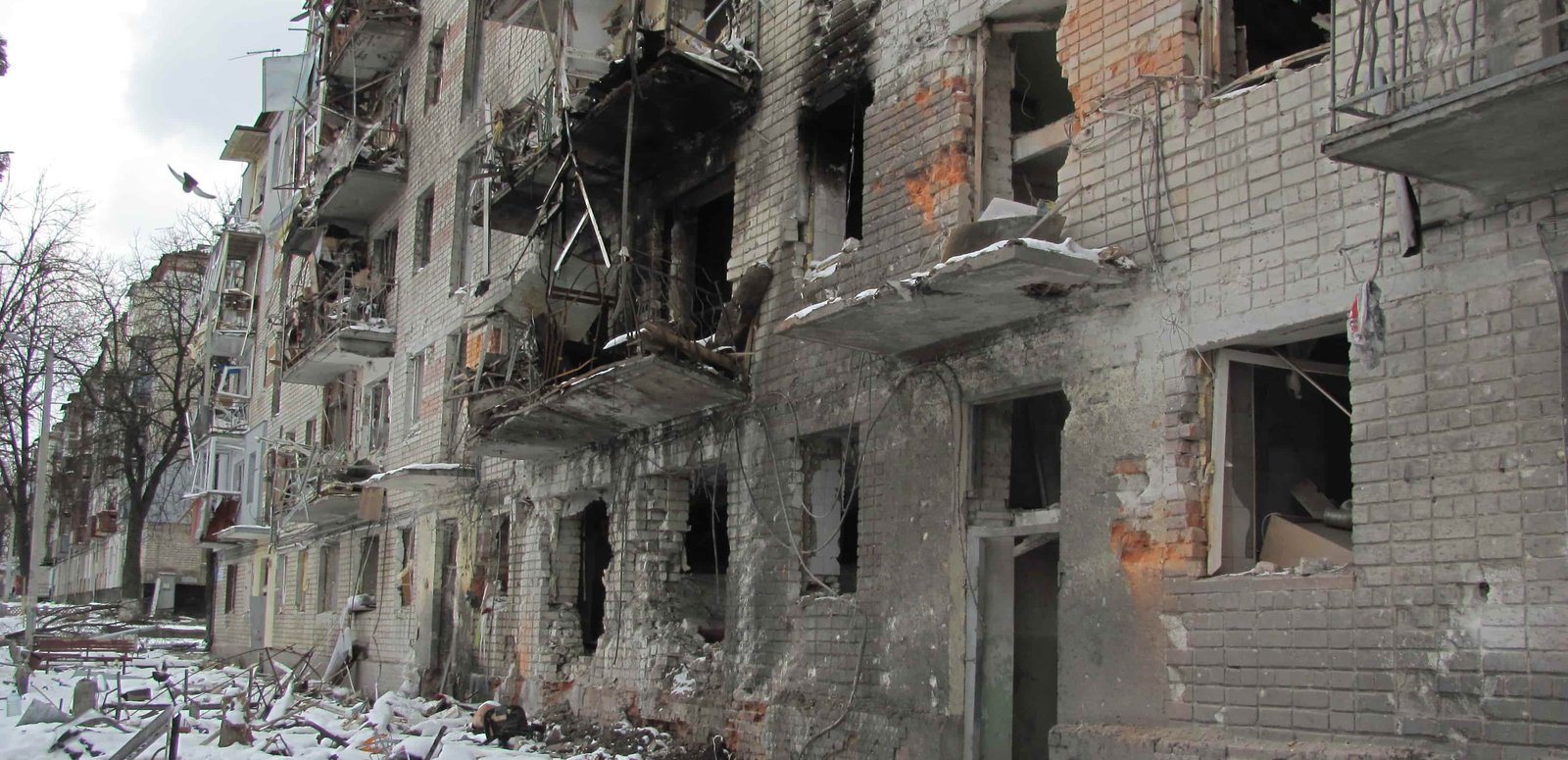
Can Ukraine Transform Post-Crisis Property Compensation and Reconstruction?
- Overview
- Property Restitution and Compensation in Ukraine
- The Diia Portal and the eRecovery Property Compensation Program
- Strengths of Diia and the eRecovery Program
- Challenges of Diia and the eRecovery Program
- Recommendations for Improving Diia and the eRecovery Program
- Conclusion
- Additional Resources