Intersections between Climate Migration and Housing Security in Receiving Communities
Climate migration will undoubtedly impact housing security in receiving communities throughout the United States. Yet future outcomes in each community will differ based on several factors. These include the condition of the local housing market pre-migration and a community’s zoning laws; the socioeconomic characteristics of migrants themselves; and patterns of displacement and migration, including its scale and pace and whether it is primarily permanent, temporary, or even circular in nature.
Local Housing Conditions and Zoning Regulations
The increased demand for housing within receiving communities will raise rents and home prices. If local decision makers fail to ensure that housing supply keeps pace with demand, the result could be major spikes in housing insecurity and home loss.
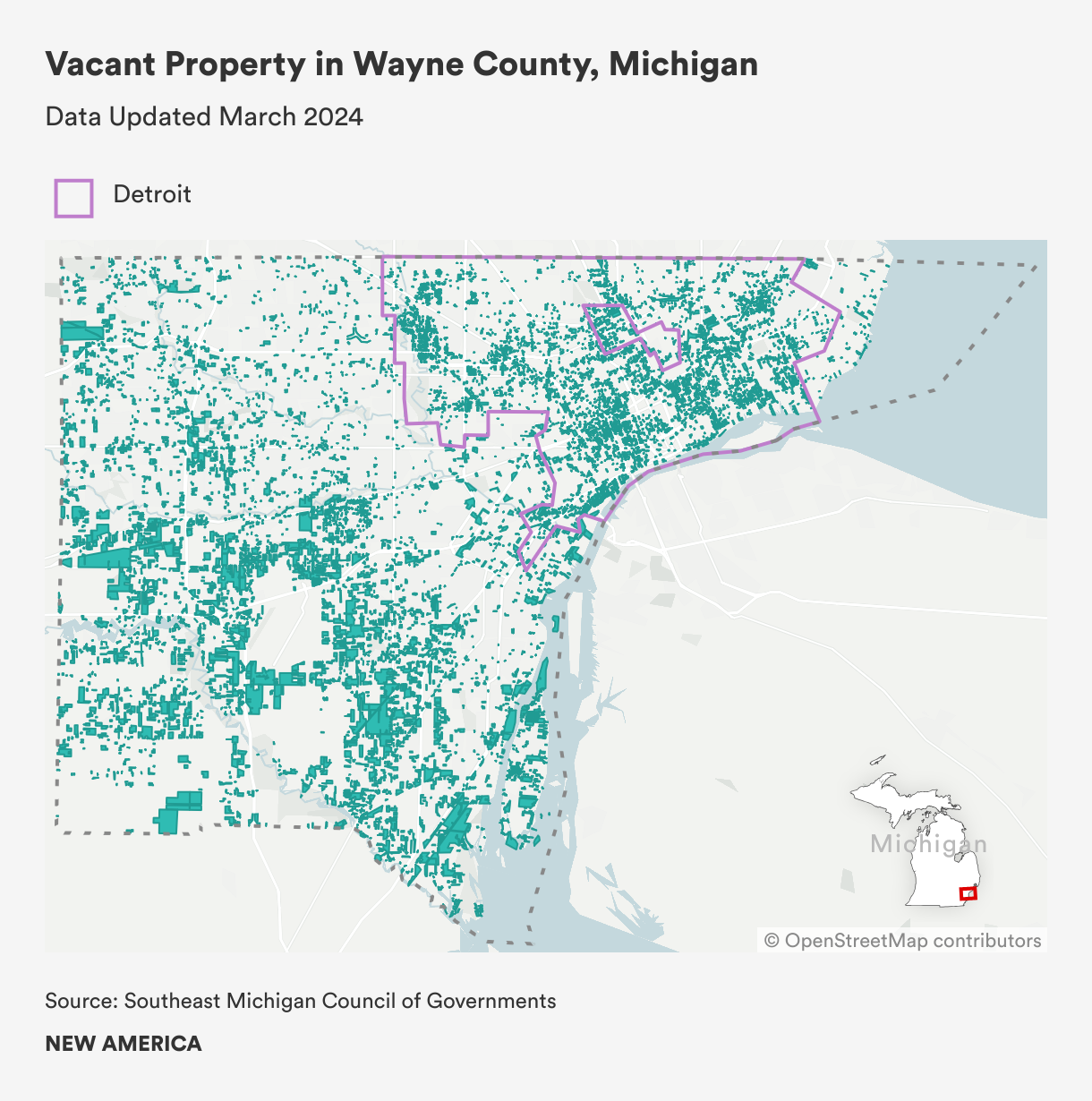
To analyze existing housing conditions, a 2023 report from the Urban Institute considers whether a local market is “loose” or “tight” with respect to vacancy rates and home costs. Some markets may be better situated to accommodate climate migrants, especially with innovative policies and increased investment in housing. Larger Rust Belt cities such as Detroit, Cincinnati, and Buffalo have experienced deindustrialization and job losses in the last half-century, losing hundreds of thousands of residents as a result. Local leaders have an expressed desire to rebound socioeconomically, and these communities also possess plenty of vacant homes for sale and empty buildings to convert into housing. Many already score well on various indices analyzing housing affordability across the country. The land bank in Wayne County, Michigan, which includes Detroit, owned over 100,000 homes in 2020 and sells properties for as low as $2,000, for example. Inland New England and the northern Great Plains—including the Dakotas, Wyoming, and Montana—are also cited as states with room for more housing.
But in many places, the arrival of a large number of climate migrants could exacerbate long-standing supply and affordability constraints. Myriad receiving communities are likely to struggle, as the United States is currently experiencing a severe affordable housing crisis and is short as many as 5 million housing units by some estimates. As a result, roughly half of all American households are housing cost burdened, or spend over 30 percent of their income on housing. Even in Duluth, a former industrial city with existing infrastructure to accommodate nearly 50,000 additional people, housing stock is aging, limited, and increasingly unaffordable. And in 2021, the city’s rental housing vacancy rate was only 2 percent.
In close relation, local land use and zoning regulations in receiving communities will likely affect housing availability and affordability in the long term, for both climate migrants and lifelong residents. Municipal governments throughout the United States are primarily responsible for zoning rules, and many have historically restricted multi-family development. A 2019 study from the New York Times found that 11 American cities allowed only single-family homes on 75 percent of their residential land. Research shows that this restrictive zoning limits housing supply and contributes to increased home costs and housing insecurity nationwide.
Local officials and residents in some communities are evaluating or implementing zoning reforms that could lead to more affordable and secure housing. Many of these changes allow for multi-family homes in more neighborhoods (which is also known as “upzoning”); encourage transit-oriented development; and lower barriers for construction permitting. Minneapolis, Minnesota, is often cited as the leading model for innovative zoning, allowing for greater density downtown and near public transportation, eliminating minimum parking requirements, and authorizing accessory dwelling units on residential plots.
At the same time, however, there is often considerable opposition to zoning reform at the local level. “Not in my backyard” homeowners from Montana to Texas and Connecticut have organized politically against rezoning and have voiced a number of concerns over high-density housing—valid or otherwise—including changes to “neighborhood character” and lower property values as supply increases. Many proposed changes are abandoned by elected officials or are blocked by the legal system after residents file lawsuits.
Other Considerations: Public Infrastructure, Service Access, and Job Markets
In addition to housing, climate migrants and those displaced by natural disasters will have a number of critical needs such as employment, education, care, and access to transportation. These exigencies are especially important for low-income and otherwise marginalized populations, as research indicates that disaster-related displacement exacerbates racial and socioeconomic inequalities across the United States. Access to physical and mental health services is also important because displaced individuals experience high levels of stress that negatively impacts mental health and well-being.
The rapid and unplanned arrival of climate migrants in a receiving community could place additional strain on existing public infrastructure and services, including health care, transportation, schools, water and sanitation, electricity, and waste management. Areas unprepared for significant demographic shifts, especially rural, lower-capacity, and historically underfunded communities, may experience challenges in basic amenity provision, service disruptions, and increased maintenance costs.
As academic Mathew Hauer notes, infrastructure and service delivery challenges related to climate migration are virtually unexplored in many potential receiving communities, from Riverside, California, to Atlanta, Georgia. In these cities and elsewhere, the lack of financial and technical resources creates significant barriers to preparedness. Many municipal governments do not have the staffing and capacity to access funding for planning.
Ultimately, the local needs required by climate migration are much the same for any balanced and thriving community. Investments in infrastructure, public services, and economic growth might be tangential to climate adaptation, but also serve to increase community resilience and preparation for climate migration.
Migrant Socioeconomic Status and Gentrification
Given a general lack of housing options in many places, some lower-income climate migrants may not be able to access safe and affordable homes in the short or long term. There are also well-documented cases in which migrants from historically marginalized groups experience challenges in navigating new and unfamiliar housing markets, due in part to knowledge gaps and a lack of resources. Following Hurricane Maria in 2017, for instance, many Puerto Rican migrants in the Orlando area struggled to secure adequate long-term housing. Instead, many families booked hotel room after hotel room, crowded into small apartments with relatives or friends, ended up unhoused, or returned home.
Some climate migrants could arrive in a receiving community following financial ruin. Sea-level rise, wildfires, and other climate impacts will very likely lower property values in at-risk regions, leading to loss of equity for homeowners and, eventually, an unsellable house. In fact, real estate prices are already dropping: A 2019 analysis from First Street Foundation found that between 2005 and 2017 sea-level rise diminished the value of 25.6 million properties across all East Coast states, Alabama, and Mississippi by a total of $15.8 billion. Insurance coverage gaps could also cause significant economic hardship for homeowners following a flood or wildfire, leaving them responsible for thousands of dollars in repairs.
Ultimately, many homeowners will be unable to afford a rebuild without insurance and could default on their mortgage, sell at a loss, or even abandon their property. There is already evidence that American families are underselling their homes to move away from high-risk areas. Such market forces could very well subvert the traditional view in the United States that homeownership is a tool for generational wealth building, and many future migrants may be moving while down-and-out economically.
An influx of middle-class or wealthier migrants, however, could result in climate gentrification, whereby these newcomers gradually displace households in neighborhoods that are poorer and more Black and Hispanic, but also more resilient to climate impacts. Lower-income, lifelong residents might be pushed out by rising housing costs and pressures from real estate developers, eager to profit on increasingly desirable land. Unfortunately, displaced individuals and households may have little choice but to relocate to more climate-vulnerable neighborhoods.
While climate gentrification is currently more associated with coastal cities such as Miami and New Orleans, recent disasters make clear that it also occurs in receiving communities. Following rapid population growth due to the 2018 Camp Fire, for instance, housing prices in Chico jumped 21 percent and low-income renters struggled to find housing. Some residents in future climate havens are now voicing their concerns around such displacement. A 2021 WIRED article notes that the American Society of Adaptation Professionals, an organization that helps Great Lake communities prepare for climate migration, “often hears worries about gentrification, that their towns will attract wealthy people, drive up housing prices, and push out poorer residents.” In Buffalo, locals are already concerned that outsider developers and investors are snatching up residential properties in the area. Even in 2019, the city ranked seventh nationally for rent increases and housing choice voucher program participants were struggling to find rentals.
The Pace of Climate Migration and Housing
Finally, it is imperative to understand how the speed and volume of migration will impact housing in receiving communities. Fast-paced or sudden population growth could quickly overwhelm a receiving community’s housing sector, leading to a spike in costs, displacement, and homelessness. Low-income and minority renters, already at increased risk of home loss, may be particularly vulnerable to eviction amid an influx of climate migrants. Gradual migration that is accompanied by long-term planning and sustained action, by contrast, could benefit both newcomers and long-time residents of receiving communities (see next section). Some receiving communities will see both rapid and longer-term migration: Analysis from the Urban Institute notes, for instance, the protracted movement of people from small Louisiana towns on the Gulf to higher-elevation communities amid sea-level rise, and also sudden migration inland following especially severe hurricanes and flooding.
Experience also demonstrates that smaller and mid-sized communities, especially, can struggle with the sudden arrival of many newcomers. These towns and cities experience their own social, economic, and environmental challenges, and the local housing market along with other services and amenities are quickly overwhelmed amid rapid population growth. Resentment and social conflict can result. An unfortunate example is Chico, whose initial welcome of Camp Fire evacuees eventually turned negative, as the city experienced more traffic, an increase in crime and housing insecurity, and strains on public infrastructure. Lacking any meaningful state or federal funding to address the challenge, long-time residents became resentful and the Chico City Council was actually admonished publicly by the American Civil Liberties Union for the city’s treatment of unhoused people.
Case Study: Holyoke, Massachusetts
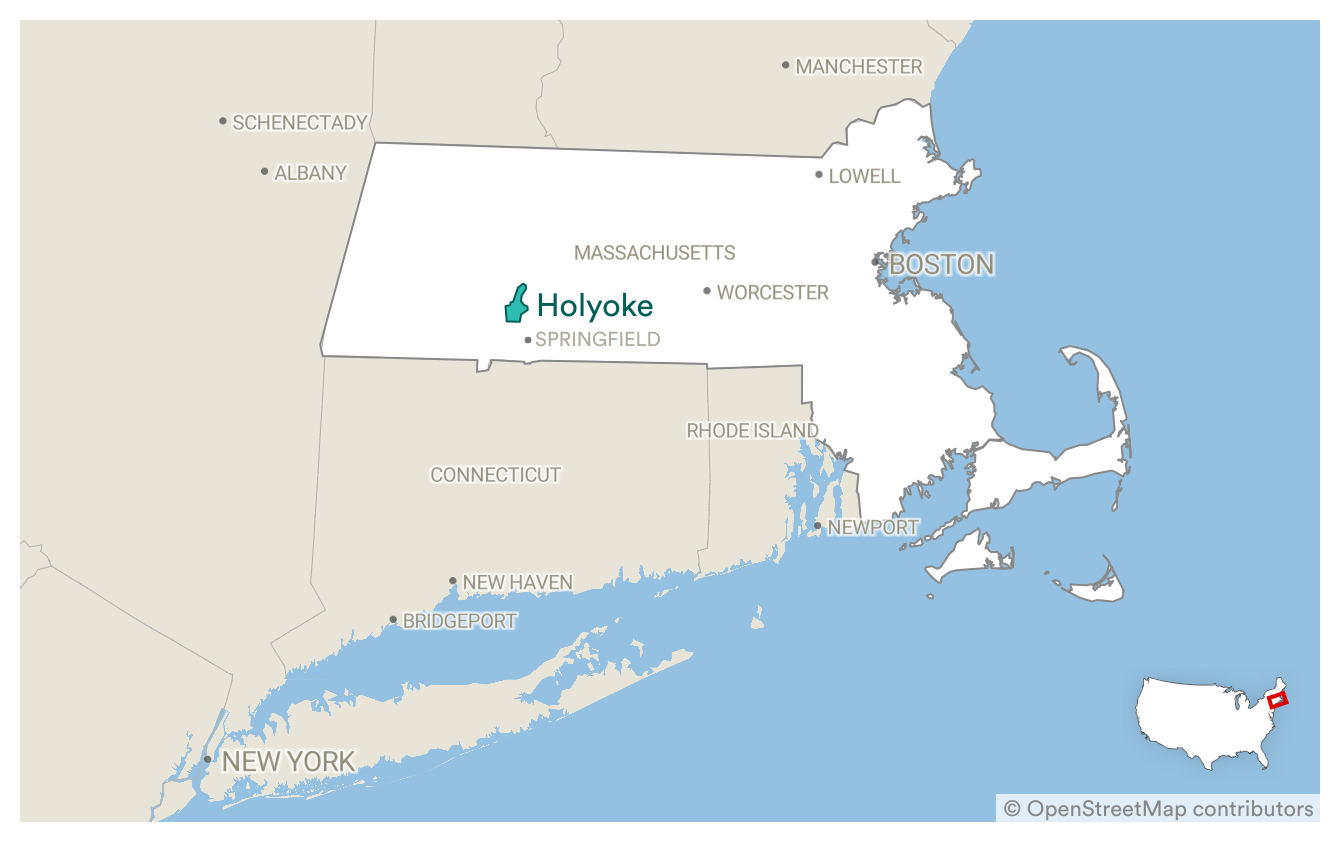
Deadly Hurricane Maria struck Puerto Rico in September 2017 and displaced over 150,000 of the island’s 3.3 million residents. The majority fled to Florida, with around 30,000 evacuees heading to the Orlando area. But approximately 5,400 people migrated from Puerto Rico to Massachusetts, with a significant number seeking refuge in Holyoke, a small city home to the highest concentration of Puerto Ricans outside Puerto Rico.
Holyoke, with approximately 40,000 residents in 2017, 46 percent of whom are Puerto Rican, sprang into action in attempt to meet the needs of the new arrivals. Primary needs included food, clothing, medical care, assistance navigating benefits, and housing. Although the local government and nonprofit sector—led by the organization Enlace de Familias, which acted as a central “one-stop shop” for people to access services—was commended at the state level for a coordinated approach, Holyoke lacked adequate resources to address the acute needs of 2,100 migrants. As a result, a large share of the effort came from kinship networks within the city’s Puerto Rican community.
Through focus groups funded by a Massachusetts Executive Office of Energy and Environmental Affairs grant, displaced persons, hosts, and service providers all identified housing as a primary need facing migrants. In Holyoke’s tight housing market, with a 2017 vacancy rate of 3.6 percent and over 41 percent of renters housing-cost burdened, long-time residents and newcomers alike felt the strain from a lack of housing options. Some residents on the waiting list for Housing Choice Vouchers suddenly found themselves moved down in order during the months after the hurricane. A migrant from Puerto Rico, meanwhile, remarked that, “housing assistance from the city was terrible. It wasn’t until later, at a meeting, that I was able to understand the great demand for housing there was because so many people arrived from Puerto Rico. The city wasn’t ready for a boom of people. I understand why it was, but we suffered it because we needed housing.” An evaluation of Holyoke’s response found that a lack of flexibility from government service providers, particularly at the federal level, created challenges: The federal Housing Choice Voucher program, funded by the U.S. Department of Housing and Urban Development (HUD), does not allow recipients to host others for longer than 15 days, or risk continued receipt of crucial rental assistance.
The needs and challenges of displaced Puerto Ricans lasted for several months, but the community eventually stabilized. By 2020, many migrants indicated plans to remain in Holyoke rather than return to Puerto Rico. Ultimately, city and civic leaders built an impressive network of assistance to receive displaced families, but a lack of flexibility from federal partners and constraints on both housing supply and rental assistance funding prevented Holyoke from completely meeting the needs of those displaced by Hurricane Maria.