Common Questions to Address Using Court Eviction Data
This section walks through common questions that can be explored using court eviction data. This section is organized into five main areas of inquiry:
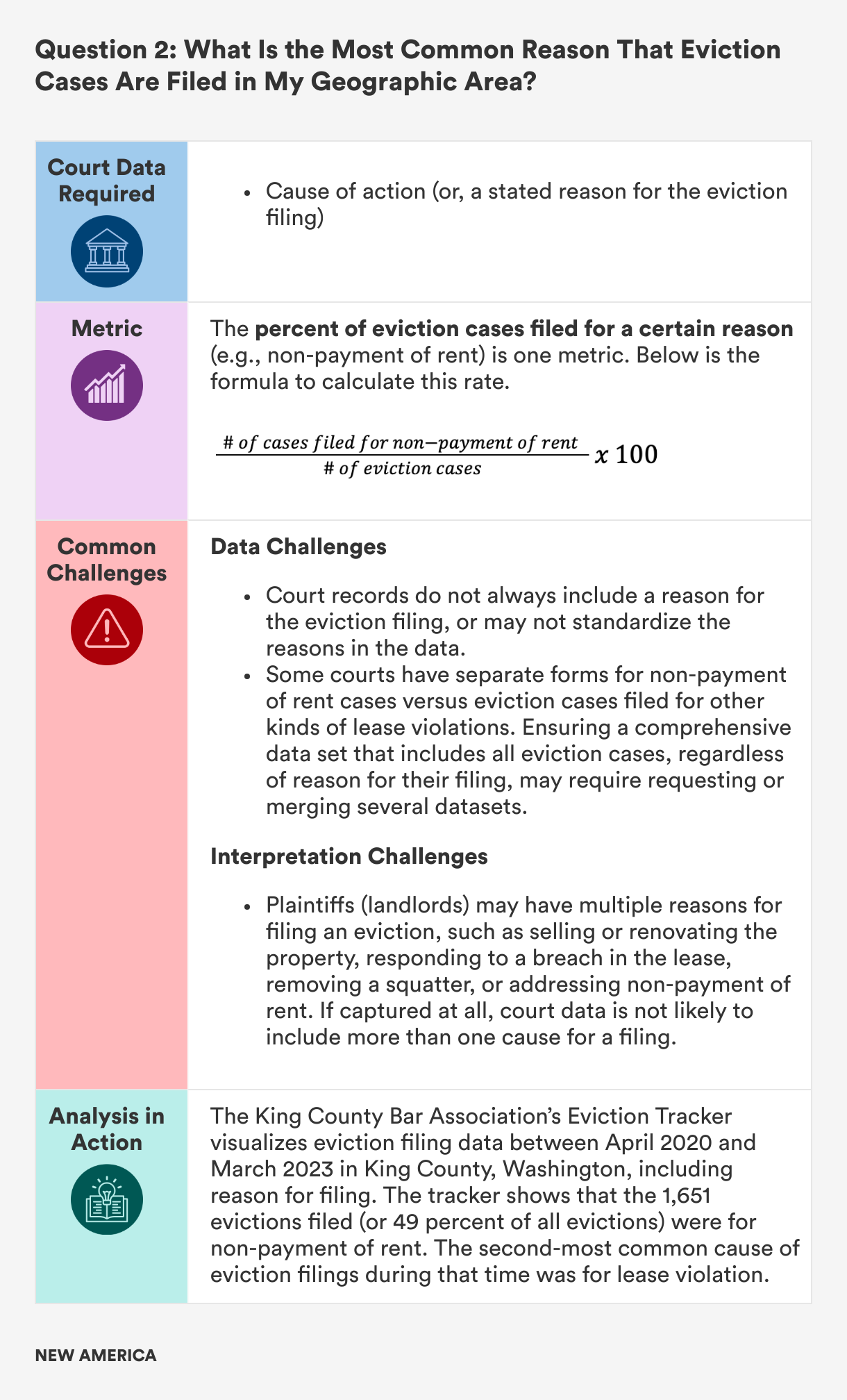
I. How many eviction lawsuits are taking place, and why?
II. Who is filing eviction lawsuits?
III. Who is facing eviction lawsuits?
IV. How do tenants and landlords engage in eviction lawsuits?
V. What are the outcomes of eviction lawsuits?
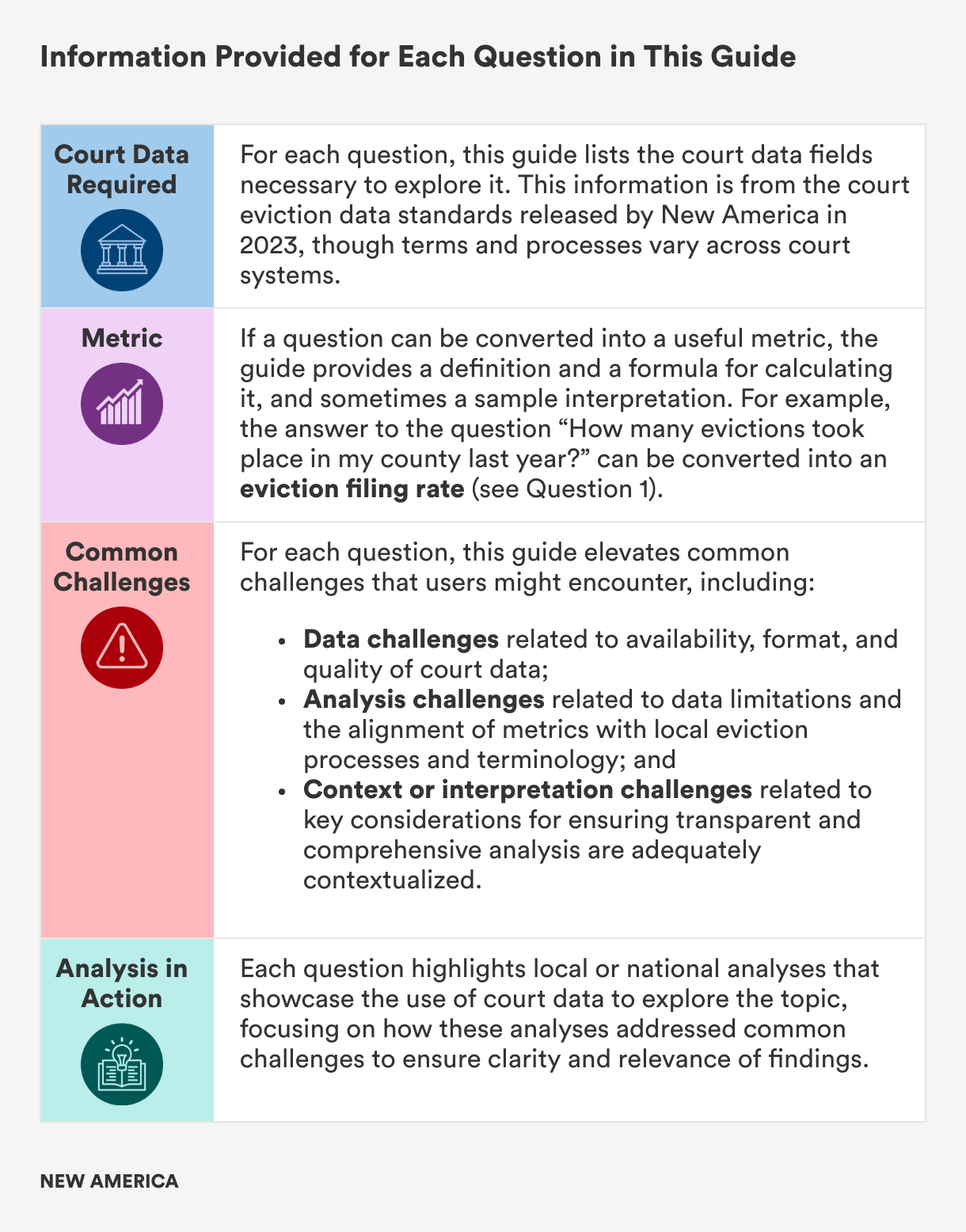
Within each area of inquiry is a set of more specific questions to help users dig deeper into these areas—a total of 14 questions. Each question includes the same set of information, including court data necessary to answer it; a metric to use, if applicable; common challenges related to the data, analysis, or interpretation; and examples of this analysis in action. The table below provides a detailed breakdown on what is included for each of the 14 questions.
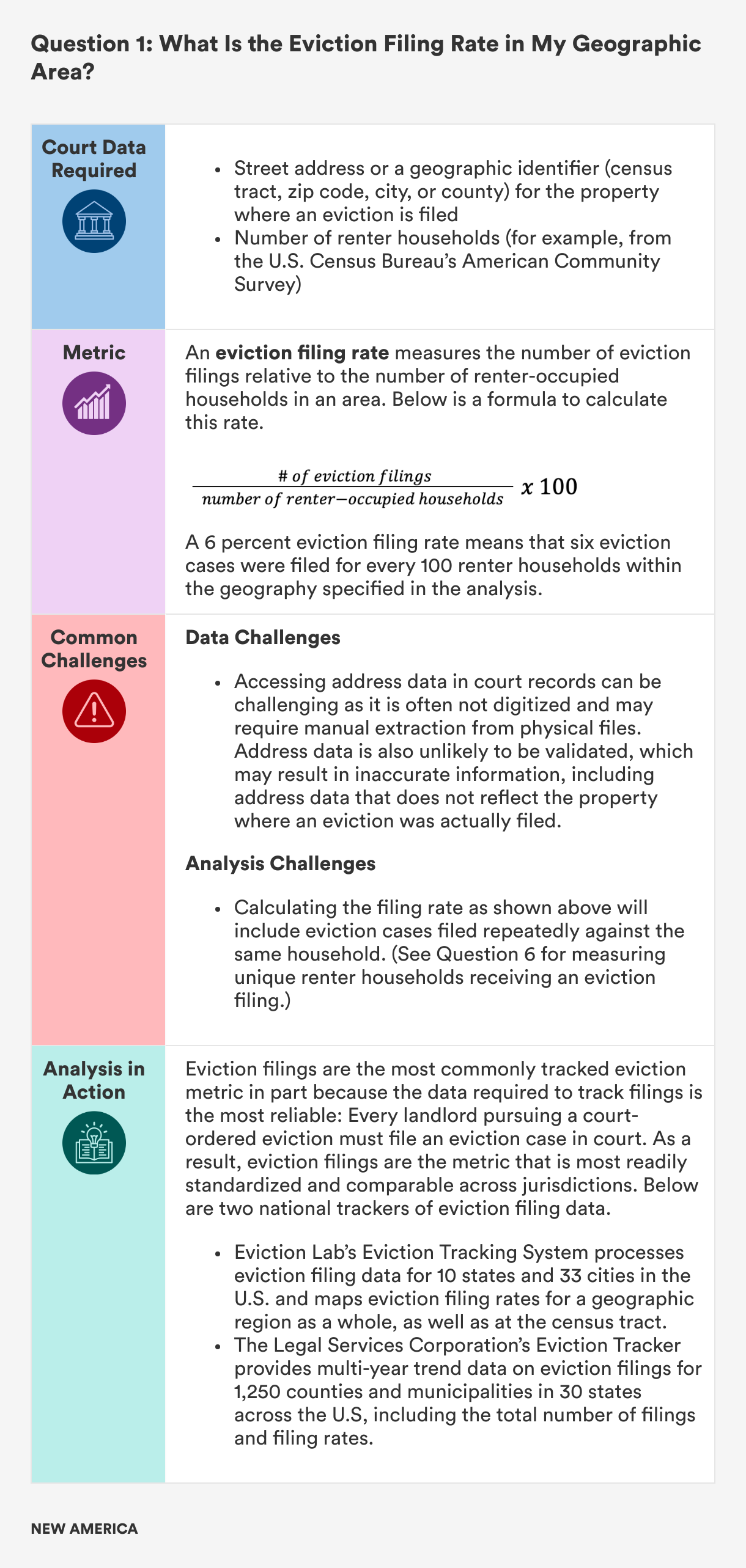
Note to Users: To apply any of these questions to eviction data, users must define the time period and geographic scope for analysis. That is, users should add “in [insert geographic location] over [insert time period of interest]” to each question. For example, for Question 1, “What is the eviction filing rate in New Orleans, Louisiana, from January 1, 2023, to June 30, 2023?” Because this is universal in exploring any of the 14 questions in this guide, we do not specify the need for date data, despite its necessity in conducting any analysis related to evictions.
I. How Many Eviction Lawsuits Are Taking Place, and Why?
Understanding the volume of eviction filings and judgments in a jurisdiction is critical for tracking housing instability over time. While eviction filings do not necessarily result in court-ordered displacement, they represent a risk of future eviction and can create future barriers to housing stability as landlords consider filing information when screening tenants. Eviction filings also represent a critical moment when interventions—in the form of legal aid, financial assistance, and other services—can help tenants in understanding their rights and navigating the legal process. Eviction judgments shed light on the number of families who face court-ordered removal from their homes, offering a clear picture of forced displacement.
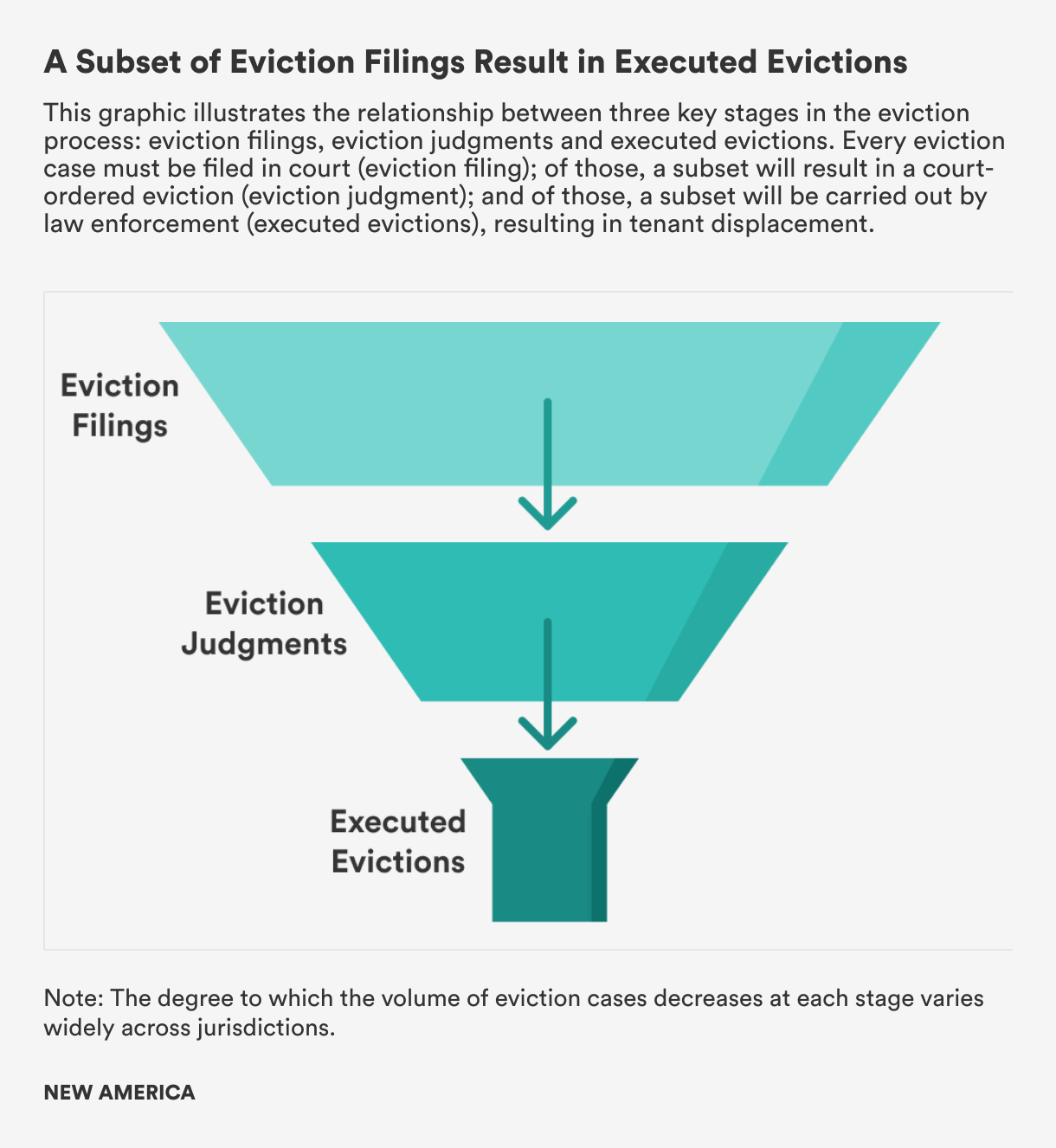
Detailed insights on the number of eviction filings and judgments and where they occur can also support efforts to evaluate the impact of housing policies and programs on eviction prevention.
Case Study: Prioritizing Court Form Standardization to Improve Eviction Data Collection in Illinois
Type: Court Policy (Supreme Court Rule 10-101 and M.R. 25401)
Policy/Action: Standardized Forms
In 2012, the Illinois Supreme Court created the Access to Justice (ATJ) Commission, composed of 11 appointed members (judges, attorneys, and other court stakeholders), to improve the legal system for self-represented litigants in civil courts across Illinois. That same year, the Commission developed the standardized court forms project. Initially an ambitious but small-scale effort led by one full-time employee at the Administrative Office of the Illinois Courts (AOIC), the project has since grown into a robust initiative. Since its inception, the project has overseen the development of 56 standardized court form sets and 350 individual documents.
Not only are standardized, easy-to-understand forms critical from an access-to-justice perspective, they also streamline data entry for court clerks. This is especially important for eviction cases, where accurate court data is essential to inform service delivery, as local leaders have emphasized.
Today, three full-time employees in the AOIC’s ATJ Division oversee the creation and development of standardized forms across 13 subcommittees on different civil court case types. Composed of volunteer experts across the state, including judges, court personnel, lawyers, and legal aid groups, each subcommittee is responsible for driving the form development process, including a plain language review, user testing, and public comment period. All form sets are approved by a committee, a 10-member governing body, before they are published on the Illinois Courts’ website.
The eviction subcommittee, formed in 2016, has overseen the development of numerous standardized forms, including 11 eviction complaint forms, six forms for responding to an eviction complaint; seven eviction order forms; and four forms to remove an eviction court file from public record. As codified in Supreme Court Rule 10-101, all courts in Illinois are required to accept the standardized forms and are prohibited from creating or promoting alternate forms that fulfill the same legal purpose.
The Eviction Order form, which outlines the judgment terms, is required to be used by all courts.8 This means that for every eviction lawsuit in Illinois in which a plaintiff wins a judgment against a tenant (for possession, money, or both), courts are capturing identical information, including which parties were present in court at the time the order was entered; whether a judgment is by default, after a hearing, or by agreement; and a detailed breakdown of the money owed in the order (e.g., for rent, court costs, or attorney fees). While not all forms are required, the seven eviction order forms—each one corresponding to a different potential outcome (e.g., agreed dismissal, agreed settlement, or a judgment entered into by a judge after a hearing)—offer detailed information on the range of potential outcomes, now collected in a standardized way.
Each set of forms is accompanied by an easy-to-interpret and detailed road map that offers guidance for court staff and the parties. These road maps help demystify legal terminology and provide structured entryways into the court system for self-represented litigants. Further, the road maps may benefit court staff in providing consistency in how legal terms are defined and interpreted statewide.
While collecting information via standardized court forms is necessary to produce high-quality and meaningful eviction data, the impact on data quality still relies on how courts process, store, and share this information. Because Illinois does not have a unified court system, courts differ in how they incorporate forms into existing processes, and in what case management technology they use. While it is premature to assess the impact of standardized forms on the quality of court eviction data in Illinois, many benefits are already clear.
II. Who Is Filing Eviction Lawsuits?
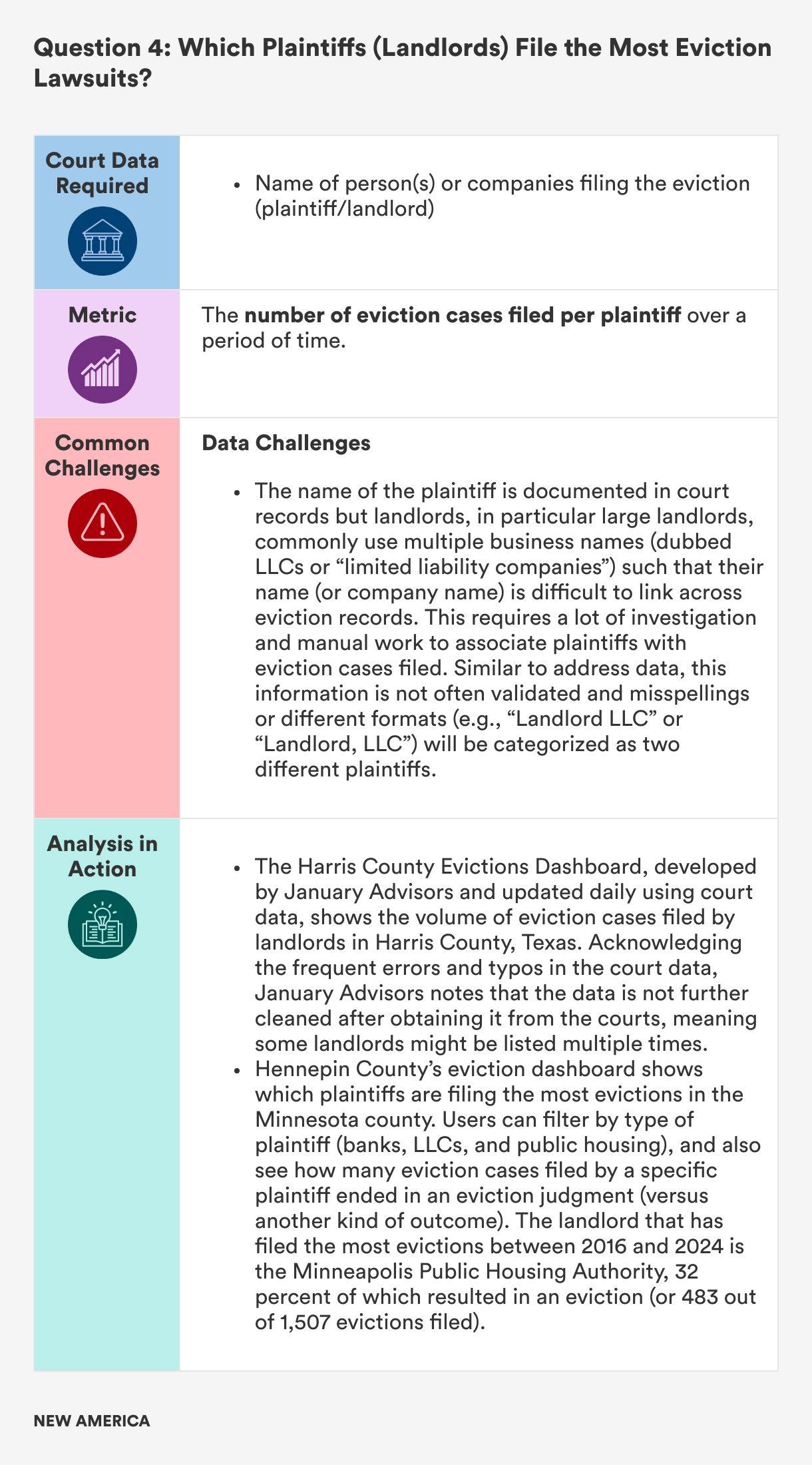
Understanding who is filing evictions is important for tracking which landlords are filing for eviction most frequently, and for identifying opportunities for direct intervention with landlords. In cases where property owners may use the legal eviction process as a way to collect rent and other fees, for example, policy interventions—such as requiring landlords to address all outstanding code violations before filing or increasing the fee for filing an eviction—may be considered.
III. Who Is Facing Eviction Lawsuits?
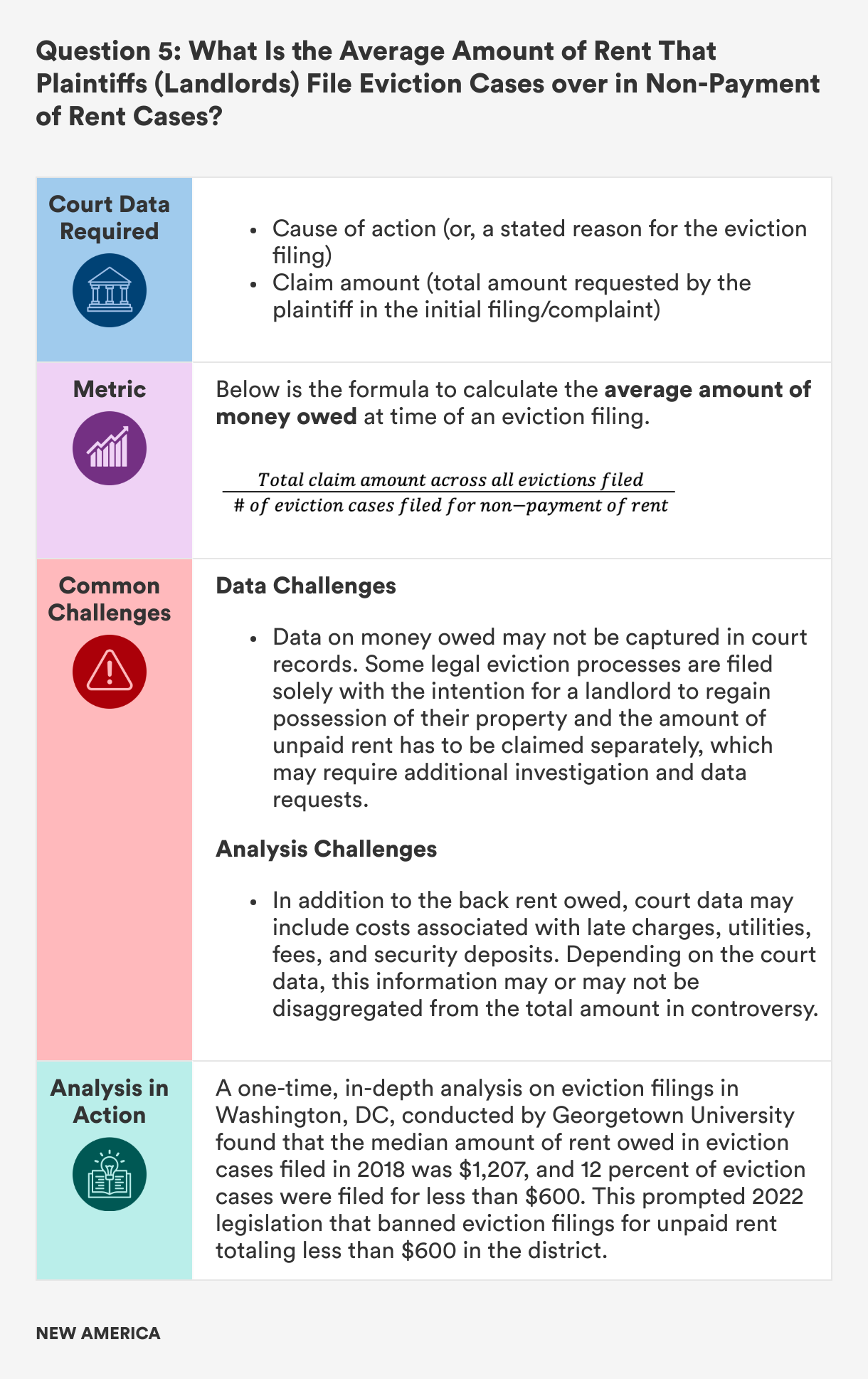
While court records do not collect demographic information or other characteristics of defendants, it is critical to understand the populations who experience eviction most frequently. This understanding is essential for delivering resources more effectively and addressing racial, gender, and other inequities within the system. To account for this gap in court data, researchers often append demographic data from other sources to reveal sociodemographic trends among those experiencing eviction.
The Foreclosure and Eviction Analysis Tool, or FEAT—a data tool developed by New America and DataKind—joins around 70 variables from the U.S. Census Bureau’s American Community Survey (ACS) to eviction data summarized at the census tract level and measures the strength of the association as a proxy of which communities are most at risk. A 2023 Eviction Lab study linked court eviction data from across the country with ACS data at the household level to identify the race, ethnicity, gender, age, and place of birth of households with an eviction filing between 2007 and 2016.9
This analysis should be undertaken thoughtfully, with appropriate caveats in place outlining the limitations of what we can understand about individual defendants through appending other data sources. For example, making assumptions about a defendant’s race or gender based on their name could potentially lead to inaccuracies in findings about the way evictions impact a certain group.
IV. How Do Tenants and Landlords Engage in Eviction Lawsuits?
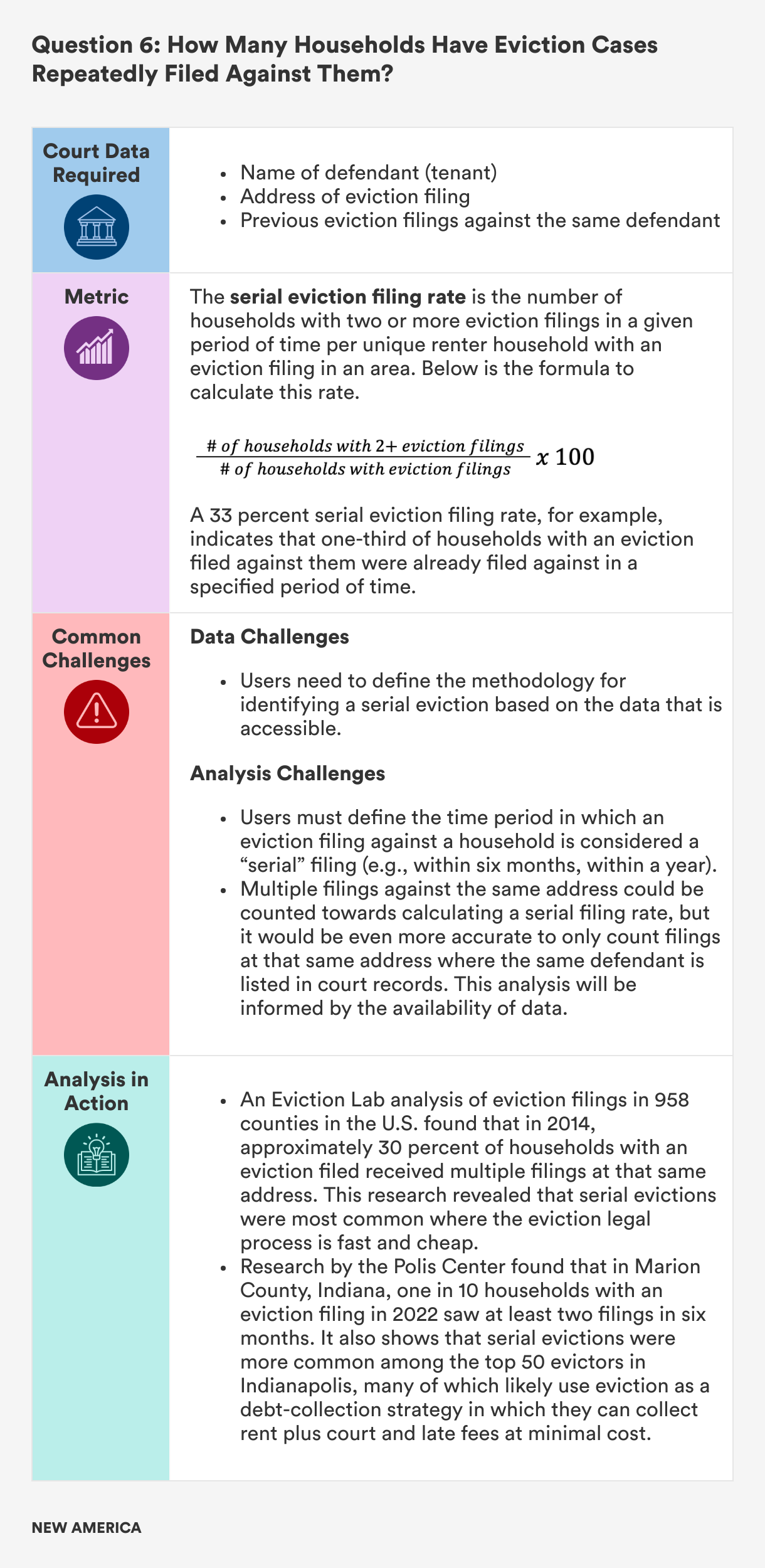
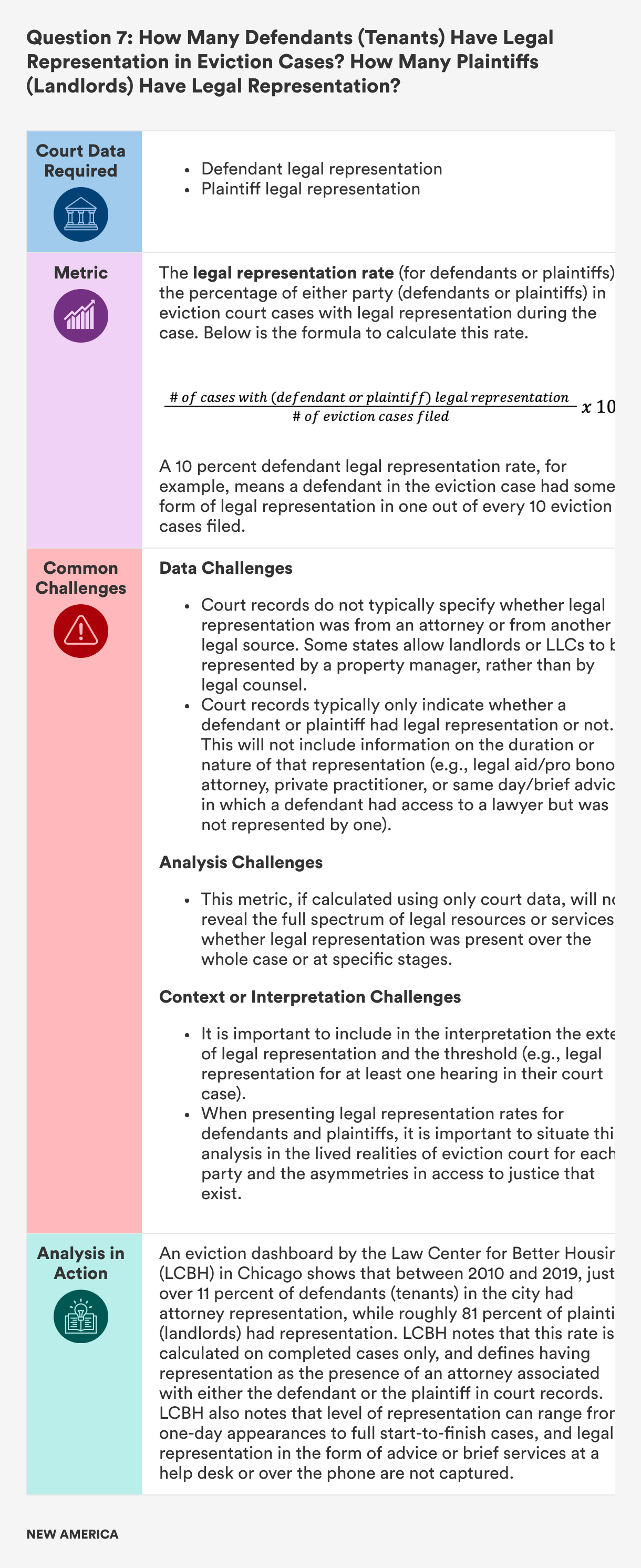
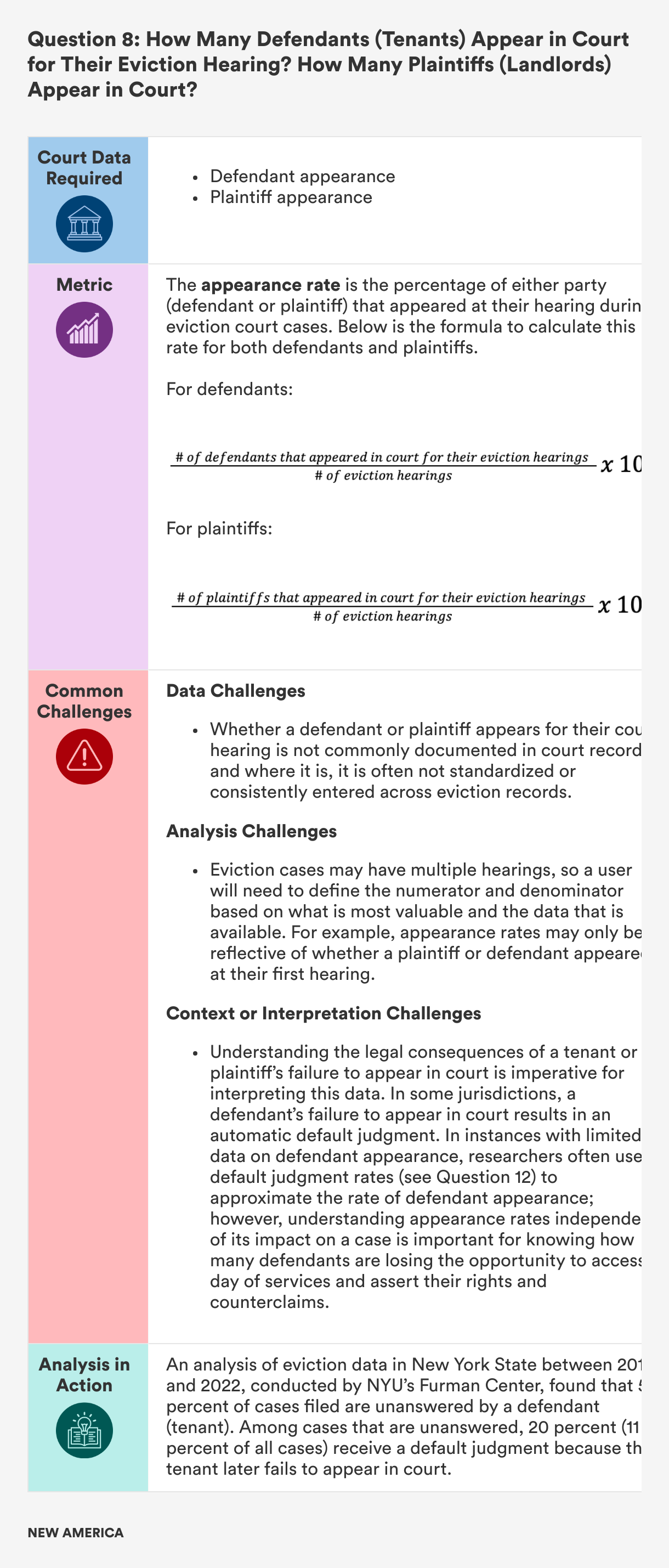
This question is critical to better understanding which interventions are most effective for preventing unnecessary evictions. Eviction proceedings are intended to provide tenants the opportunity to present counterclaims to the case filed against them, but the speed at which the eviction process unfolds, and their complexity, can lead to stark imbalances of power in eviction cases, potentially resulting in unnecessary evictions.
V. What Are the Outcomes of Eviction Lawsuits?
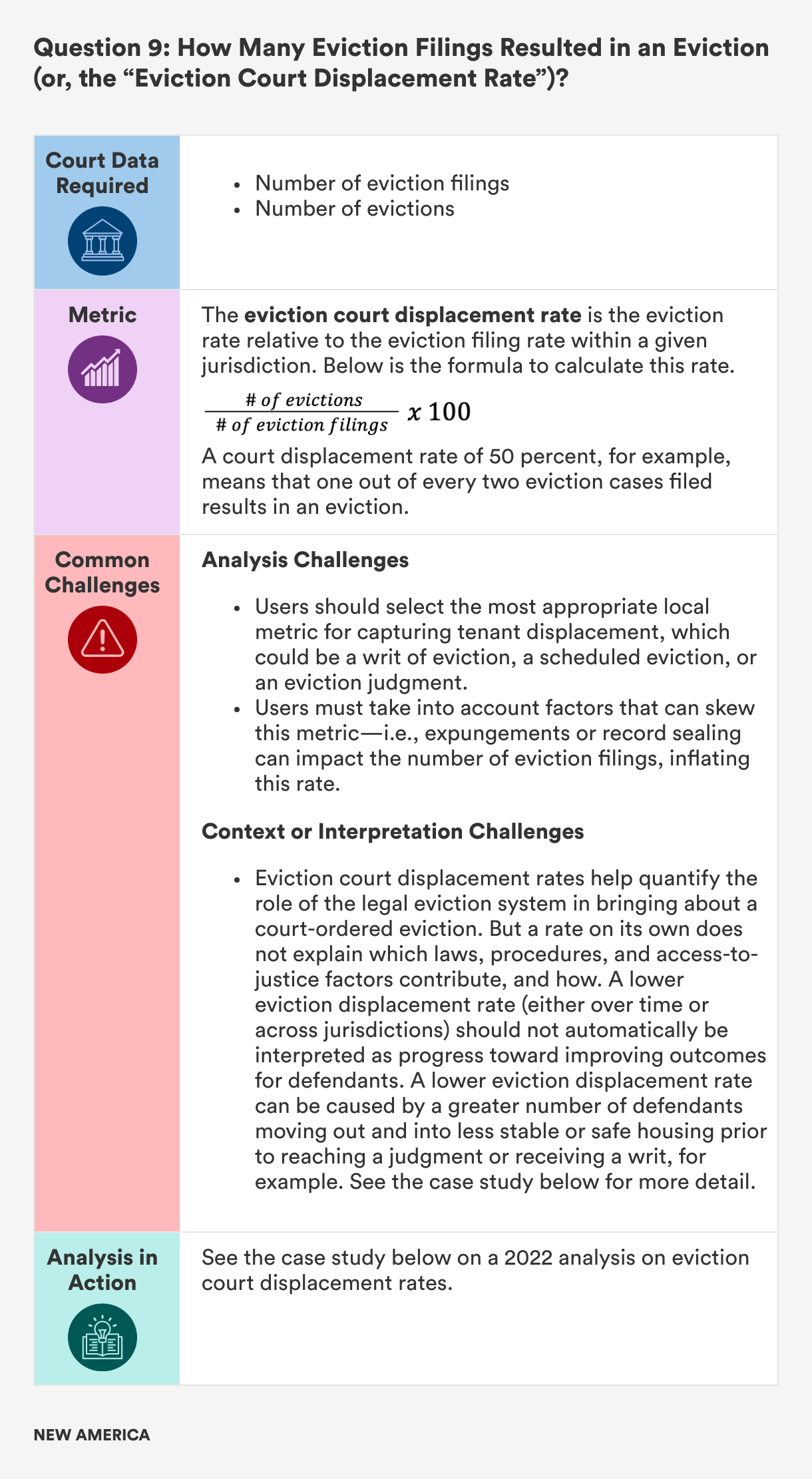
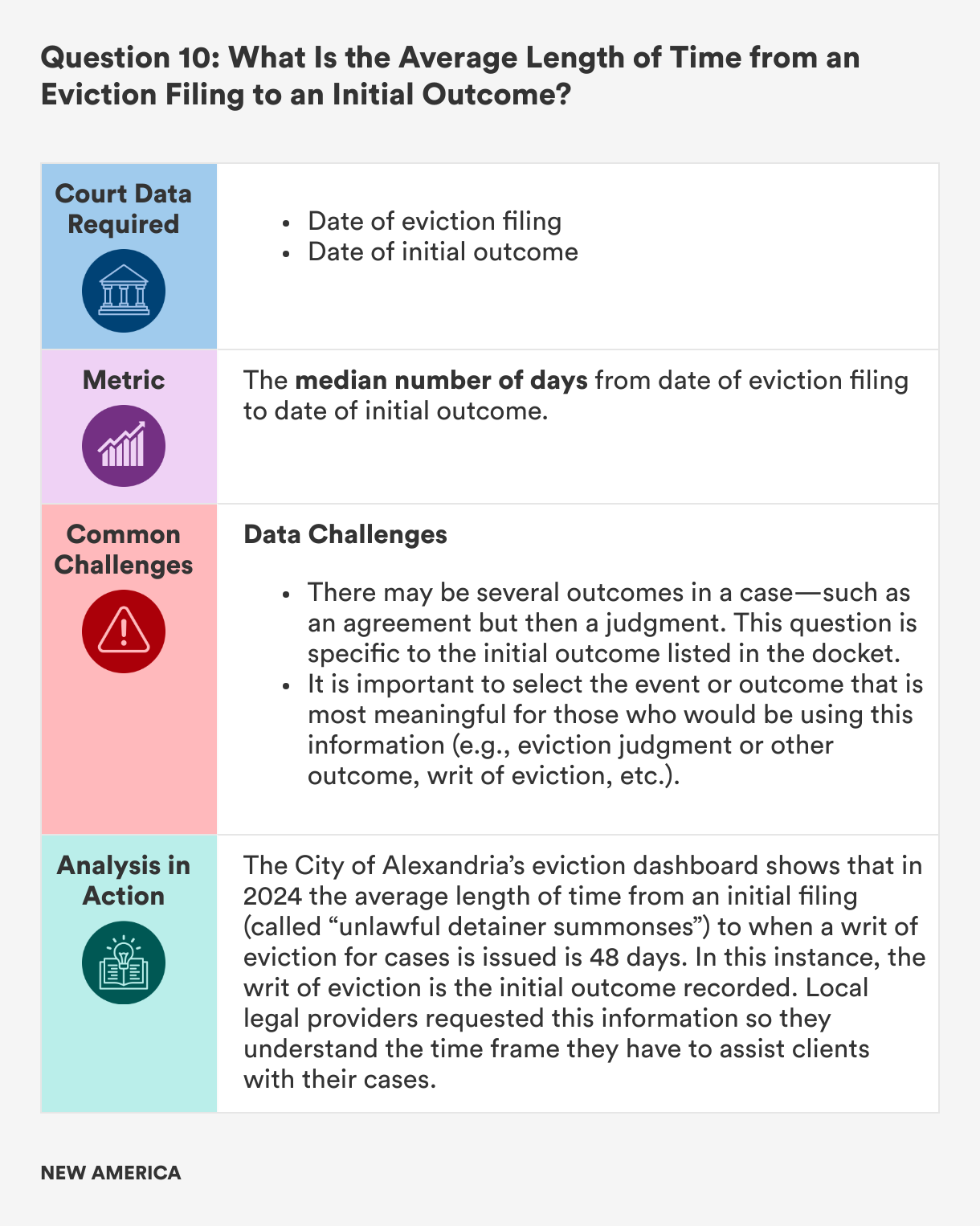
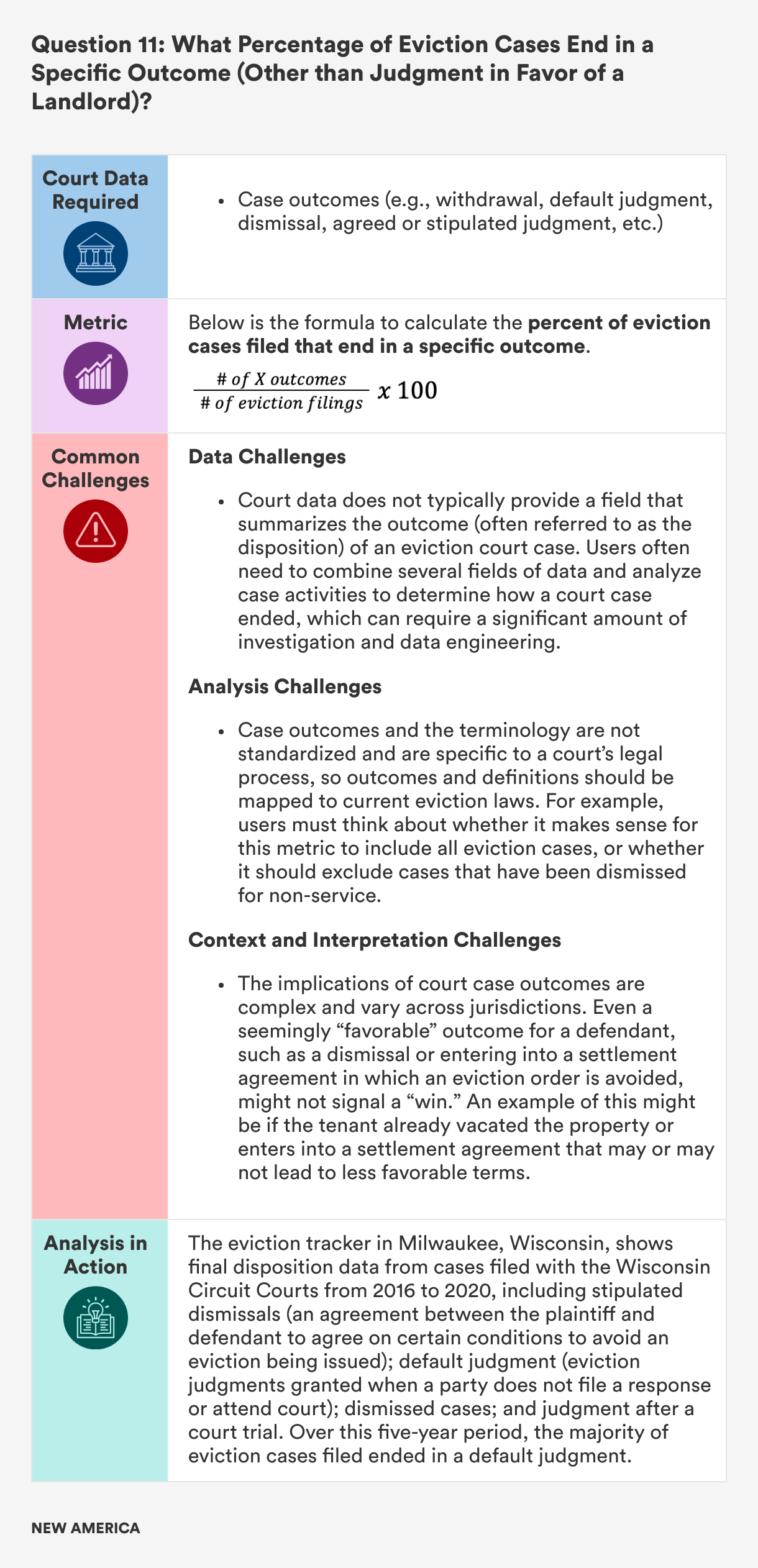
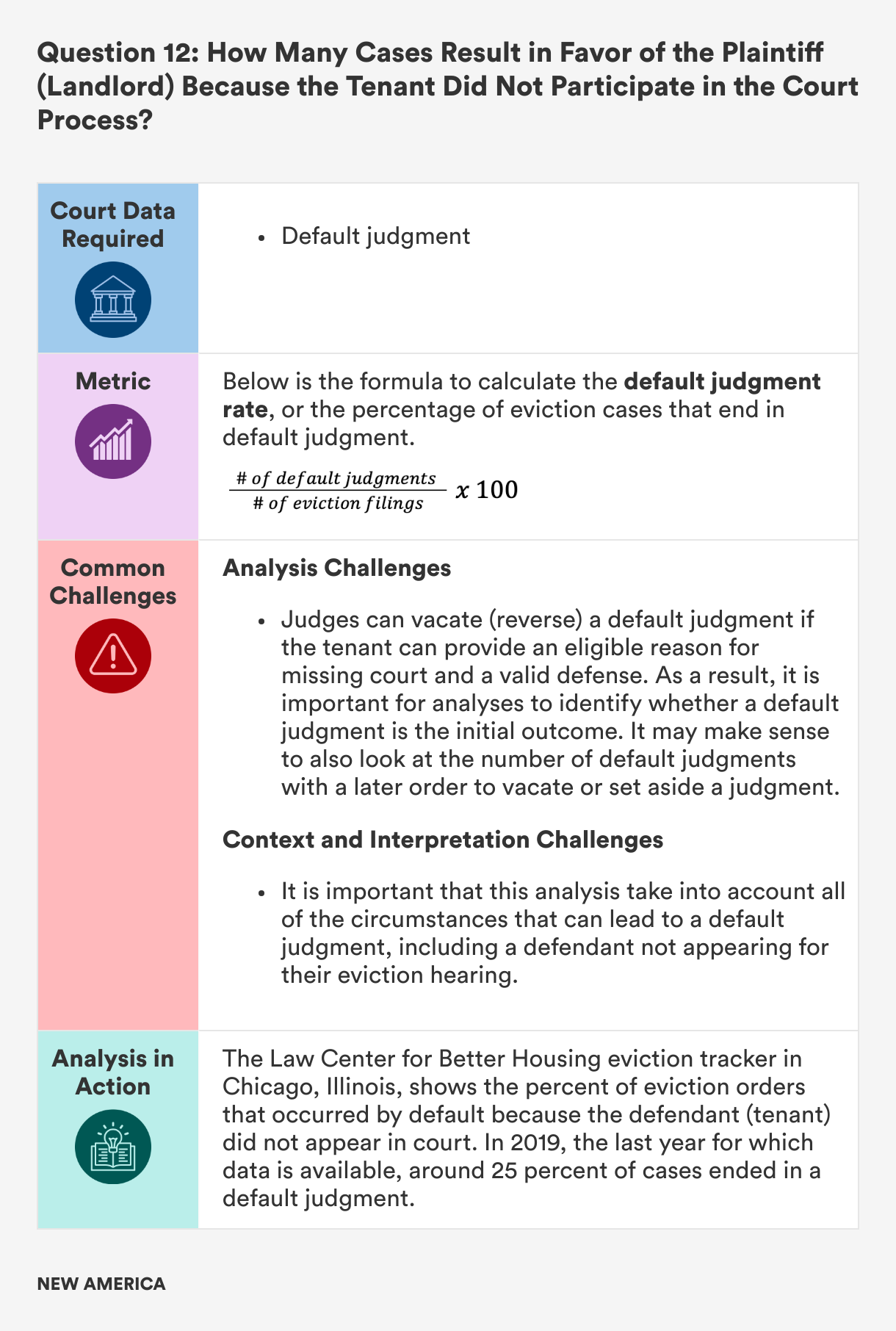
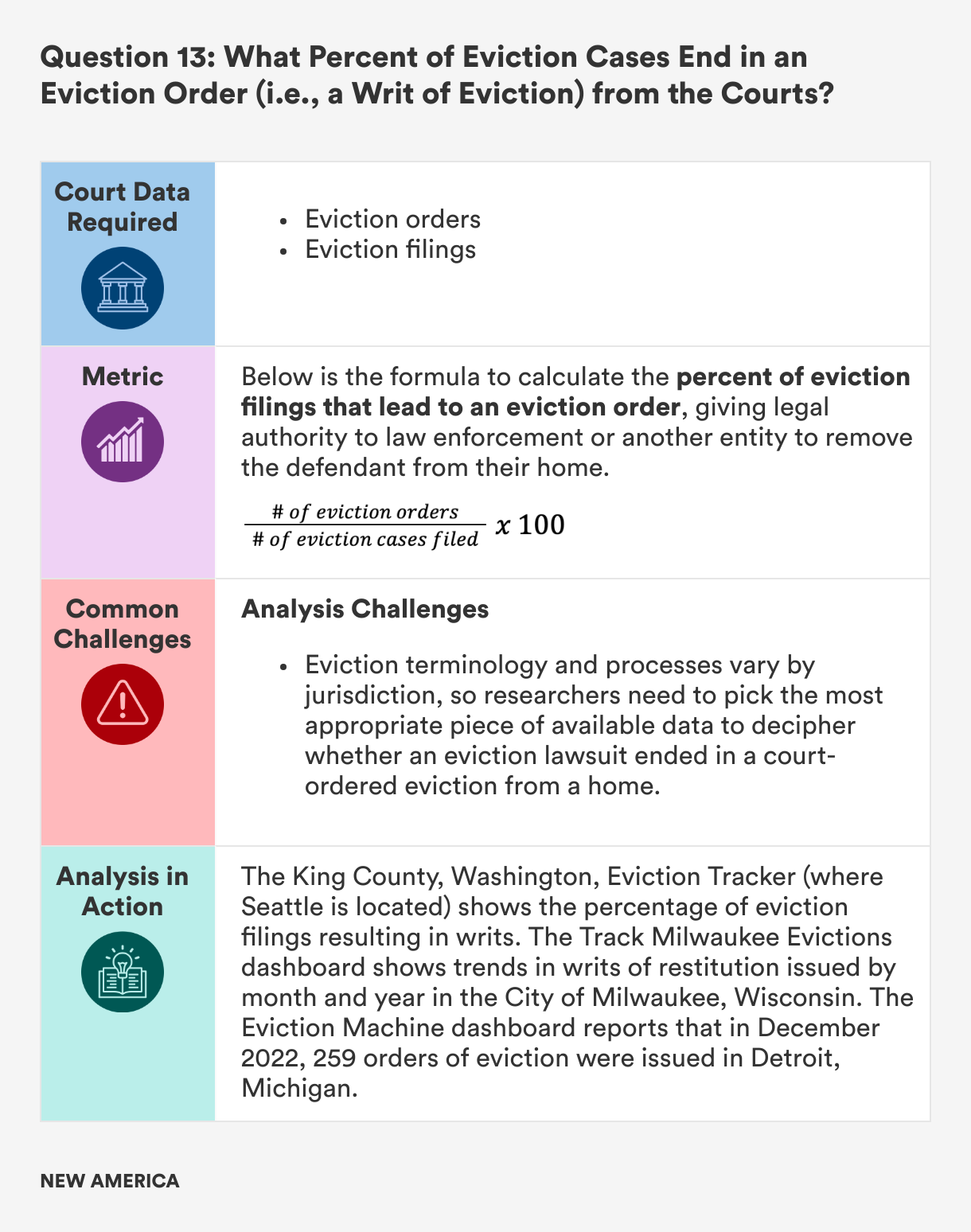
Understanding the different outcomes of eviction court cases is critical for understanding not only the scope of displacement as a result of an eviction filing, but also for evaluating the impact of eviction prevention policies.
Information on an eviction judgment in favor of a plaintiff, however, is harder to define from jurisdiction to jurisdiction, as court systems have different legal processes and terminology for what constitutes a court-ordered eviction. As a result, both within and across court systems, data on what constitutes a court-ordered eviction is context-specific. Aggregating this information across cases can often require manual investigation and coding by someone with knowledge of local eviction processes and court systems.
Case Study: Leveraging Eviction Court Displacement Rates to Assess the Role of the Legal System in Shaping Eviction Outcomes
Type: Research and Analysis
Policy/Action: Court Displacement Rates
In the field of eviction research, rates of eviction filings and forced tenant moves as a result of eviction are commonly used to understand the volume and impact of residential displacement. A 2022 essay by Georgetown University law professor Nicole Summers introduces a metric that explores the relationship between these two rates—the eviction court displacement rate.10 This metric, detailed in Question 9, captures the rate at which defendants (tenants) are displaced from their homes after eviction cases are filed.
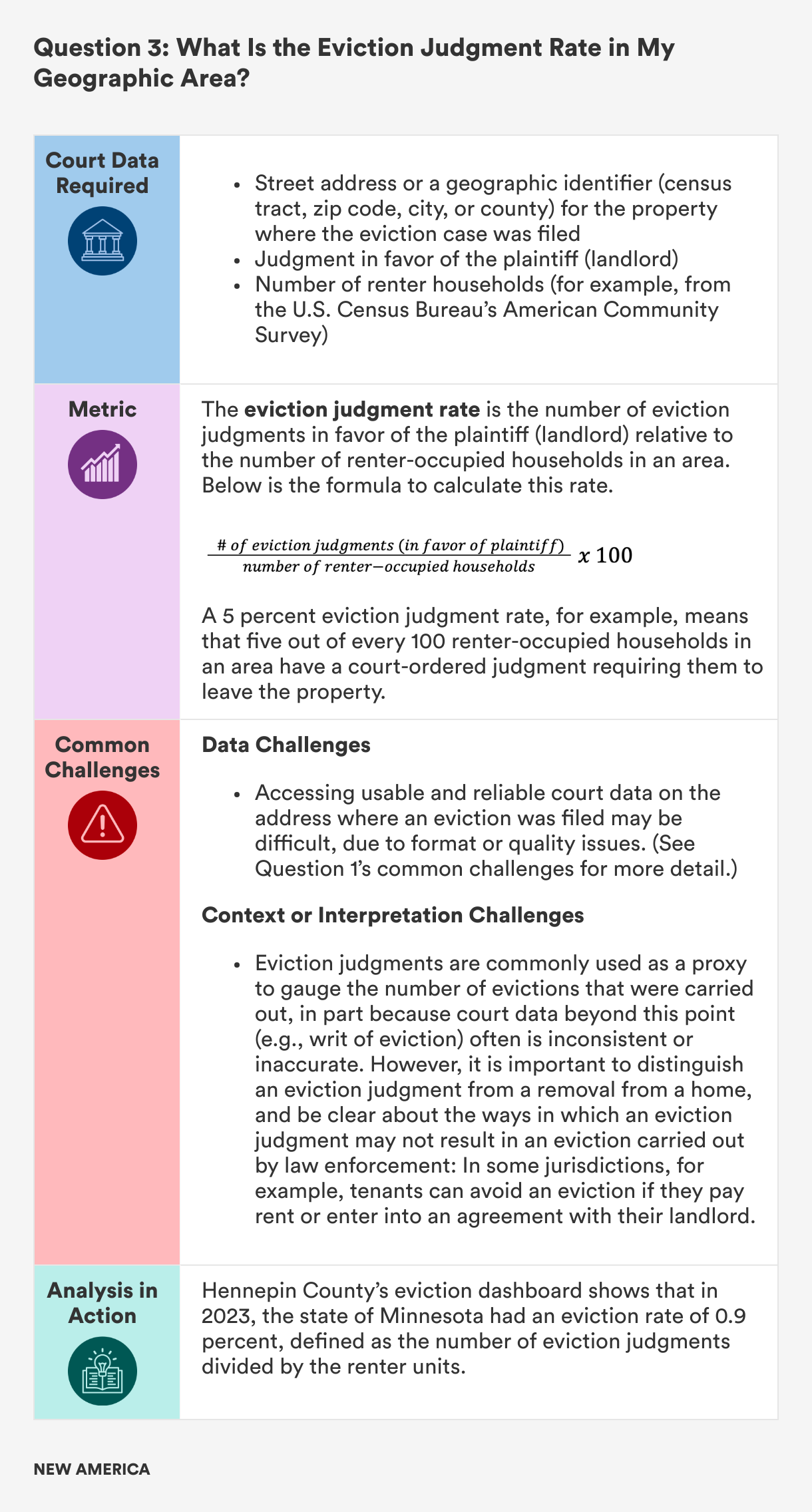
Court displacement rates are a powerful metric because they assess the role of the legal eviction system in determining eviction outcomes and provide an entry point for further inquiry. In Washington, DC, for example, only 5.5 percent of eviction filings result in displacement, while in Kansas City, three-quarters do.
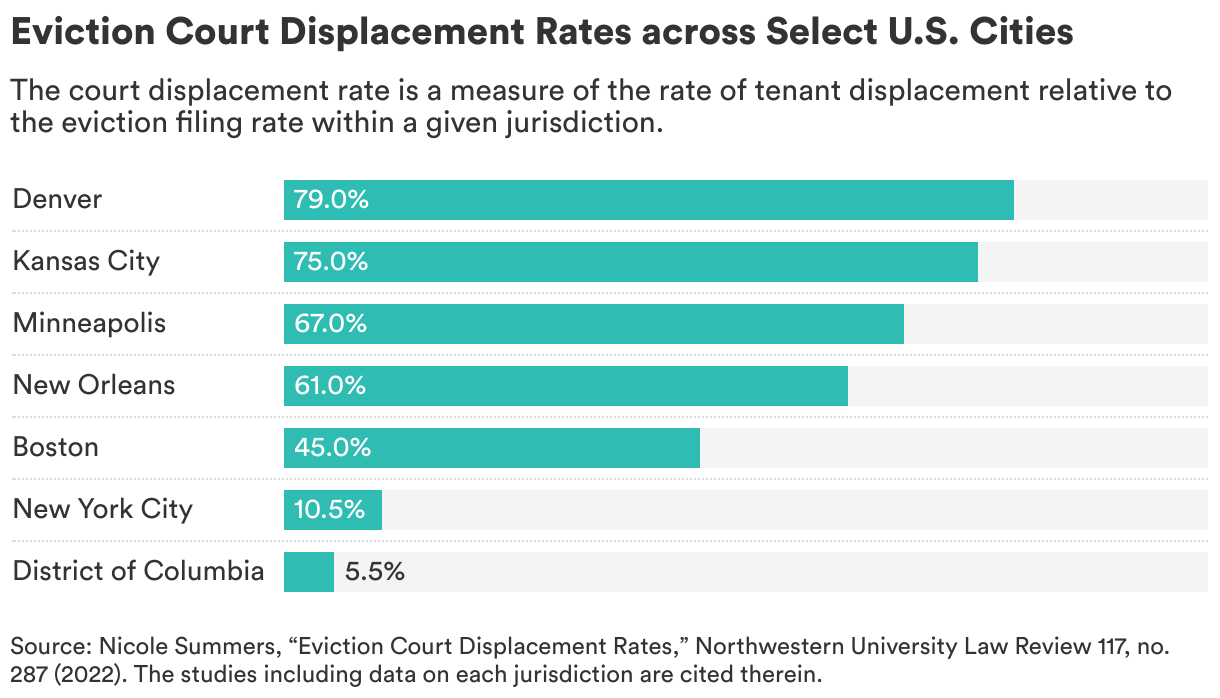
Does the high court displacement rate in Kansas City, for example, signal that eviction filings are more likely to be greenlit by the legal system, or perhaps that landlords are using eviction filings as a tool for rent collection? On the other hand, does DC’s relatively low displacement rate suggest that the court policies or procedures play a role in discouraging tenant displacement?
There is still so much that we do not understand about eviction in the United States, and court displacement rates on their own do not provide the answers. This metric highlights how widely court systems vary in facilitating eviction, and in exploring why that is, researchers can deploy it to investigate which laws, procedures, or access-to-justice factors are most effective in preventing court-ordered eviction.
Citations
- See Illinois General Assembly Statute 735 ILCS 5/9-109.6, 2018, https://www.ilga.gov/legislation/ilcs/fulltext.asp.
- Nick Graetz, Carl Gershenson, Peter Hepburn, Sonya R. Porter, Danielle H. Sandlerand, and Matthew Desmond, “A Comprehensive Demographic Profile of the U.S. Evicted Population,” Proceedings of the National Academy of Sciences 120, no. 41 (2023), https://www.pnas.org/doi/10.1073/pnas.2305860120.
- Nicole Summers, “Eviction Court Displacement Rates,” Northwestern University Law Review 117, no. 287 (2022), https://scholarlycommons.law.northwestern.edu/nulr/vol117/iss1/10/.