A Chapter of: Varying Degrees 2024
Affordability
The latest analysis of the cost of college conducted by College Board shows that when adjusted for inflation, tuition and fees have actually gone down in recent years. However, costs are still considered at an all-time high across all sectors.7 Americans have been concerned about college costs for decades: a Pew survey in 2011 shows that three in four Americans did not think higher education was affordable.8 The decline in public confidence for higher education is reflected in this frustration with the rising cost. This year, we dug deeper to better understand how Americans perceive college affordability.
Nine in ten Americans believe that people are choosing not to enroll in higher education because they cannot afford the price of college. Eight in ten Americans think that this lack of affordability is the biggest barrier to enrollment for low-income students and those who are the first in their families to attend college. Seven in ten believe cost presents the biggest barrier for students of color (see Figure 13).
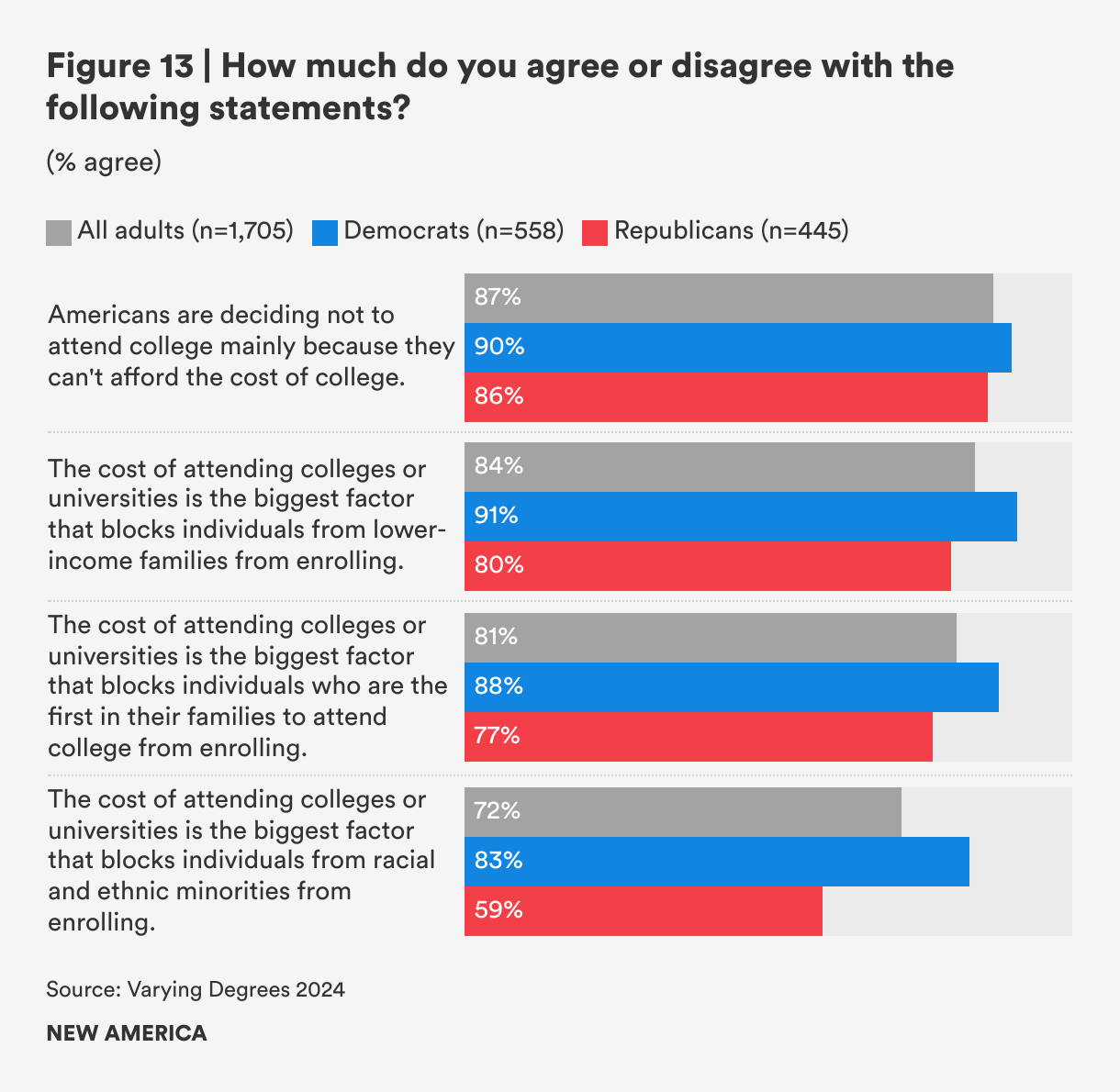
A majority of Democrats and Republicans agree that cost is the biggest barrier to enrollment for both low-income (91 percent of Democrats and 80 percent of Republicans) and first-generation students (88 percent of Democrats and 77 percent of Republicans). But when it comes to students of color, the split grows larger between the two parties: 83 percent of Democrats agree, compared to only 59 percent of Republicans.
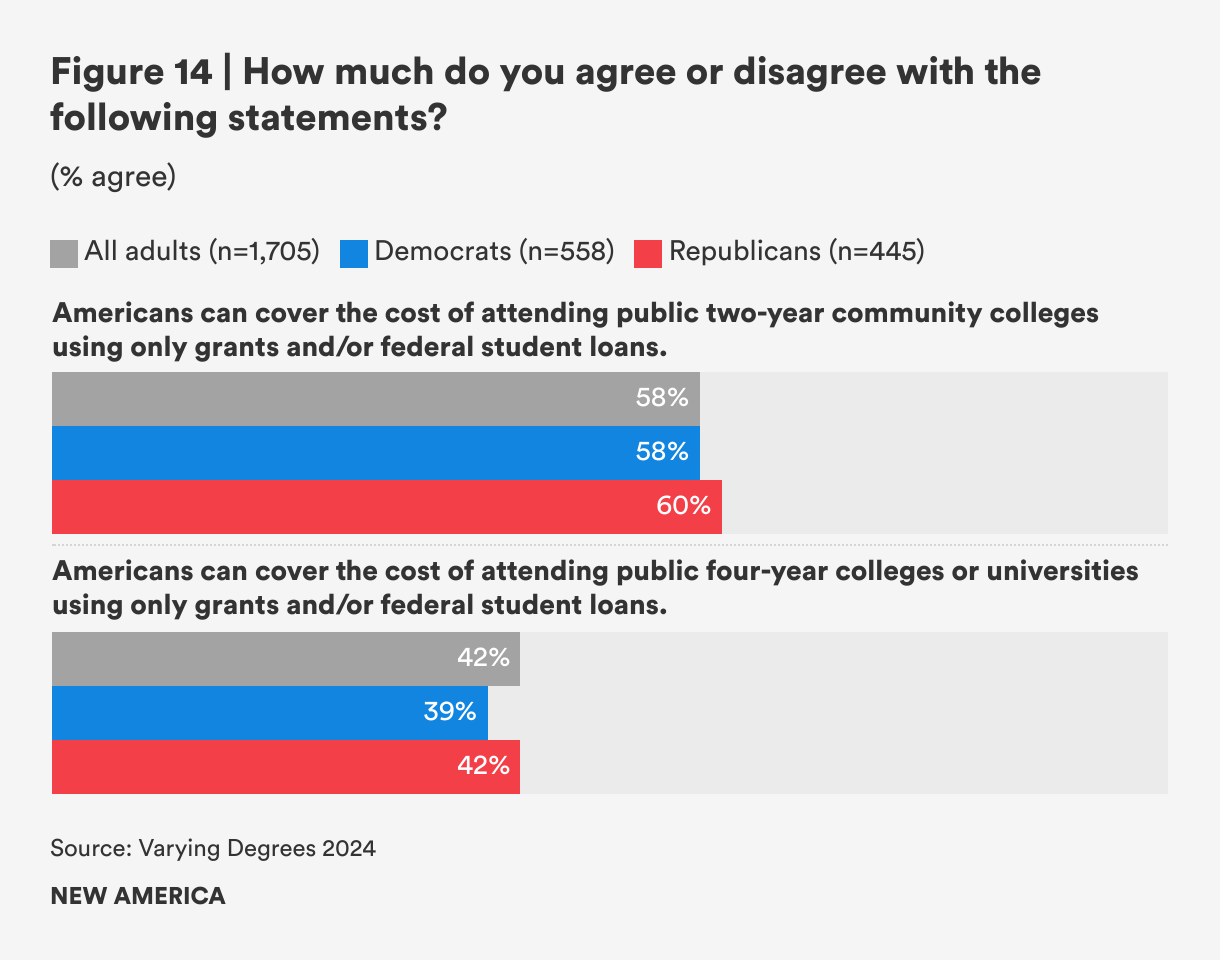
Nearly 60 percent of Americans believe that students can cover the cost of attending a two-year community college using only grants and federal student loans, but just 42 percent think students can do so at a four-year college (see Figure 14). Democrats and Republicans are similarly aligned on these questions.
Americans Believe Access to High-Quality and Affordable Higher Education is Unequal
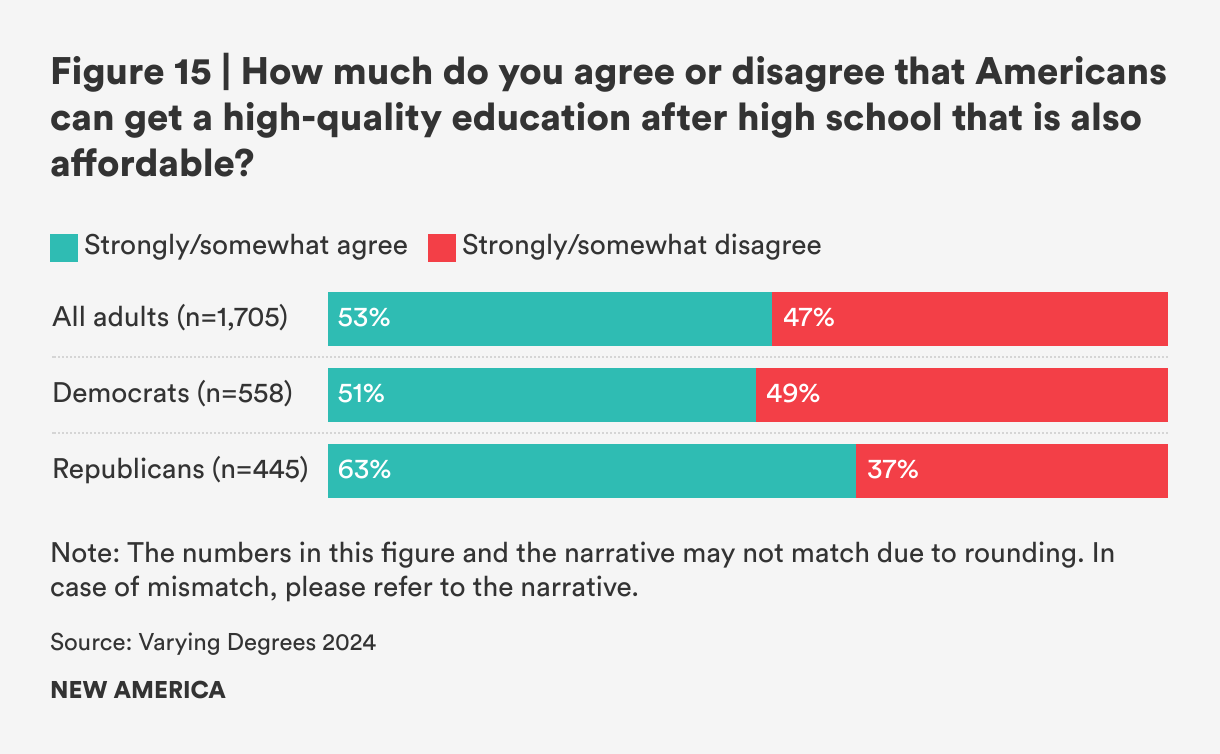
As in previous years, Americans are split on whether someone can get a high-quality education after high school that is also affordable. About half (53 percent) agree that it is possible. Here, Republicans (63 percent) are more likely than Democrats (51 percent) to agree (see Figure 15). This partisan gap has remained consistent since 2019.
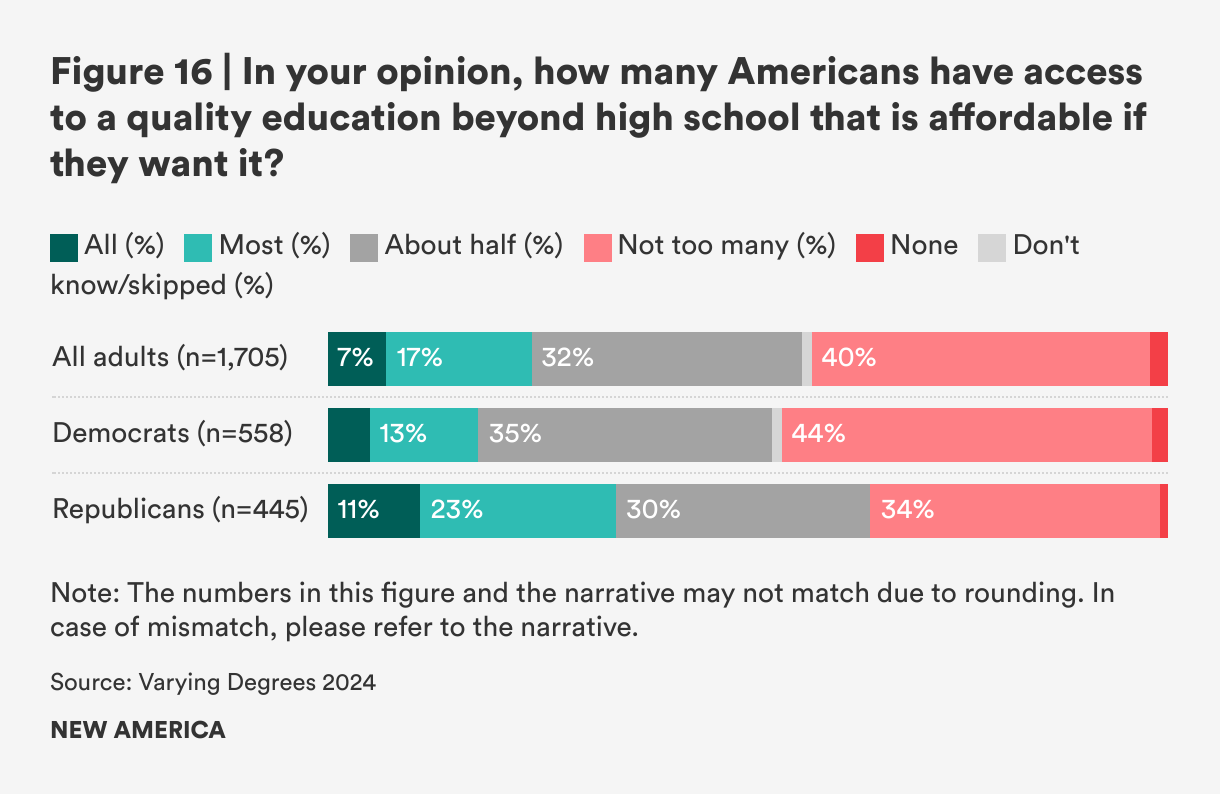
This year, the survey asked Americans to gauge how many people can access quality and affordable higher education if they want it: 25 percent said all or most people, 32 percent said half, and 42 percent said not too many, or none can (see Figure 16). Twice as many Republicans (34 percent) as Democrats (18 percent) believe that most people can access high-quality and affordable higher education if they want to enroll. Having said that, a third of Republicans still think that affordable higher education is inaccessible for most people.
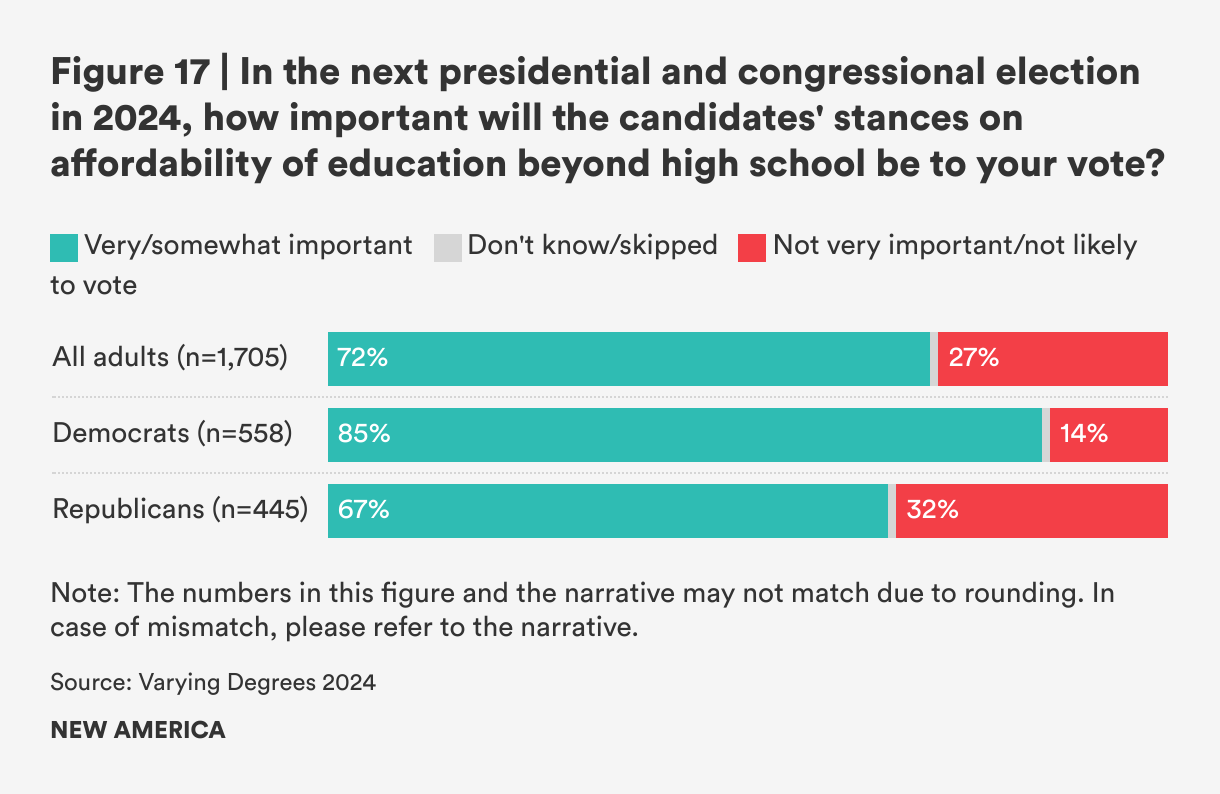
As the 2024 presidential election nears, 71 percent of Americans indicate that candidates’ stances on higher education affordability will be important in determining which candidate they support. Democrats (85 percent) feel the strongest about this, but a majority of Republicans (66 percent), Independents (66 percent), and those who do not affiliate with any of these political descriptors (60 percent) also see the candidates’ positions on college affordability as important (see Figure 17).
Americans’ Perceptions Versus Reality on How Students Can Afford Higher Education
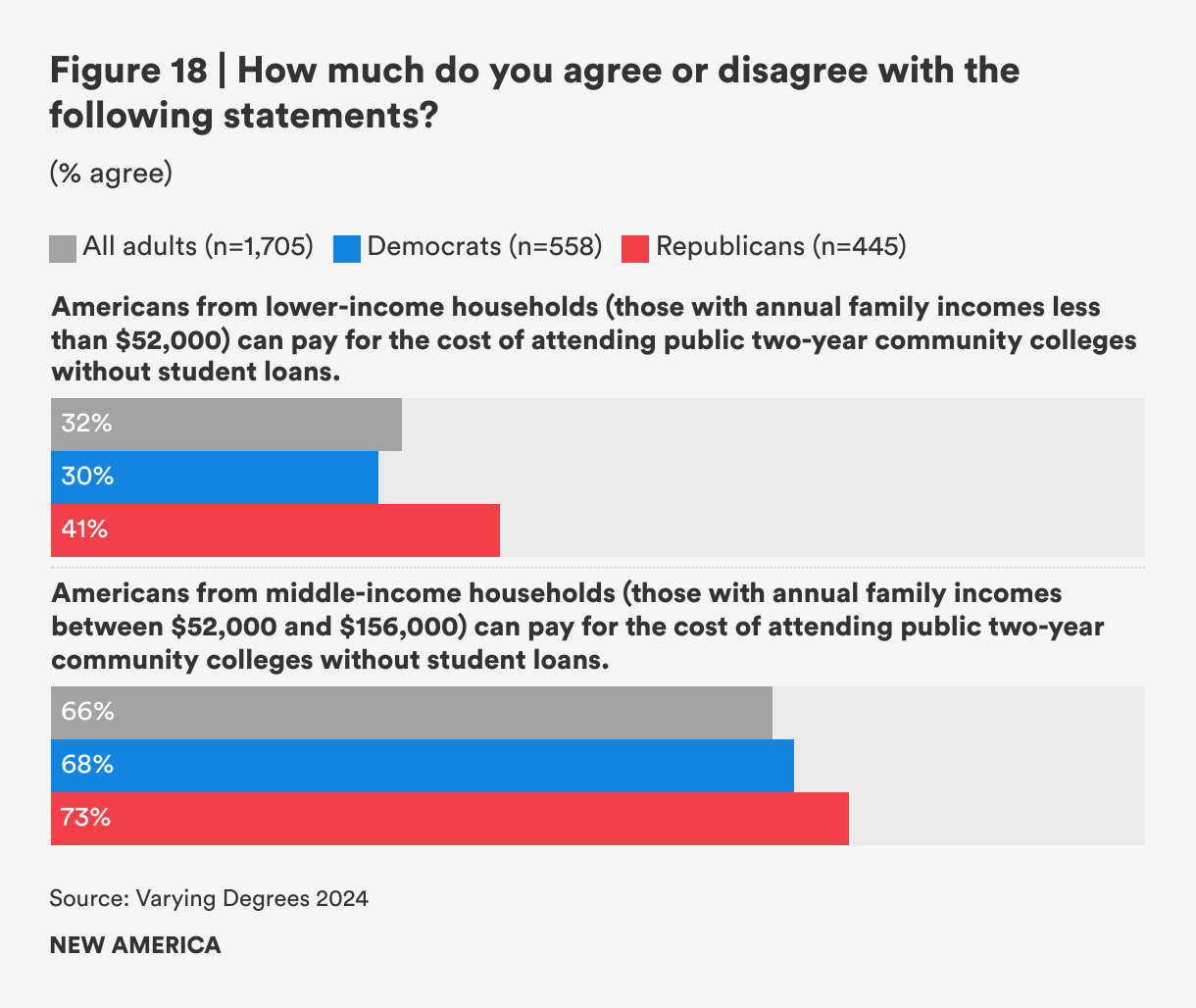
We added questions this year that measure the perceived affordability of two-year and four-year colleges for lower- and middle-income families. One in three Americans believe that those from lower-income households can afford the cost of enrolling in a community college without taking out student loans, compared to two-thirds who believe the same for those from middle-income households (see Figure 18).
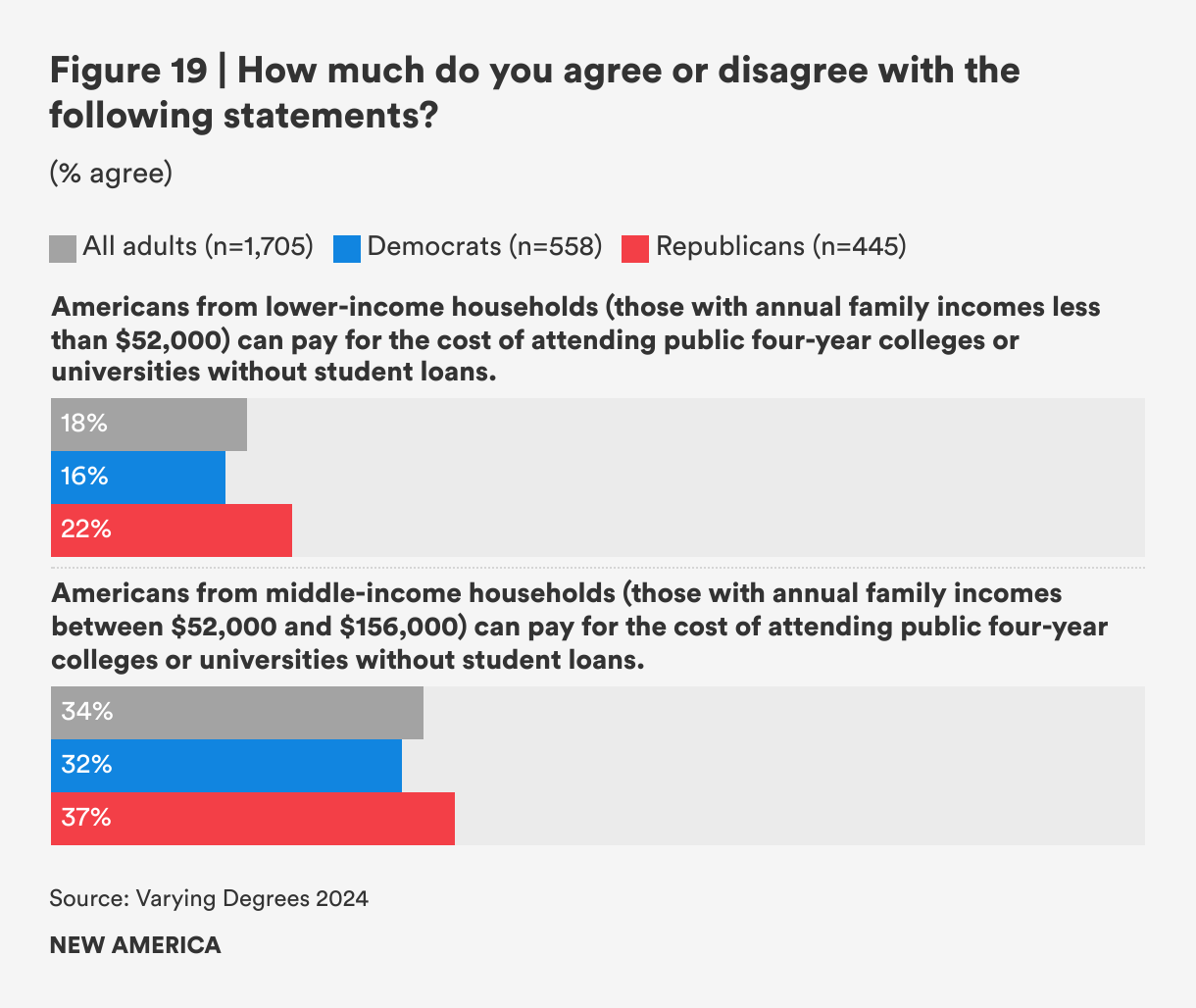
Americans are less confident about students’ ability to afford the cost of attending public four-year colleges without using student loans. Just 18 percent believe that students from lower-income households can afford to attend without loans, compared to 34 percent for those from middle-income households (see Figure 19).
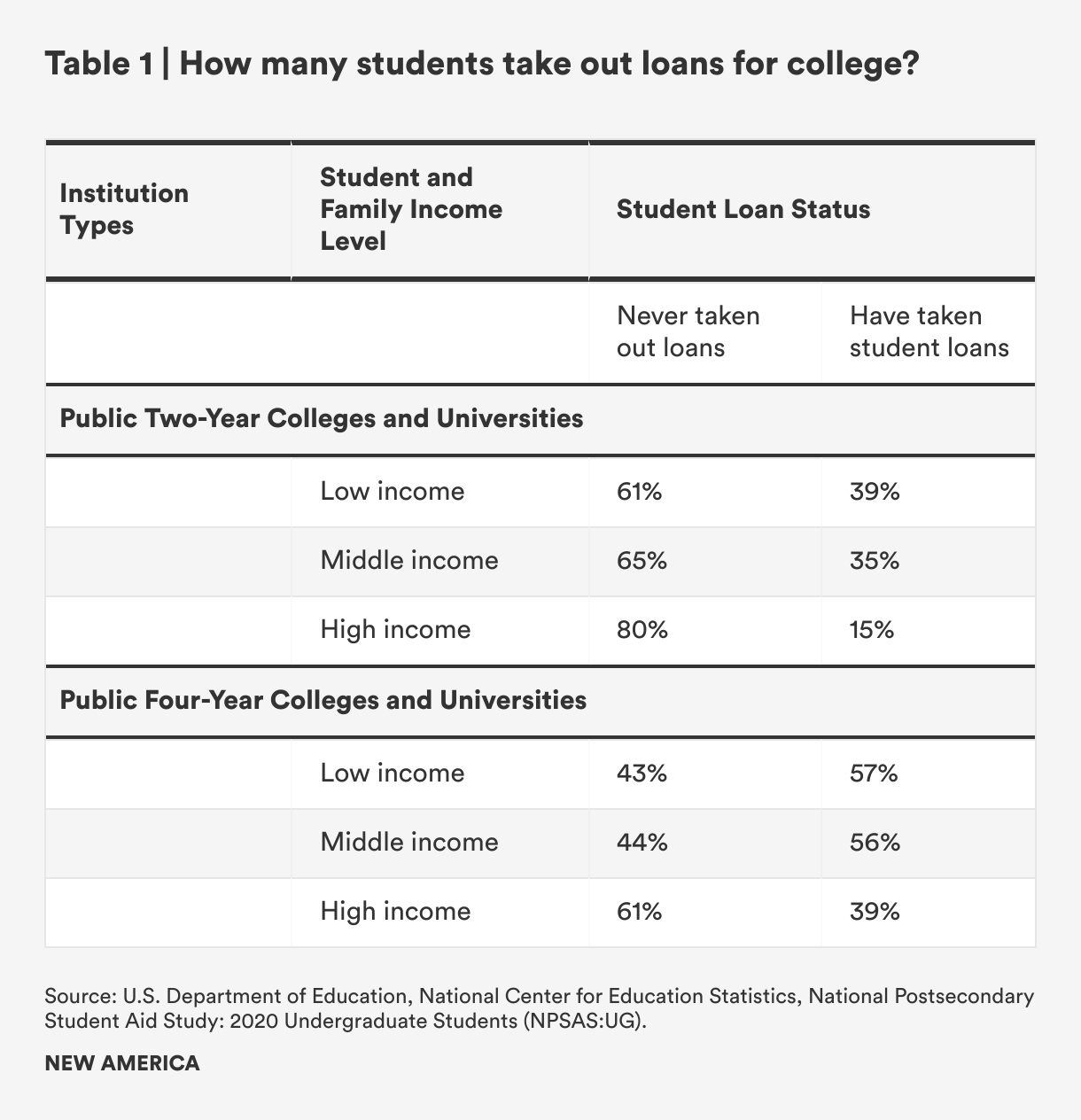
In reality, the latest data from the National Postsecondary Student Aid Survey show that students from lower- and middle-income families rely on loans to cover the cost of public colleges at similar rates to each other.9 In 2020, 39 percent of low-income students and 35 percent of middle-income families at community colleges had taken out student loans, compared to 57 percent of low-income students and 56 percent of middle-income students at public four-year colleges (see Table 1). The data show that even with grants and scholarships, many low- and middle-income students still have to rely on student loans to enroll.
Citations
- Jennifer Ma and Matea Pender, Trends in College Pricing and Student Aid 2023 (New York: College Board, 2023), https://research.collegeboard.org/media/pdf/Trends%20Report%202023%20Updated.pdf.
- Paul Taylor, Kim Parker, Richard Fry, D’Vera Cohn, Wendy Wang, Gavriel Velasco, and Daniel Dockterman, Is College Worth It? College Presidents, Public Assess Value, Quality and Mission of Higher Education (Washington, DC: Pew Research Center, May 2011), https://www.pewresearch.org/wp-content/uploads/sites/3/2011/05/higher-ed-report.pdf.
- U.S. Department of Education, National Center for Education Statistics, National Postsecondary Student Aid Study: 2020 Undergraduate Students (NPSAS:UG), https://nces.ed.gov/datalab/powerstats/table/jaqjfo.