Conclusion and Recommendations
Based on our conversations and learnings, below are the key recommendations and action items needed to build a grassroots movement to advance a multiparty democracy in the United States.
Invest in Civic Discourse
The vast majority of grassroots investment in this country is in “Get Out The Vote” efforts, which come with great urgency during election cycles but don’t often extend beyond Election Day. People are bombarded with commercials, door knocks, texts, and mailers telling them of all the horrible things that will happen if they don’t vote a certain way, followed by two or four years of radio silence. Voting is incredibly important, and we must do all we can to ensure all eligible voters vote in every election, but voting alone does not sustain a democracy. Minority communities, and especially communities with low numbers of eligible voters, are rarely engaged in political discourse. They are never asked what they think about different issues or what issues are important to them, and they certainly are never given an opportunity to learn together and come up with collective thoughts and solutions to some of the problems they face.
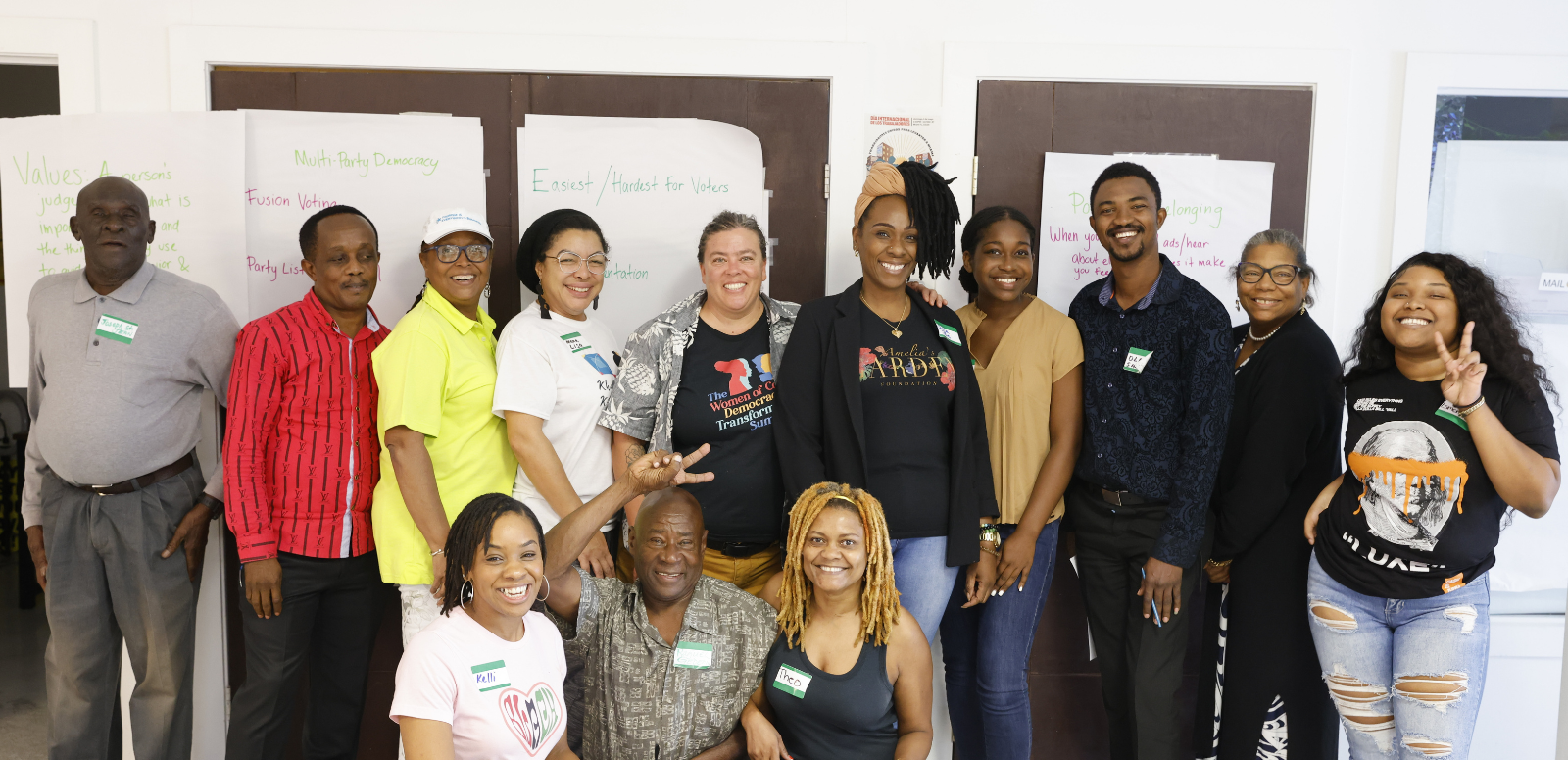
This project reinforced our belief that communities are thirsty for productive civic discourse and given the opportunity, regardless of whether they can vote or not. These conversations provided a space to think together and feel less isolated. Many of our participants asked if we could hold conversations like these with other groups they belong to. Members of our working group expressed an interest in replicating and scaling this kind of work with different communities across the country. Holding space for civic discourse builds the civic muscle in our communities, which inevitably strengthens our capacity to build and sustain a functioning democracy. Practitioners should seek opportunities to engage and enact local change through the implementation of democratic practices and processes, such as participatory budgeting committees and citizen assemblies. It is important to build civic muscle, and this should start at the community level.
Shift Narratives around the Word “Party”
Participants were largely open to the idea of doing democracy differently, including the idea of having a multiparty system. However, the concept of a party itself was met with a great deal of distrust and disillusionment. For reformers to explore policies that have the expressed intention of increasing the number of viable parties in the United States, there needs to be a dedicated effort to rehabilitate the word “party.” However it’s done, there needs to be a distinction between how parties would operate under the proposed system and how that differs from the current situation in the United States. When it came to alternative systems, the theory was understood and appreciated, but placed in the U.S. context, the viability was justifiably questioned. When speaking directly to voters, messaging should center around fairness and incentives for parties rather than parties themselves. In candidate-centric situations, emphasis on more choice and more nuance is very effective, but extending that to parties themselves would require more study and message development.
Create and Disseminate Accessible and Culturally Appropriate Resources
Our approach to this project allowed participants to sit and grapple with concepts rarely presented to this audience. There was interest and excitement around potential alternatives, but the existing information on these topics is geared towards those already deeply engaged in politics. All materials used had some positive bias because they were made by advocates of these reforms. However, they were vetted to ensure that they were educational rather than persuasive. We found that materials that used simple and accessible language had a larger impact on the attitudes of participants towards the reform itself than those that were more technical.
Leverage Existing Democratic Culture and Infrastructure in Communities
Communities are doing democracy internally—and doing it well—but these practices do not translate into formal structures and systems. People are making collective decisions, compromising, collaborating, and looking out for each other’s best interests. In addition to thinking of state and federal-level democracy-building legislation, we need to assess how democracy is already being practiced formally and informally in communities and learn from that. Many of these systems and structures include informal mutual aid operations, systems of mentorship and sponsorship when it comes to adapting to American life and culture, promoting and assisting with education, employment, and more. These informal systems are often incredibly effective and build democratic practice, trust, and cohesion in the community. These structures offer a model that could be adopted and supported across the country.