Democracy and Belonging: Learning from Immigrant Communities
Abstract
As disillusionment with the American political system grows, New America is developing new strategies to promote a multiparty democracy in the United States. As part of this effort, Democracy Rising conducted research highlighting the voices of immigrant communities across the United States—engaging with groups that are often left out of conversations about politics and governance.
Through a series of five focus groups, Democracy Rising sought to understand the groups that participants consider themselves a part of, how those groups and communities engage with the existing political structure, and their level of interest and openness to alternative systems. The findings reveal a strong sense of collectivism, a desire for civic discourse, and a need for a political system that offers better representation. However, there is also a prevalent cynicism about politics and mistrust of existing institutions. Recommendations to promote multiparty democracy and enhance civic engagement within these communities include investing in civic discourse, reframing the concept of political parties, creating accessible educational resources, and leveraging existing democratic practices.
Acknowledgments
Democracy Rising would like to thank all the facilitators for the community conversations that informed this project: Kelli, Rosa, Betel, Pakou, and Peju. Transformative qualitative research is only made possible by community members who are willing to deeply engage. Thank you to all in Miami, Rock Springs, Arlington, St. Paul, and Atlanta who so generously shared their time with us and each other. Thank you Mila, Sarah, Deeqa, and Brittany for your added contributions to our qualitative analysis. And finally, thank you to New America for believing in the value of this project.
Editorial disclosure: The views expressed in this report are solely those of the author(s) and do not reflect the views of New America, its staff, fellows, funders, or board of directors.
Downloads
Executive Summary
In a Pew report released in September of 2023 only 4 percent of those surveyed responded that our political system is working well.1 A growing share of Americans have an unfavorable view of both political parties, and more than 60 percent reported feeling exhausted when discussing politics.2 This data reflects the growing body of research and analysis that demonstrates how the current ways of American democracy—and particularly our two-party system—fail voters.
Many proposals are being presented as a solution to the “doom loop” of the two-party system.3 New America and several other pro-democracy nonprofits are building grassroots and grasstops strategies to build support for reforms that will pave the way for the United States to have a thriving multiparty democracy. In laying the foundation for this effort, New America partnered with Democracy Rising to conduct qualitative research about how the American public feels about our democracy, existing political structures, opportunities for change, and potential alternatives. In approaching this project, Democracy Rising determined that the most primed constituency for these conversations is immigrants and first-generation Americans. Forty million people living in the United States are either foreign-born or born here to parents born elsewhere.4 That is about one in four people; it is important to include their voices in conversations about politics and governance.
Methodology
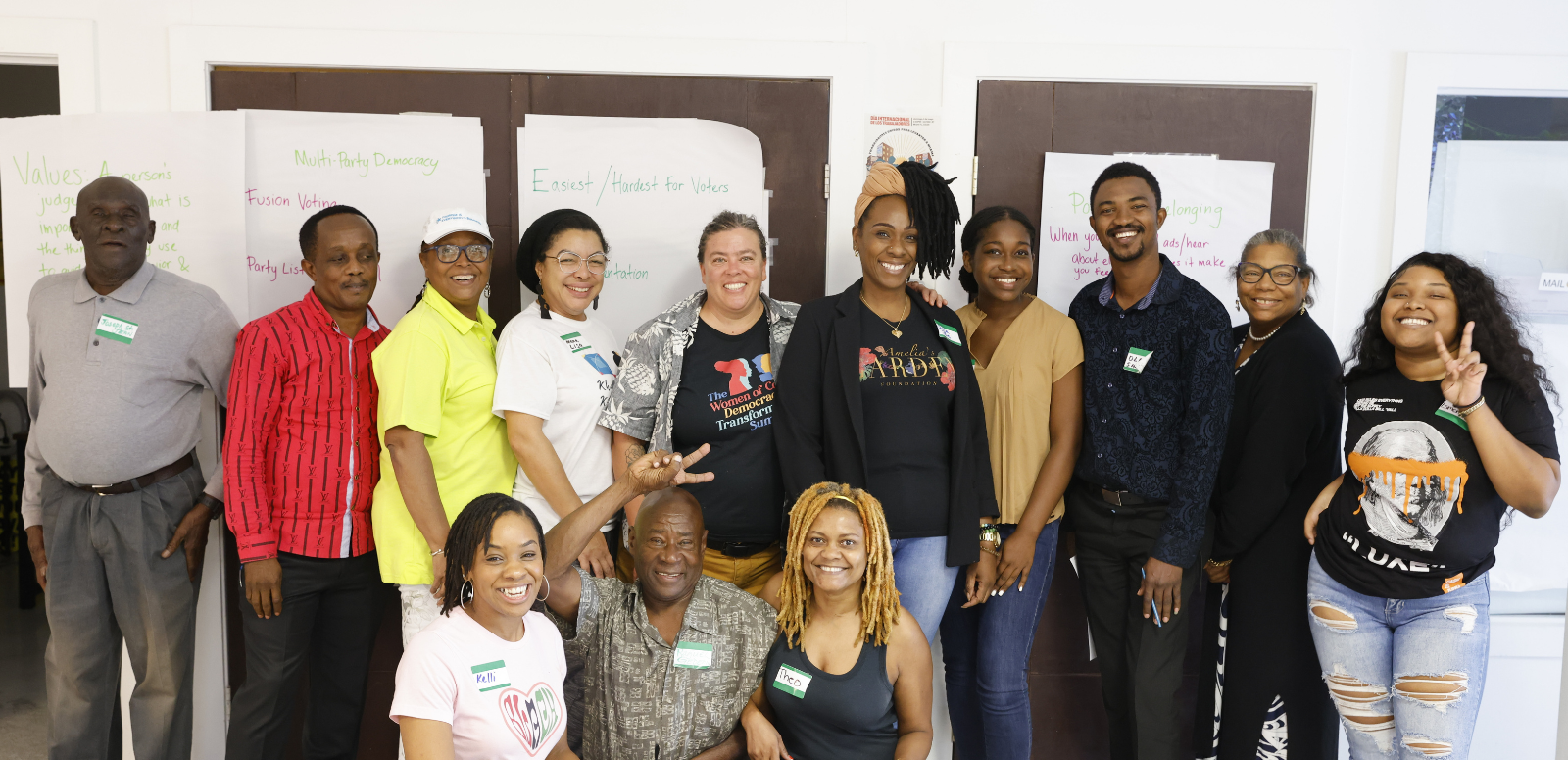
Between October 2023 and January 2024, Democracy Rising conducted five in-person focus groups with immigrant communities around the country: a Mexican community in Rock Springs, Wyoming; a Haitian community in Miami, Florida; an Eritrean community in Arlington, Virginia; a Hmong community in St. Paul, Minnesota; and a Nigerian community in Atlanta, Georgia. Rather than a standard one- or two-hour focus group, sessions for this project lasted five hours, because they were conducted using pedagogical principles of popular education.5 Additionally, the sessions provided the participants a primer on the systems and structures within American democracy that have resulted in our two-party system and proposals for alternative systems. Initial analysis was conducted by a working group. When the working group’s analysis concluded, the notes and data were then uploaded to the online platform Dedoose and reviewed by an independent researcher to determine which themes were most salient to report.
Findings
- Collectivism rooted in the immigrant experience: Participants spoke at length about the deep sense of belonging and interconnectedness they found in spending time with their neighbors and community members of the same culture. Many participants talked about being insular but having to interact with other groups to find common ground, form alliances, and build coalitions to foster belonging and safety. In this sense, participants are building micro-party-like structures within their communities.
- Thirst for civic discourse: Participants in all five locations expressed gratitude to be able to participate in a long-format, candid conversation in a small, safe setting where they could discuss typically unsafe topics like politics and the immigrant experience. Many expressed a hope that their kids and loved ones could engage in such conversations. This is a testament to the powerful shift that is possible when we open doors for civic education, engagement, and relationship-building.
- Desire for a political home: When participants were asked if they identify with any current political party, they overwhelmingly conveyed that they do not. When asked about their openness to a political system that would allow more viewpoints, participants showed great interest in finding ways to have better representation, values alignment and, creating space for more parties.
- Cynicism is the barrier: There was a theme of cynicism in all sections of the conversation in all locations—almost always about our current state of politics. People have hope for the future, but very little trust in our institutions, our politicians, and importantly, our political parties. Across the board, participants were clear that representation is important, but only if it is aligned with values.
Recommendations
- Invest in civic discourse: Voting is important, and we must make sure all eligible voters can vote in every election, but voting alone does not create a democracy. Minority communities, and especially communities with low numbers of eligible voters, are rarely engaged in political discourse. This project reinforced our belief that communities are thirsty for civic discourse and are able to do so productively given the opportunity, regardless of whether they are eligible to vote or not.
- Shift narratives around the word “party”: Participants were largely open to the idea of doing democracy differently, including the idea of having a multiparty system, however, the concept of a party itself was met with a great deal of distrust and disillusionment. For reformers to explore policies that have the intention of increasing the number of viable parties in the U.S. system, there needs to be a dedicated effort to rehabilitate the word “party.”
- Create and disseminate accessible and culturally appropriate resources: Our approach to this project allowed participants to sit and grapple with concepts that are rarely presented to a broader audience. There was interest and excitement around potential alternatives, but the existing information on these topics is geared towards an audience that is already deeply engaged in U.S. politics. We found that resources with simple and accessible language had a larger impact on the attitudes of participants towards the reform itself than those that were more technical.
- Leverage existing democratic culture and infrastructure in communities: Communities are undertaking effective democratic practices, but they often do not translate into formal structures and systems. In addition to thinking of state- and federal-level democracy building legislation, we need to assess and learn from how democracy is already being practiced formally and informally in communities.
Citations
- Americans’ Dismal Views of the Nation’s Politics (Washington, DC: Pew Research Center, 2023), https://www.pewresearch.org/politics/2023/09/19/americans-dismal-views-of-the-nations-politics/.
- Americans’ Dismal Views of the Nation’s Politics (Washington, DC: Pew Research Center, 2023), https://www.pewresearch.org/politics/2023/09/19/americans-dismal-views-of-the-nations-politics/.
- Lee Drutman, Breaking the Two-Party Doom Loop: The Case for Multiparty Democracy in America (New York: Oxford University Press, 2019).
- Mohamad Moslimani and Jeffrey S. Passel, “What the data says about immigrants in the U.S.,” Pew Research Center, July 22, 2024, https://www.pewresearch.org/short-reads/2020/08/20/key-findings-about-u-s-immigrants/.
- Popular education is a teaching methodology that centers around lived experience and through the learning process connects that lived experience with larger context. See Paolo Freire, Pedagogy of the Oppressed (London, England: Penguin Classics, 2017).
Introduction
In a Pew report released in September of 2023 only 4 percent of those surveyed responded that our political system is working well.6 Additionally, a growing share of Americans have an unfavorable view of not one, but both, political parties. More than 60 percent reported feeling exhausted when discussing politics. This data reflects the growing body of research and analysis that demonstrates how the current ways of American democracy—and particularly our two-party system—fail voters.
There are many proposals being presented as a solution to the “doom loop” of the two-party system.7 For many experts and activists, the solution seems simple: Adopt electoral reforms that create a path for additional parties to have a strong political voice, which would eventually lead to more viable candidacies. To the average voter these words, while impressive, mean almost nothing. With most electoral reform proposals, there is a chasm between the theory and the public sense of urgency to adopt and implement these changes. Of the many roadblocks to reform resulting in a multiparty American democracy, one of the most prominent is a general lack of understanding of our current system and how it leads to gridlock and polarization. Additionally, this lack of understanding means many voters aren’t aware or don’t believe that these systems can be changed.
New America, through support from the Stronger Democracy Award, is building grassroots and grasstops strategies to pave the way for a thriving multiparty democracy in the United States. In laying the foundation for this effort, New America partnered with Democracy Rising to conduct qualitative research about how the American public feels about our democracy, existing political structures, opportunities for change, and potential alternatives. Democracy Rising determined that the most primed constituency for these conversations is immigrants and first-generation Americans, who possess an inherently adaptive and comparative lens. Coming from another country or cultural background provides keen insight into how these systems work outside of the U.S. and an understanding that there are different ways of doing democracy—both in the official sense of parties, voting, and elections, but also within communities. Immigrants and first-generation Americans are often overlooked in voter engagement work, movement building, and research but 40 million people living in the U.S. are either foreign-born or born here to parents born elsewhere.8 That is about one in four people; it is important to include their voices in conversations about politics and governance.
Citations
- Americans’ Dismal Views of the Nation’s Politics (Washington, DC: Pew Research Center, 2023), https://www.pewresearch.org/politics/2023/09/19/americans-dismal-views-of-the-nations-politics/.
- Lee Drutman, Breaking the Two-Party Doom Loop: The Case for Multiparty Democracy in America (New York: Oxford University Press, 2019).
- Mohamad Moslimani and Jeffrey S. Passel, “What the data says about immigrants in the U.S.,” Pew Research Center, July 22, 2024, https://www.pewresearch.org/short-reads/2020/08/20/key-findings-about-u-s-immigrants/.
Methodology
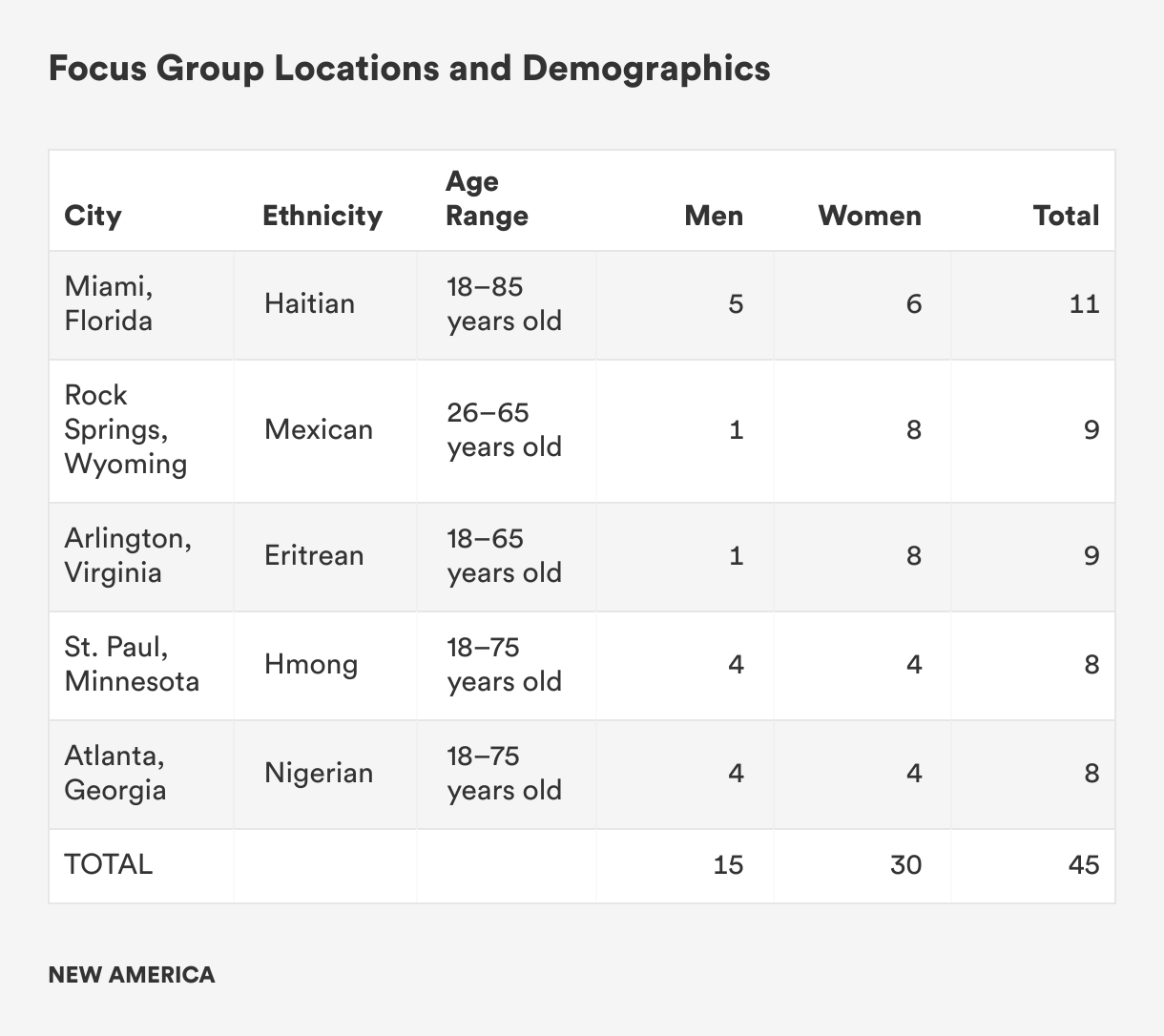
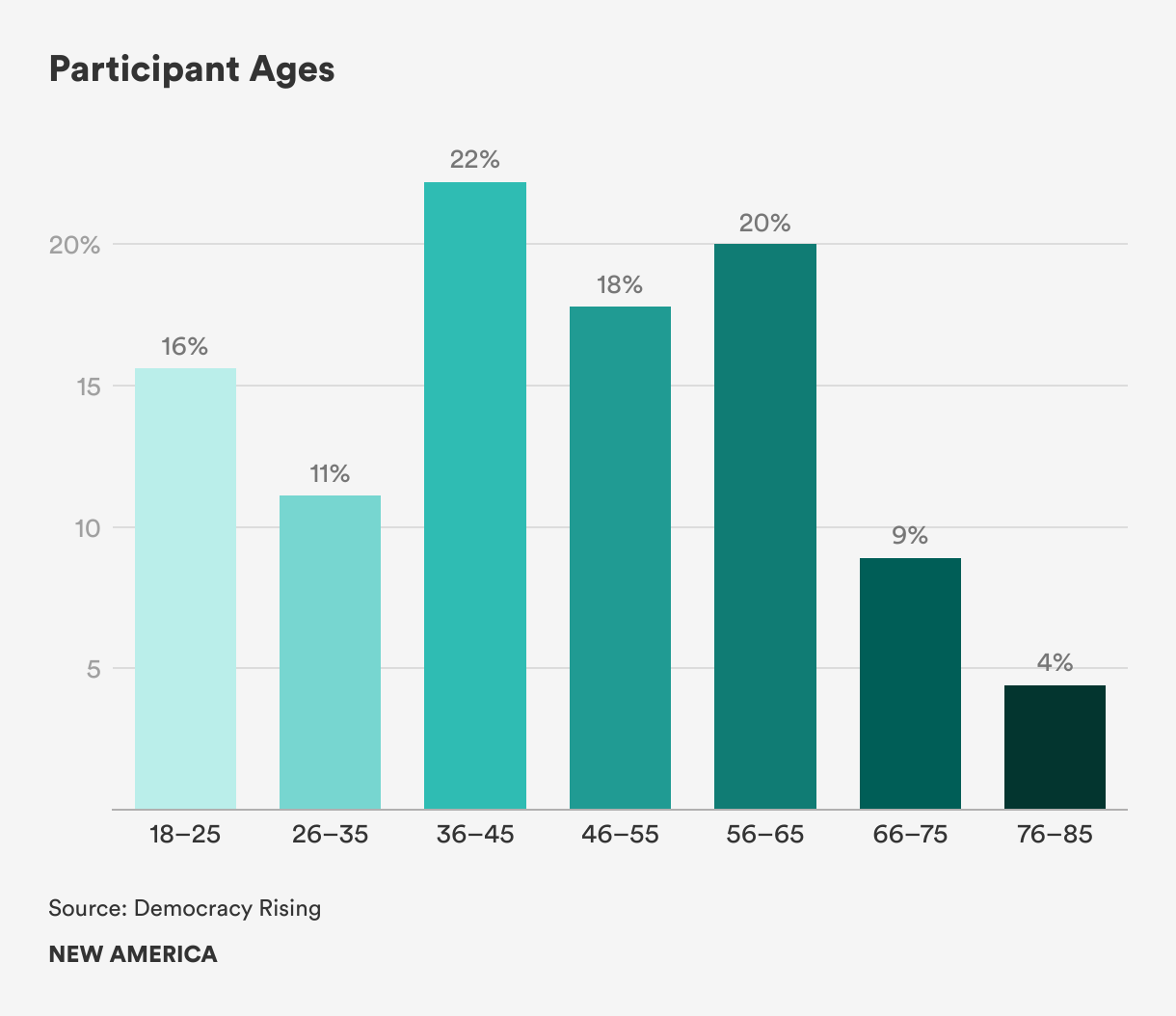
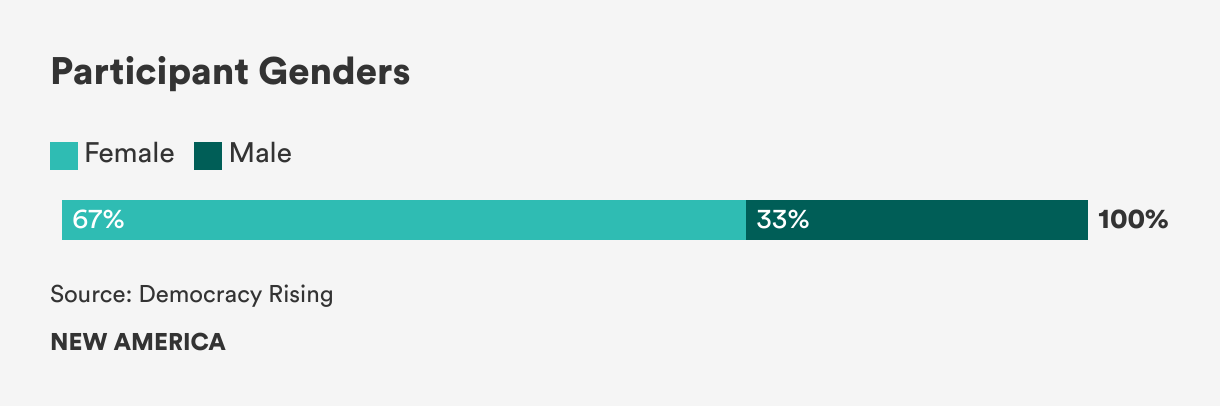
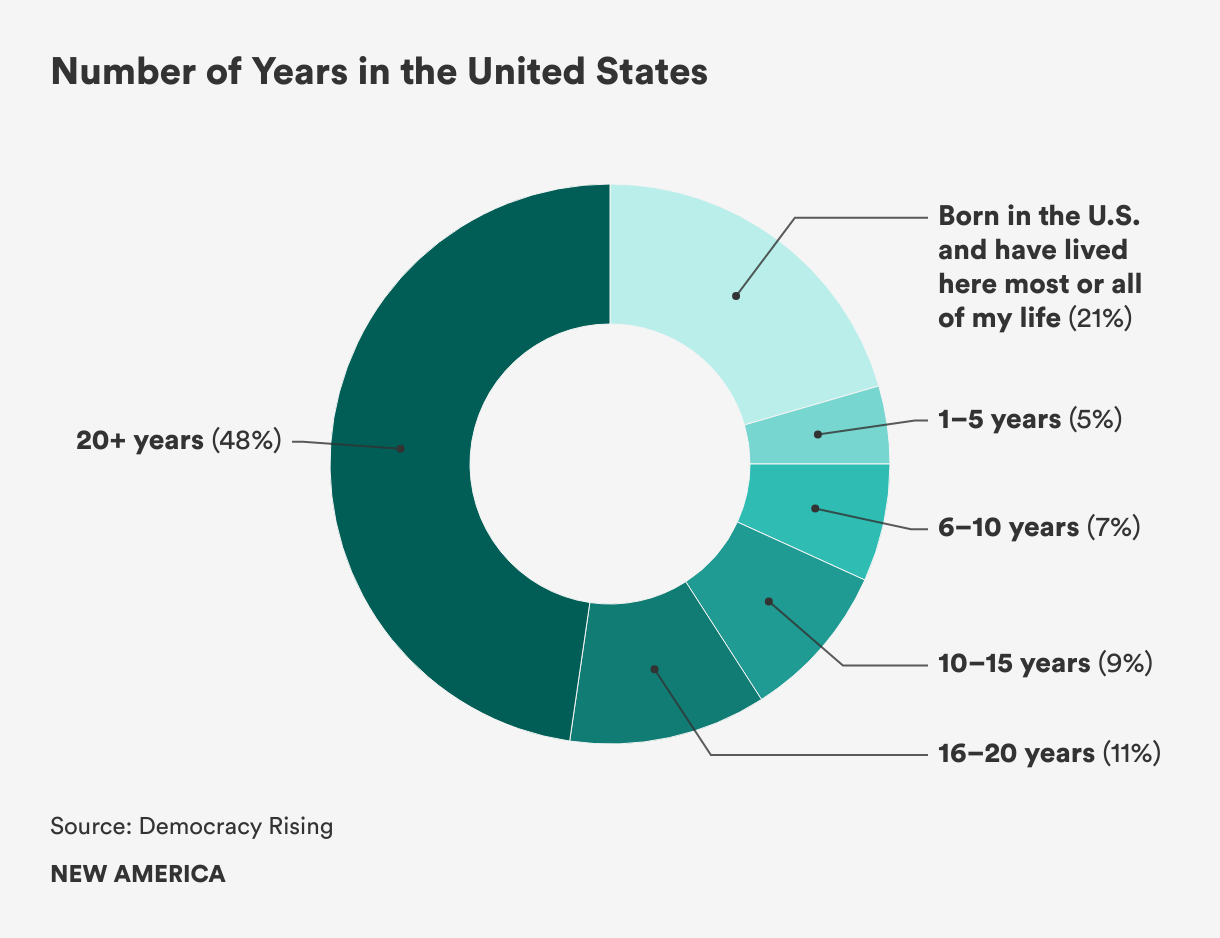
Between October 2023 and February 2024, Democracy Rising conducted five in-person focus groups with immigrant communities around the country: a Mexican community in Rock Springs, Wyoming; a Haitian community in Miami, Florida; an Eritrean community in Arlington, Virginia; a Hmong community in St. Paul, Minnesota; and a Nigerian community in Atlanta, Georgia. Locations were selected in purple to red-leaning states and in localities where Democracy Rising had existing relationships with trusted local leaders. These leaders were engaged as consultants to recruit focus group participants, coordinate logistics, and facilitate the discussion. In total, there were 45 focus group participants across the five locations. (See the appendix for a more detailed breakdown of participant demographics.)
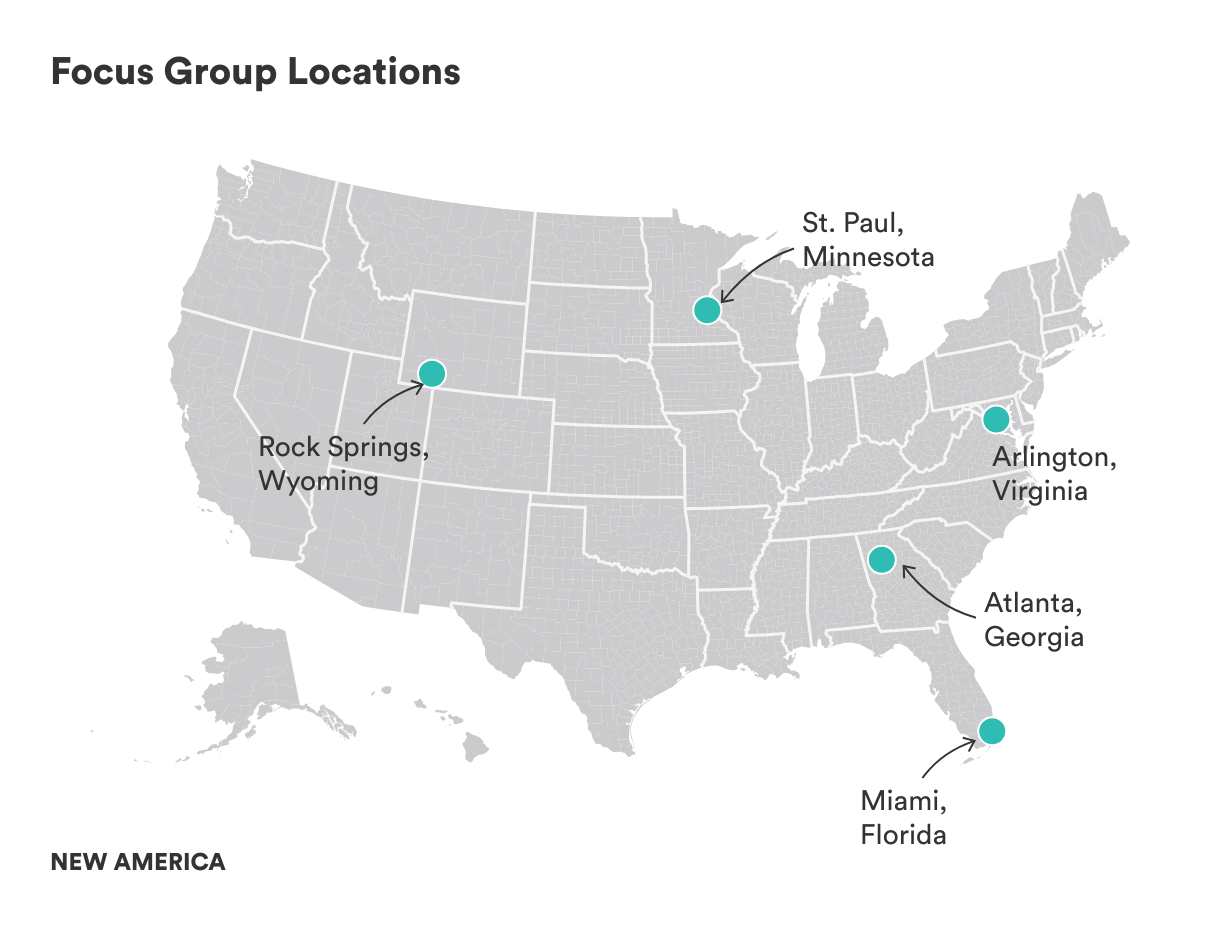
In advance of these conversations, Democracy Rising convened a working group of partners—the vast majority of whom are immigrants or first-generation Americans themselves—to co-develop the program and facilitation guide. Once completed, each facilitator went through a two-hour training to prepare for the sessions and to ensure that facilitation would be as consistent as possible across locations. A member of the Democracy Rising team attended each of the five sessions and served as a note-taker. Participants were paid a minimum of $30 an hour for their time, and each session was served a meal. Sessions were conducted in English, and interpretation was not provided. However, facilitators and participants frequently gave comments or context in their first language to ensure understanding.
Rather than a standard one- or two-hour focus group, sessions for this project lasted five hours because they were conducted using pedagogical principles of popular education. Popular education (often described as “education for critical consciousness”) is a teaching methodology developed by the Brazilian educator and writer Paulo Freire.9 Popular education is a process that aims to empower people who feel marginalized socially and politically to take control of their learning and effect social change. In popular education, the learning process starts with identifying and describing one’s personal experience through various activities. After the activity, a debriefing process allows participants to analyze their situation together, linking their experiences and historical and global perspectives to see the “big picture.” Through the generation of this new knowledge, the group is able to reflect more profoundly about themselves and how they fit into the world. Essentially, all participants have something to teach and something to learn.
For the purposes of this project, it was important to understand the lived experience of participants and how that impacts the way they engage with American democracy—as it is now and how it could be in the future. Additionally, in contrast with traditional focus group methodology, the sessions provided the participants a primer on the systems and structures within American democracy that have resulted in our two-party system and some proposals for alternative systems. The facilitation guide was divided into three sections, detailed below. Participants received the following materials: a participant survey to gather demographic and basic beliefs and attitudes information, the New York Times multiparty democracy quiz designed by Lee Drutman,10 a brief presentation on American democracy and the two-party system, and a series of basic educational resources about alternative voting systems, including mixed-member proportional representation, ranked-choice voting, and fusion voting.
Facilitation Guide
Section 1: What Is Community?
This section was grounded entirely in the lived experience of participants. The discussion revolved around the groups that give people a sense of belonging—those we choose and those we do not—and how those groups engage with the larger community and politics. Additionally, this section contained an exercise where all participants defined core values for themselves and shared values for the group.
Section 2: Power and Belonging
This section gained an understanding of how participants grapple with the idea of a political home. How do they (or do not) engage with politics and parties in the present, and what would a political home look like to them if they could create it?
Section 3: Multiparty Democracy
This section provided participants with a primer on how U.S. democracy has led to a two-party system and several reform proposals. Participants gave their feedback on the theory of the systems, as well as their perceptions of how they would work in practice. The session concluded with participants’ reflections on the conversation as a whole.
After completing all five sessions, transcripts were created for each, and the analysis phase began. Analysis was conducted by a working group consisting of Democracy Rising’s two co-directors, the facilitators for all five sessions, and an additional two research partners who have previously worked on Democracy Rising projects. The transcripts from the sessions were divided into the facilitation guide’s three sections. The working group held meetings to review the process and assign each member their segments to analyze individually. Each working group member was assigned at least two sections of the facilitation guide for all five locations and two locations total to ensure that each section and location was analyzed by multiple people. Working group members conducted a qualitative analysis of their assigned sections and locations over the course of three weeks. When their analysis had been submitted, the group reconvened for another meeting to discuss the overall themes of the data. Following this discussion, the group met two additional times to collectively review each section’s themes and subthemes that emerged from the analysis. The final meeting of the working group addressed lingering questions that had been identified through the process and the additional research questions and needs that this project could grow towards.
When the working group’s analysis was concluded, the notes and data were uploaded to the online platform Dedoose using the coded themes and subthemes identified by the working group. The themes and subthemes were then reviewed by an independent researcher (external to the working group) to determine which themes were most salient to report. Each interview transcript was thoroughly examined to identify the codes and themes that appeared most frequently. The themes that were reported most frequently were determined to achieve the saturation point, at which no additional qualitative analysis was needed.11 The most frequently reported themes were then used to write the findings section below.
Citations
- Paolo Freire, Pedagogy of the Oppressed (London, England: Penguin Classics, 2017).
- Lee Drutman, “Quiz: If America Had Six Parties, Which Would You Belong To?,” New York Times, September 8, 2021, https://www.nytimes.com/interactive/2021/09/08/opinion/republicans-democrats-parties.html.
- Benjamin Saunders, Julius Sim, Tom Kingstone, Shula Baker, Jackie Waterfield, Bernadette Bartlam, Heather Burroughs, Clare Jinks, “Saturation in Qualitative Research: Exploring its Conceptualization and Operationalization,” Quality & Quantity 52, no. 4 (2018): 1893–1907, https://link.springer.com/article/10.1007/s11135-017-0574-8.
Findings
Collectivism Rooted in the Immigrant Experience
In the early part of the focus group, interviewees were asked about the ways they foster the community where they live and what they gain from routinely participating in groups and group activities in their communities. The participants identified the groups they belong to ranging from spiritual development, such as church, to social and recreational events and professional development networks. Participants spoke at length about the deep sense of belonging and interconnectedness they found in spending time with their neighbors and community members of the same culture. Participants reported that the groups they belong to help them identify and seek out essential resources and services, create new social support infrastructure, and promote civic and youth engagement.
Furthermore, participants shared that the groups provided them with an opportunity to share their unique skill sets and hone new talents alongside others with similar lived experiences, strengthening their sense of fulfillment and belonging. A theme that came up repeatedly was the need to adapt to a culture that was not designed for them and find a sense of belonging without losing a sense of pride in and connection to their culture of origin. Many participants talked about being insular but interacting with other groups to find common ground, form alliances, and build coalitions to build belonging and safety. In this sense, participants are building micro-party-like structures within their communities.
Across all five groups, participants were then asked to talk about the core values that most resonated with them and how their core values relate to their politics.12 The most common values that surfaced across the board were justice, fairness, honesty, authenticity, unity, education, and trust. Throughout the focus group conversations, all these values were encompassed by an overarching value of collectivism and service to others. In every session, without any prompting, the conversation from beginning to end was grounded in the “we” and not the “I.”
Many participants expressed great hope in the young people in their communities, and in the youth of the world more broadly, to be agents of future civic change and political engagement. Often, young people were also seen as a bridge between members of their community who were not able to vote and the ballot box. All sessions included conversations about young people building power, including the importance of education, both in a formal sense but also the education that young people get from their elders and communities.
In Their Words: Collectivism and the Immigrant Experience
- “From a spiritual perspective, we are on Earth to be of service to each other. That is survival. Particularly in raising children.”
- “Being young and educated, if you are not engaged with the community, you can lose that collective mindset. The American influence is what has people thinking about just getting ahead.”
- “It’s a very Hmong mindset to say ‘What do WE need,’ whereas the American mindset is ‘How does this benefit ME.’”
- “Education is something that makes us equal. Not just school though.
- It’s sharing with each other and learning from each other. This conversation today is education because we are sharing with one another.”
- “I don’t tolerate injustice. I will advocate for justice. Education is the base for a society to progress, so others can also be lifted up.”
- “Community is what allows you to share values and serves as a place of trust and safety.”
- “We build the infrastructure for the community that we feel Eritreans are left out of.”
- “There is a lot to learn and share, first with my kids. Push them to be informed and come out of the shadows. If I can’t vote, they can vote for me. My son doesn’t vote, but I need to talk to him about what I have learned today and make him do it.”
Thirst for Civic Discourse
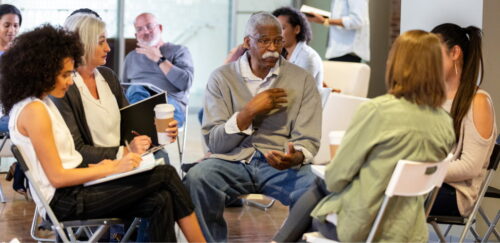
Participants in all five locations expressed gratitude to be able to participate in a long-format, candid conversation in a small, safe setting where they could discuss typically unsafe topics like politics and the immigrant experience. Many participants said they feel isolated and like they don’t quite belong in American culture, and most reported never having had a conversation like this.
Participants valued the political education that the focus group offered, and many reported leaving the conversation with a deeper understanding of the systems that create our lived experience. Most had never been in a political learning space without being asked to vote for someone or something before. People described a sense of hope and relief to openly talk about belonging and the current political climate and conveyed interest in having more conversations like these.
Many expressed a hope that their kids and other loved ones could engage in such conversations. This is a testament to the powerful shift that is possible when we open doors for civic education, engagement, and relationship-building.
In Their Words: Political and Civil Discourse
- “I became an organizer because organizers talked to me. They came to my house. They asked me questions. They gave me information. They invited me to things. Now I am doing the same thing.”
- “I feel like part of the reason we don’t talk about this is because of political tension. If you’re in a conversation where everyone thinks alike and one person thinks differently, it can derail it.”
- “I came in not knowing what to expect. I’ve been a part of focus groups before, but as an immigrant having someone take the time to go and ask what we think, it was very refreshing to stop and think about these issues.”
- “When you first come to the U.S. there is a culture shock. You’re out there being yourself, and then someone tells you what to do. Then you go into yourself, and you withdraw. Sharing your thoughts with other people lets you know that it’s ok. It’s refreshing.”
- “Change comes from these conversations. Doesn’t matter how educated you are. People listening to each other can make things better.”
- “Grateful and humbled by this experience. This kind of conversation is what the world is missing. We can talk to each other, we can disagree, but we can find our way to the greater good.”
- “I’ve never had a conversation like this about politics without someone being there to sell me on a candidate or something to vote for. Or scare me about something. Just political education. I really loved this conversation.”
- “I want to learn more about this. We don’t want to get involved because of a lot of fear. We say ‘I am not prepared,’ or ‘I don’t want to get in a fight.’ If we get prepared and we follow our shared values, we can have these conversations.”
Desire for a Political Home
Facilitators offered focus group members the following definition of politics: “Politics is the way that people living in groups make decisions. Politics is about making agreements between people so that they can live together in groups such as tribes, cities, or countries.”13 Afterwards, they shared the reflection prompt: “What comes to mind when you hear the word politics?” Participants clearly and overwhelmingly agreed that this definition is not what they think about when they hear the word “politics” and expressed their level of frustration and disillusionment with the current political landscape. Overall, the sentiment was that voting is extremely important and everyone who is eligible to vote should do so. They should vote not only for themselves but also for those in their communities who aren’t able to vote.
Participants talked in depth about how being an immigrant voter is an incredibly complex and impossible task because the political calculus includes considering what is best for the communities where they live, but also what is best for their country of origin. Participants want proper representation, and that means knowing that those elected to office will act on their behalf in good faith. They agreed that a political system is never going to be perfect but that an optimal system needs to be based on truth and trust.
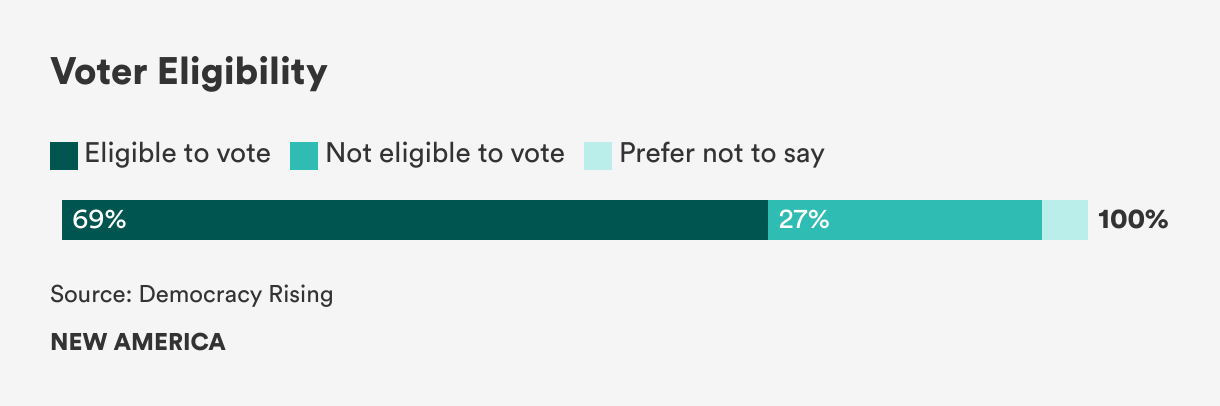
When participants were asked if they identify with any current political party and how much they feel a sense of political belonging or representation, they overwhelmingly conveyed that they do not. While participants were clear on their core values and priority political issues, they lamented that those values were easily dismissed as campaign promises that received little to no follow-up by their elected officials. Participants in all locations expressed the need for greater nuance than the two-party system allows for, though some participants identified more strongly with the Democratic party on some issues (e.g., immigration and the environment) and the Republican party on others (e.g., Christian values and business). Generally, they felt deeply underrepresented by the two-party system because of the strong compromise that voting for either party would require. That being said, many of the focus group participants are ineligible to vote, but as pathways to citizenship continue to become available this serves as a clear example of where the two-party system falls short in representing minority communities.
During each focus group, participants were asked to complete a brief New York Times quiz to identify their ideal political party affiliation from a list of six hypothetical party options and were given clear definitions and descriptions of each party. Most participants identified with the Progressive Party but about one-fifth of participants identified with the American Labor and New Liberal parties, respectively. When being asked to select a political home from a more robust list of options, participants felt excited and reported wishing they indeed had more options to choose a political home from.
When asked about their openness to a political system that would allow more viewpoints, participants showed great interest in finding ways to have better representation and values alignment, including an openness to creating space for more parties. They were shown brief educational videos on different election systems that allow for more perspectives to be represented on the ballot: ranked-choice voting (single and multi-winner), mixed-member proportional representation, and fusion voting.14 It was difficult to present the participants with consistently accessible information about these systems because educational materials on these topics are not usually made with a broader audience in mind.
In each focus group, participants strongly critiqued the current U.S. election model of first-past-the-post as fundamentally unfair, though easy to understand. Instead, participants gravitated towards ranked-choice voting because it allows voters to support candidates that align with their values without engaging in an impossible political calculus. The preference for ranked-choice voting seemed to stem from the desire for a candidate-based system rather than a party-based system.
Some participants were already familiar with some of the alternative electoral systems. The Hmong group in St. Paul had experienced their city’s ranked-choice voting approach, and the Haitian participants in Miami had experienced the Haitian election system similar to fusion voting, where small parties endorse major party candidates. When participants across all five locations were discussing the different election systems, they approached the conversation from a lens of whether each system was fair, not whether it would further their individual priorities. The theory around mixed-member proportional representation was met with understanding and interest until it was revealed that parties chose the candidates for their allotted seats. Fusion made a great deal of sense to participants, but many immediately shifted to wondering what backroom deals might result in endorsements.
In Their Words: Political Parties and Priorities
- “A lot of immigrants vote based on U.S. foreign policy for their country back home. Before we think about our lives and our kids, we think about our country. The problems we face back home affect our daily lives here. We have to send more money, we have to move them. I wish the U.S. could listen to the people who experience these difficulties.”
- “It would be good to have a group that is for all the Hispanic community here—to talk about our issues, learn about what is happening [in] politics. Regardless of religion.”
- “I would belong if someone showed they wanted to bring everyone along.”
- “Politics is important because it affects everything in our life. If there were many parties, each would have a platform.”
- “Because of my age, I don’t want to set myself in stone. It feels like you have to pick a side, and I don’t want to be too set on something. Sometimes it seems like there’s a third party with great ideas and morals and feels like they fit perfectly, and I want to be open to that.”
- “If the structure allowed for more parties I would want to engage with more of them but now I have to think between the two.”
- “Prior to today, I’ve never been interested in politics. But if those parties from earlier existed I would like to vote for them.”
- “Even though I’m a hater, I’m incredibly patriotic at times. There truly is nowhere else where you can have that identity. In other places, when you come from outside, you’re told you will never be ‘X.’ But when you’re here, you are a part of it just by being here.”
Cynicism Is the Barrier
There was a theme of cynicism in all sections of the conversation in all locations, and almost every time, it was about our current state of politics. People have hope for the future but very little trust in our institutions, our politicians, and importantly, our parties. This distrust runs deep and goes back to their countries of origin, with the exception of the Hmong community where the lack of country of origin was cited frequently. The Hmong group was the least cynical, the most politically engaged, and had the most political power.
To some extent, participants in all locations expressed alignment with some stated priorities of both major parties but perceived racism from the Republican party as a major barrier to their engagement. Participants overall felt a great sense of cynicism around the profundity of American racism. There was a lot of conversation about how the “lesser of two evils” mentality is prevalent in this country and a shared understanding of how this mentality doesn’t bode well for democracy. Across the board, participants were clear that representation is important, but only if it is aligned with values. There was cynicism about politicians who looked like them but acted against the interest of the community.
In all locations, participants were clear that corruption runs deep in every country and at every level because power corrupts, and powerful people are good at finding ways to keep themselves unaccountable. There were multiple conversations about how the United States interferes in politics and elections elsewhere, and this certainly contributes to the lack of trust that surfaced around U.S. politics and political systems.
In Their Words: Disappointment, Distrust, and Cynicism
- “It is the people that I look up to that have disappointed me. When what your leaders deliver is different than what you need, that breaks your trust.”
- “In the past I was naive, thinking that if we vouch for someone and we work for them then we would see some positive change, specifically for the immigrant community. But at the end of the day it’s about power and winning and then our lives don’t matter.”
- “Seems like the same politics as Mexico. The bigger fish eats the smaller. The smaller ones have no choice but to choose a candidate from the big parties.”
- “I think about a lack of integrity—they say something behind the scenes, and they say something else to the public. From America to Africa this is consistent.”
- “That’s why we always say the lesser of two evils, many of them are evil to the core.”
- “A majority of people are selfish. They are there for themselves, staying in power for as long as they can. Once they get there they think less of us.”
- “In America we have a facade, hiding dirty politics behind altruism.”
- “I don’t like the idea of putting more power in the hands of the parties. Can voters trust the candidates that parties put forward?”
- “People used to disagree respectfully, but we don’t see that anymore. We get judged if we say one thing or another so we stay quiet. This is a beautiful country, but sometimes because of all the things going on we lose the beauty and become scared.”
Citations
- See the values exercise worksheet used here: https://acrobat.adobe.com/id/urn:aaid:sc:US:60e34567-cb0e-4913-9d2d-bd127aeeef54.
- “Politics: Simple English,” Wikipedia, Accessed August 30, 2024, https://simple.wikipedia.org/wiki/Politics.
- There were no readily available video resources to explain fusion voting.
Conclusion and Recommendations
Based on our conversations and learnings, below are the key recommendations and action items needed to build a grassroots movement to advance a multiparty democracy in the United States.
Invest in Civic Discourse
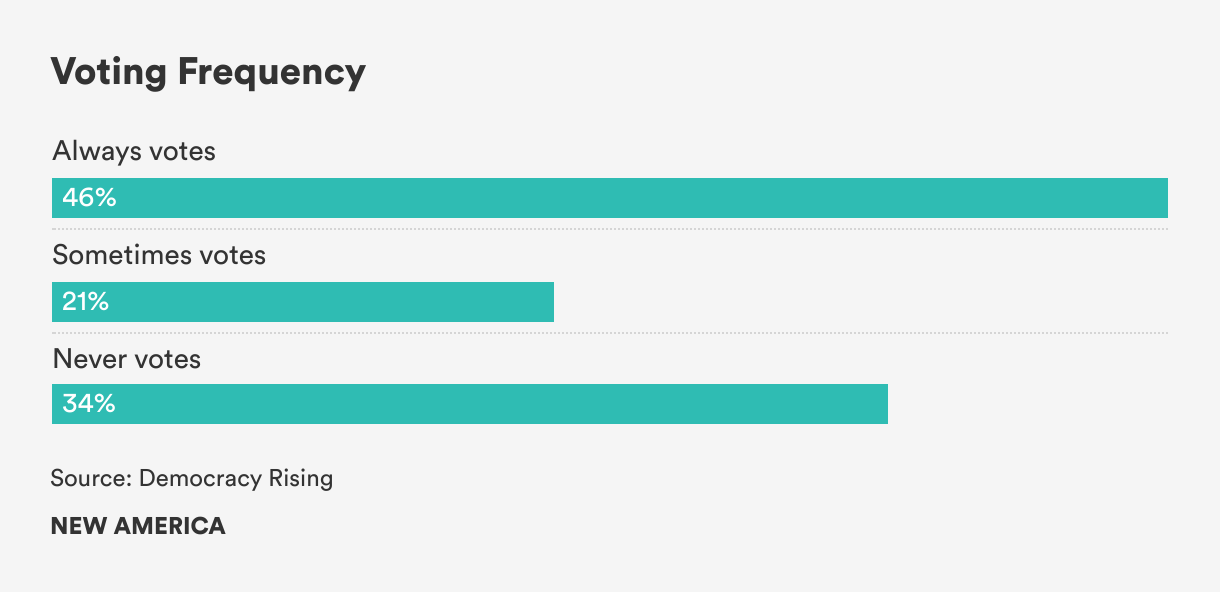
The vast majority of grassroots investment in this country is in “Get Out The Vote” efforts, which come with great urgency during election cycles but don’t often extend beyond Election Day. People are bombarded with commercials, door knocks, texts, and mailers telling them of all the horrible things that will happen if they don’t vote a certain way, followed by two or four years of radio silence. Voting is incredibly important, and we must do all we can to ensure all eligible voters vote in every election, but voting alone does not sustain a democracy. Minority communities, and especially communities with low numbers of eligible voters, are rarely engaged in political discourse. They are never asked what they think about different issues or what issues are important to them, and they certainly are never given an opportunity to learn together and come up with collective thoughts and solutions to some of the problems they face.
This project reinforced our belief that communities are thirsty for productive civic discourse and given the opportunity, regardless of whether they can vote or not. These conversations provided a space to think together and feel less isolated. Many of our participants asked if we could hold conversations like these with other groups they belong to. Members of our working group expressed an interest in replicating and scaling this kind of work with different communities across the country. Holding space for civic discourse builds the civic muscle in our communities, which inevitably strengthens our capacity to build and sustain a functioning democracy. Practitioners should seek opportunities to engage and enact local change through the implementation of democratic practices and processes, such as participatory budgeting committees and citizen assemblies. It is important to build civic muscle, and this should start at the community level.
Shift Narratives around the Word “Party”
Participants were largely open to the idea of doing democracy differently, including the idea of having a multiparty system. However, the concept of a party itself was met with a great deal of distrust and disillusionment. For reformers to explore policies that have the expressed intention of increasing the number of viable parties in the United States, there needs to be a dedicated effort to rehabilitate the word “party.” However it’s done, there needs to be a distinction between how parties would operate under the proposed system and how that differs from the current situation in the United States. When it came to alternative systems, the theory was understood and appreciated, but placed in the U.S. context, the viability was justifiably questioned. When speaking directly to voters, messaging should center around fairness and incentives for parties rather than parties themselves. In candidate-centric situations, emphasis on more choice and more nuance is very effective, but extending that to parties themselves would require more study and message development.
Create and Disseminate Accessible and Culturally Appropriate Resources
Our approach to this project allowed participants to sit and grapple with concepts rarely presented to this audience. There was interest and excitement around potential alternatives, but the existing information on these topics is geared towards those already deeply engaged in politics. All materials used had some positive bias because they were made by advocates of these reforms. However, they were vetted to ensure that they were educational rather than persuasive. We found that materials that used simple and accessible language had a larger impact on the attitudes of participants towards the reform itself than those that were more technical.
Leverage Existing Democratic Culture and Infrastructure in Communities
Communities are doing democracy internally—and doing it well—but these practices do not translate into formal structures and systems. People are making collective decisions, compromising, collaborating, and looking out for each other’s best interests. In addition to thinking of state and federal-level democracy-building legislation, we need to assess how democracy is already being practiced formally and informally in communities and learn from that. Many of these systems and structures include informal mutual aid operations, systems of mentorship and sponsorship when it comes to adapting to American life and culture, promoting and assisting with education, employment, and more. These informal systems are often incredibly effective and build democratic practice, trust, and cohesion in the community. These structures offer a model that could be adopted and supported across the country.
Appendix A: Participant Demographics
Appendix B: Glossary of Key Terms
- Winner-take-all/first-past-the-post: Elections where each voter submits a ballot choosing one person they want to occupy the office in question. Conventionally, whoever gets the most votes wins. This is the most common method of elections in the United States.15
- Proportional representation: Elections where multiple representatives are chosen in each district based on the percentage of votes they receive. For example, if a party gets one-third of the votes, they win approximately one-third of the seats. This system is the most common in democracies around the world today.16
- Ranked-choice voting: Elections where voters have the option to rank candidates in order of preference: first, second, third, and so forth. If your first choice doesn’t have a chance to win, your ballot counts for your next choice. This is a winner-take-all method of elections when used to elect one seat. When it is used to elect more than one seat, it is a proportional method.
- Mixed-member proportional: Elections that combine winner-take-all and proportional representation. It uses single-member districts along with additional seats that are allocated based on a party’s share of the vote. Voters pick both a candidate and a party. For example, a state could have three single-winner districts and three proportional seats. A party with 40 percent of the vote might lose all three single-winner seats but still win one or two proportional seats.17
- Fusion voting: Elections that allow more than one political party to nominate the same candidate on the ballot, allowing voters to support their preferred candidate without having to support one of the two major parties. Typically, this means a minor party and a major party “fuse” together to cross-nominate and support the same candidate. The candidate receives all of the votes cast for them from whichever party lines they are listed on.18
Citations
- Josh Franklin, “First Past the Post Voting: Our Elections Explained,” Common Cause Colorado, June 22, 2020, https://www.commoncause.org/colorado/articles/first-past-the-post-voting-our-elections-explained/.
- “Proportional representation, explained,” Protect Democracy, December 5, 2023, https://protectdemocracy.org/work/proportional-representation-explained/.
- “Proportional representation, explained,” Protect Democracy, December 5, 2023, https://protectdemocracy.org/work/proportional-representation-explained/.
- Cyrena Kokolis, Chris Parr, and Beau Tremitiere, “Fusing voting, explained,” Protect Democracy, December 19, 2023, https://protectdemocracy.org/work/fusion-voting-explained/.
More About the Authors
Maria Perez

Grace Ramsey
Co-Director, Democracy Rising