Explaining and Developing the OSINT Privacy Impact Framework (OPIF)
Implementing a privacy-preserving framework within OSINT processes necessitates rigorous attention to each stage: identification, collection, processing, analysis, and reporting. In the identification phase, clear protocols must be established to ensure data collection aligns with ethical standards and respects privacy rights. During collection, stringent measures such as anonymization and data minimization should be employed to protect individuals’ identities. Processing and analysis should incorporate advanced encryption and secure handling practices to prevent unauthorized access. The reporting phase must ensure that the disseminated information is devoid of personal identifiers unless explicit consent or a lawful basis has been established.
Considering the diverse categories of OSINT, as reflected in Appendix 1, the implementation of privacy-preserving measures must be tailored to the specific characteristics of each type. From the survey, 65 percent and 61 percent of professionals engage in web and social media OSINT, respectively, where appropriate lawful basis, robust consent mechanisms, and transparency in data use are crucial. Technical and document OSINT, used by 45 percent and 35 percent of survey respondents, respectively, require heightened security protocols to protect sensitive information. HUMINT and Dark Web OSINT, with their inherent risks, necessitate stringent ethical guidelines and secure communication channels. For image and video OSINT (18 percent), and geospatial OSINT (10 percent), utilized by survey respondents, data anonymization and secure storage solutions are imperative (see Figure A3).
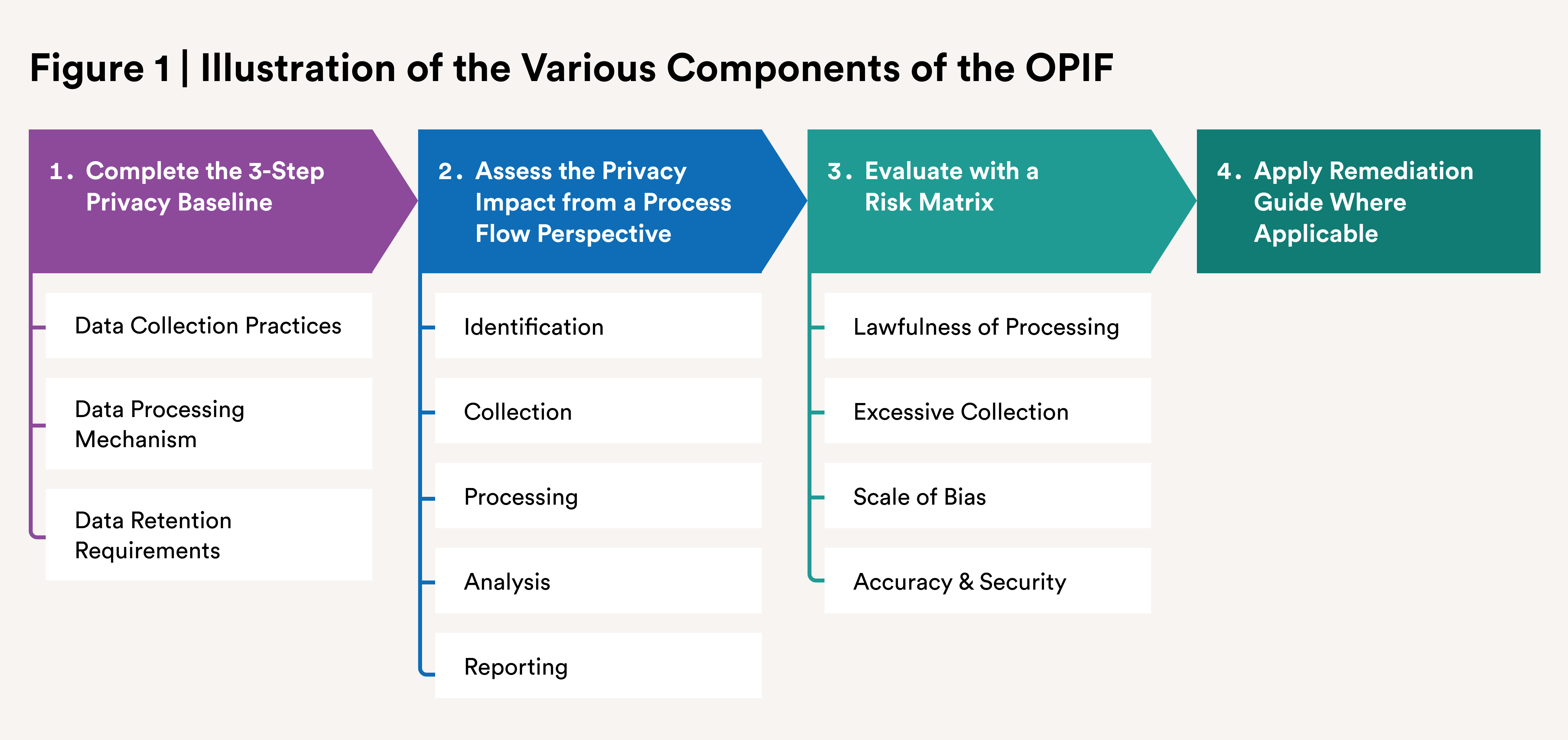
Step 1: A Three-Step Privacy Baseline
The Three-Step Privacy Baseline is designed for AI-integrated OSINT frameworks to ensure the preservation of privacy throughout its processes. It details specific measures across Data Collection Processes, Data Processing Mechanisms, and Data Retention Requirements. This baseline ensures data is collected minimally, processed responsibly, and retained securely, aligning with both National Institute of Standards and Technology (NIST) and International Organization for Standardization (ISO) guidelines.

The Three-Step Privacy Baseline establishes a robust framework for privacy preservation in AI-integrated OSINT, addressing data collection, processing, and retention, with strict guidelines. While the foundation ensures compliance and security, it also sets the stage for seamless integration into a broader OSINT operation.
Step 2: OSINT Process Flow Impact Assessment
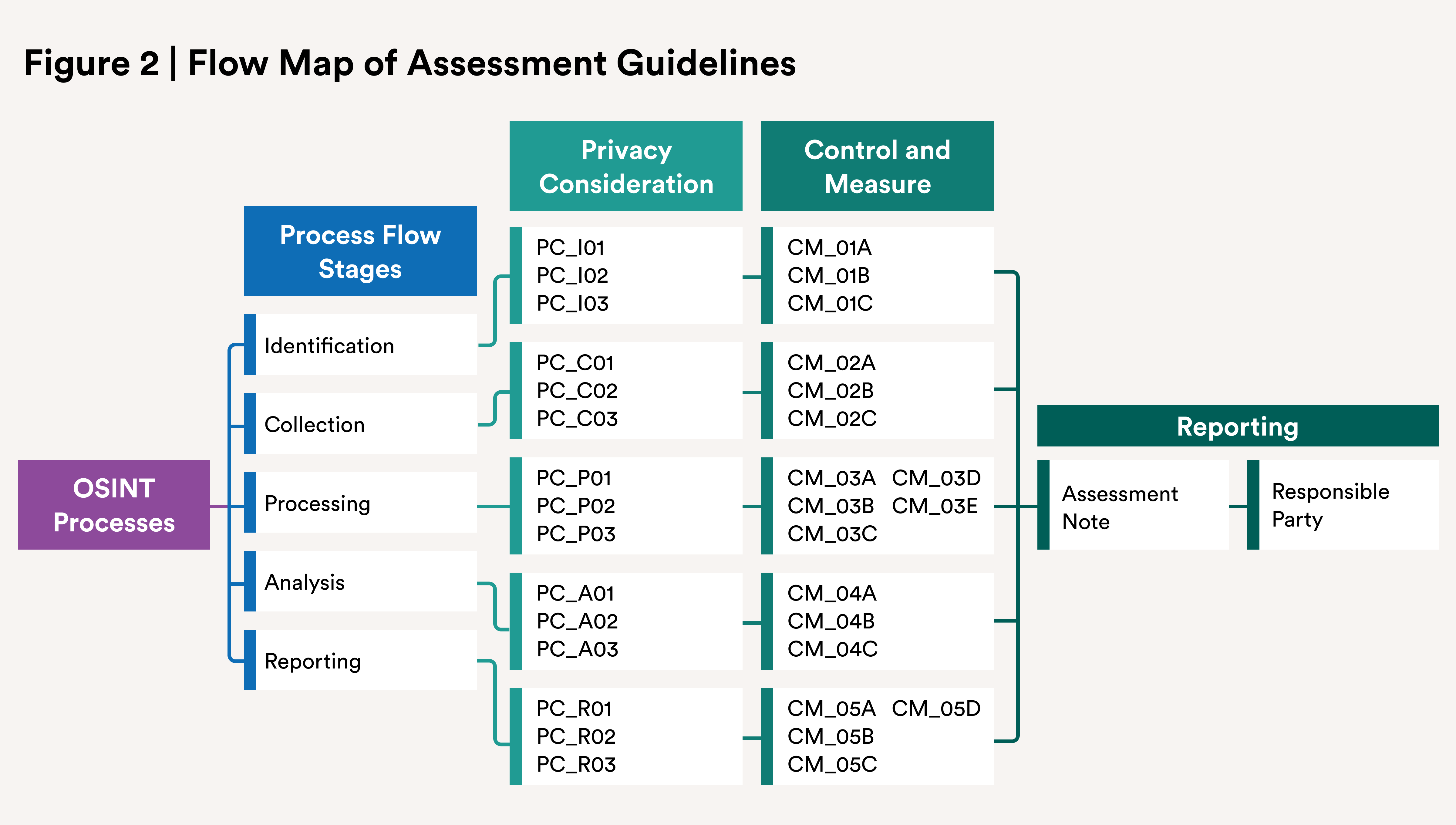
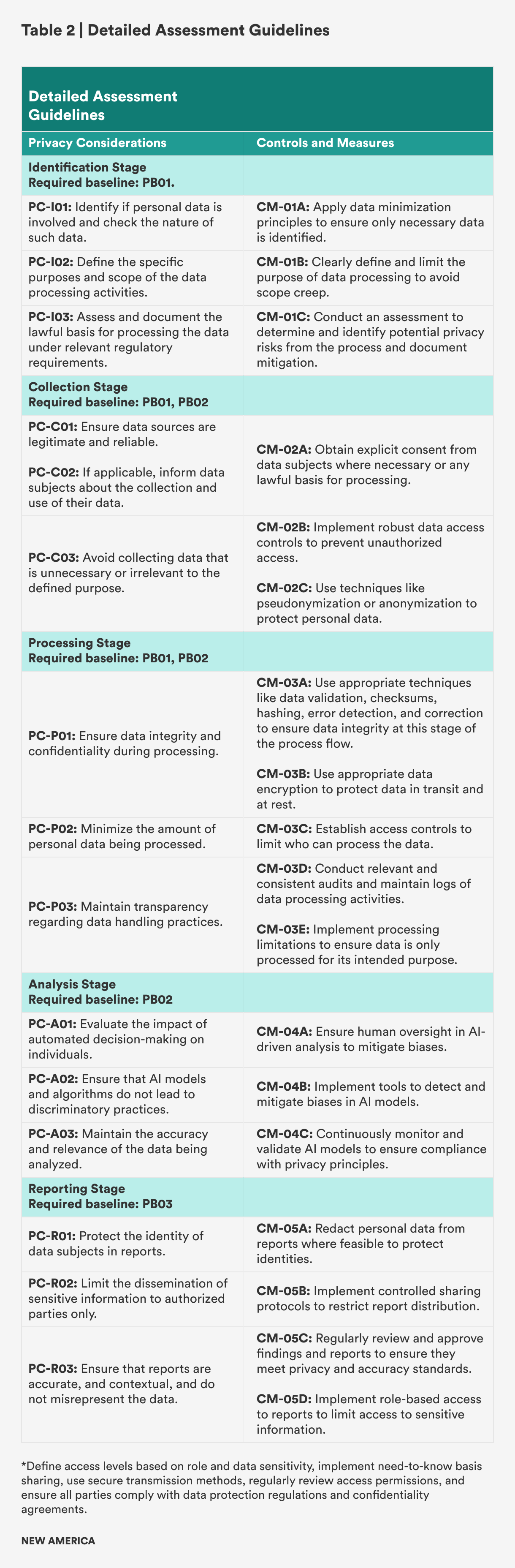
Detailed Assessment Guidelines
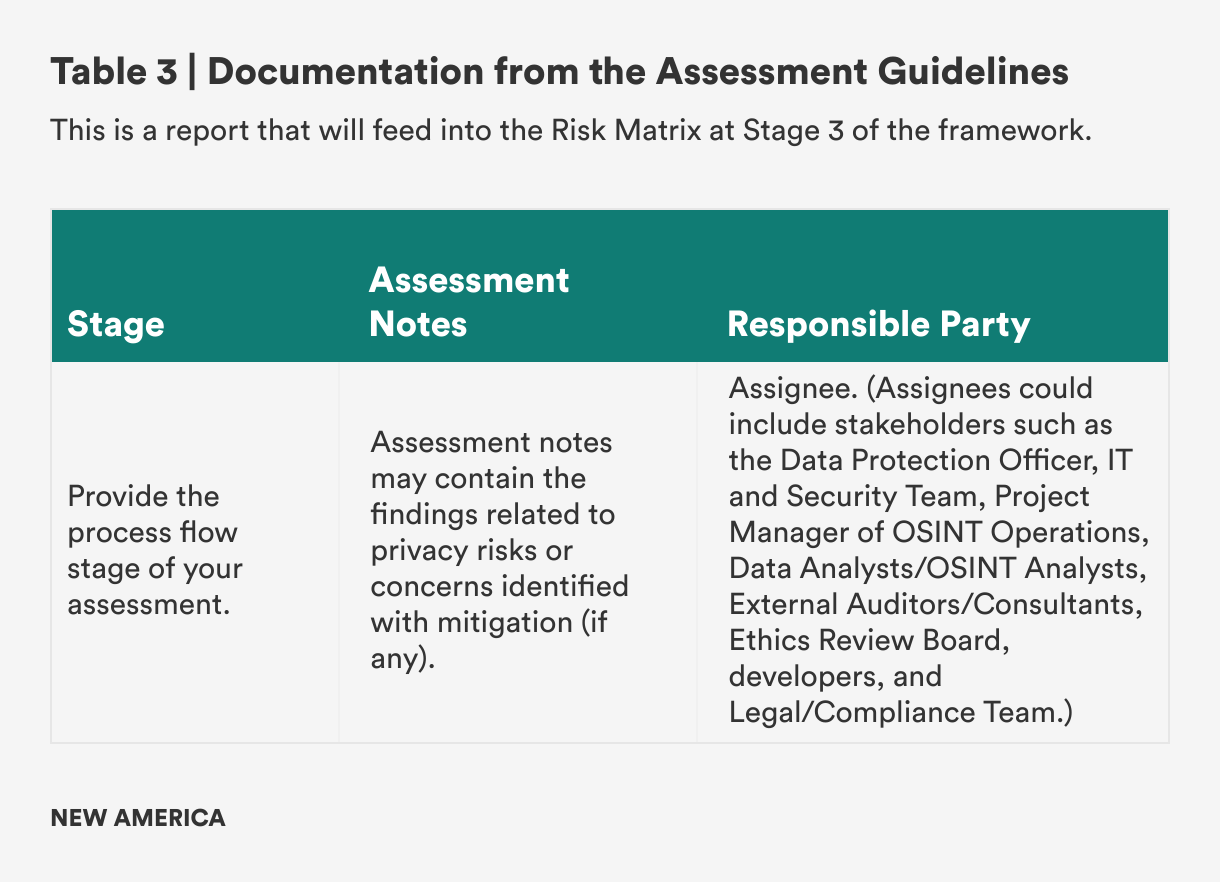
In the second phase of the framework, an assessment chart provides a structured approach to evaluating and ensuring and promoting privacy compliance throughout an OSINT process. This aligns with the GDPR DPIA and Privacy by Design principles, as illustrated in the image below. A detailed assessment guideline accompanies each OSINT process stage. The guideline seeks to ensure that privacy risks are identified, evaluated, and mitigated at every step of the OSINT workflow. Each OSINT process stage must be evaluated with the corresponding privacy considerations, controls, and mitigations. The assessment details must be documented leveraging the assessment notes including specific document findings, observations, and recommendations for each stage.
Step 3: Risk Metric, Impact, and Controls
In this section of the OPIF, the framework combines the NIST Risk Management Framework (RMF) and ISO 31000 to develop risk metrics and remediation for a privacy-preserving, AI-integrated OSINT system, ensuring actionable intelligence while safeguarding data privacy across all OSINT process stages. To effectively assess the impact of risks in AI-integrated OSINT, a risk-scoring system based on the likelihood of occurrence and the severity of impact is leveraged. Each risk is scored on a scale of one (1) to five (5), where one represents minimal impact and likelihood, and five represents the highest. The final risk score is calculated by multiplying the likelihood and impact scores. Here is a breakdown of the risks, with associated metrics and calculated scores:
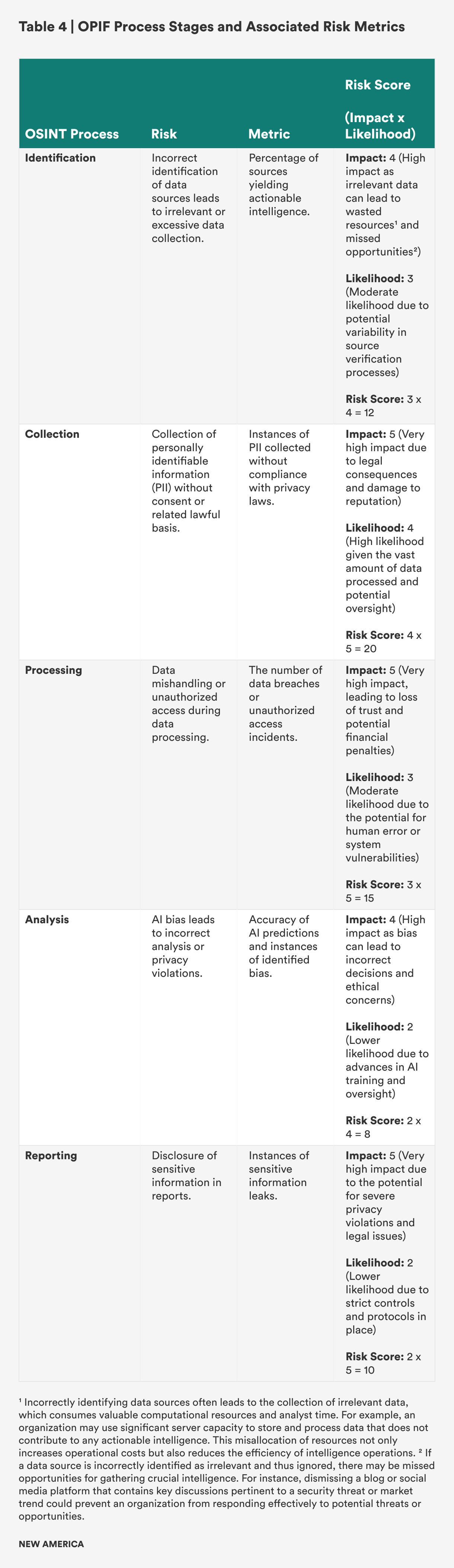
The risk scores in Table 4 are weighed to reflect the relative importance of impact over likelihood, recognizing that even less likely events can have disproportionately severe consequences when they do occur. This scoring aims to help prioritize risks that need the most immediate attention and resources for mitigation. The highest-scoring risks, such as the collection of Personally Identifiable Information (PII) without consent, should be addressed first with robust remediation measures.
Step 4: Remediation Guide
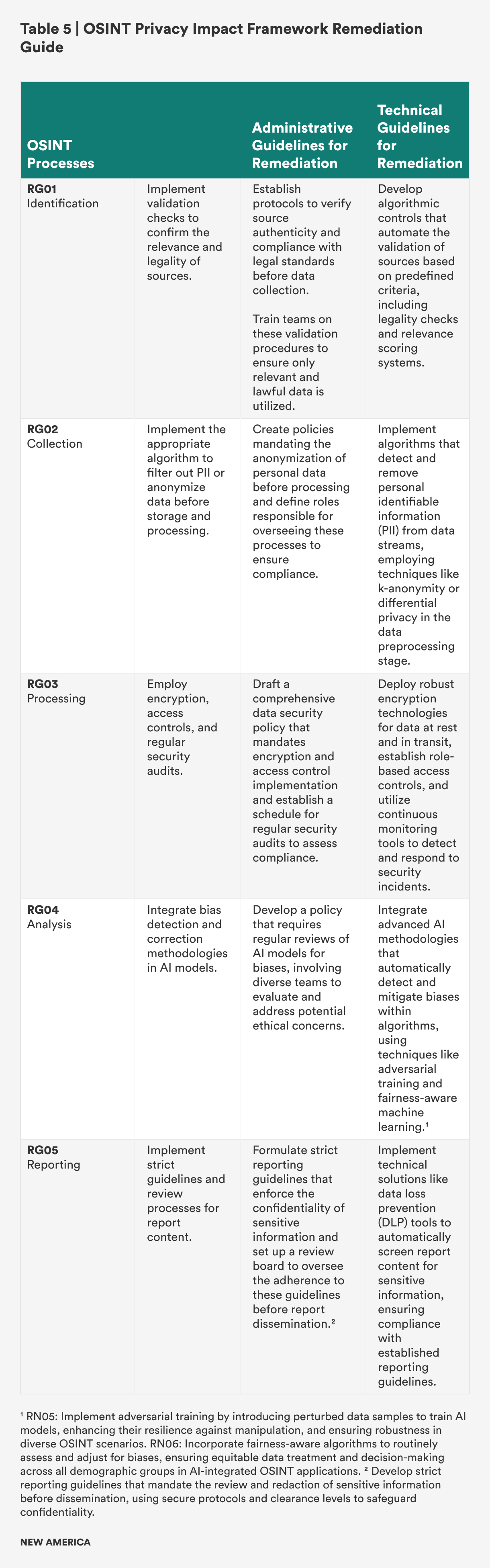
This guide outlines specific administrative and technical remediation measures designed to enhance the security and integrity of AI-integrated OSINT processes. It addresses challenges ranging from data validation and privacy protection to bias mitigation and secure reporting, and ensures comprehensive risk management in line with best practices.
Maintaining OPIF
OPIF is designed to be dynamic and collaborative. It will be developed, used, and maintained as an open-source resource, enabling continuous refinement and adaptation by the global intelligence community. By embracing open-source principles, OPIF ensures transparency, encourages innovation, and facilitates widespread adoption as a self-regulatory document. It is not just a framework; it is a living document. As such, its success and growth depend on active contributions from industry experts, privacy advocates, and OSINT practitioners.
The Future of OPIF
Looking to the future, OPIF will be accessible through a dedicated web portal, providing an easy-to-navigate platform for users. The framework will include features such as automation tools for self-assessment and compliance reporting, simplifying the processes for organizations to evaluate their adherence to privacy standards and regulatory requirements. In embracing these initiatives, OPIF will aim to become a ubiquitous publication, integral to the landscape of OSINT operations, and a benchmark for privacy and data protection standards worldwide.

Preserving Privacy: An Impact Framework for Open-Source Intelligence (OSINT)
- Executive Summary
- Introduction
- Current State of Knowledge
- Exploring the Intersection of OSINT and Data Privacy in the Digital World
- Methodology and Results
- Analysis and Assessment of the Impacts of OSINT on Data Privacy
- Explaining and Developing the OSINT Privacy Impact Framework (OPIF)
- Conclusion
- Appendix 1 | Survey Findings
- Appendix 2 | Reflections from Research Webinar Focus Groups Discussion
- Appendix 3 | Interview Protocol for Semi-Structured Interviews