A Chapter of: The Rise of Neurotech and the Risks for Our Brain Data
Brain-Computer Interfaces: Fundamentals and Applications in Commercial and Medical Contexts
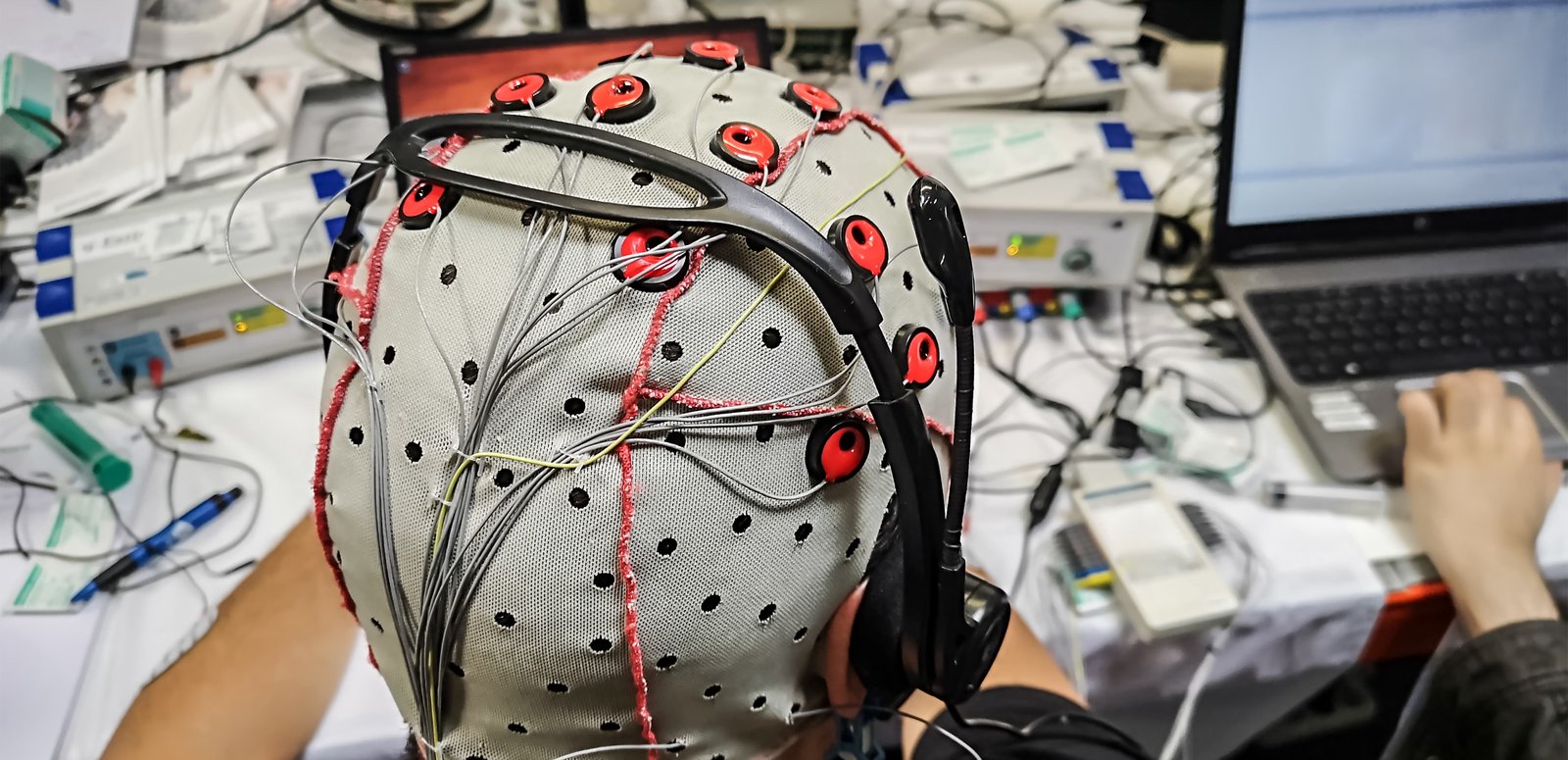
Brain-computer interfaces (BCIs) represent a transformative leap in technology, bridging the gap between the human brain and external devices. At their core, BCIs facilitate direct communication between the brain and computers by leveraging neural signals, which are either recorded through noninvasive methods like electroencephalography (EEG) or invasive techniques involving implants, to interpret and act upon the user’s thoughts and intentions.
BCIs can be broadly classified into three categories: invasive, partially invasive, and noninvasive.6 Invasive BCIs involve the surgical implantation of electrode arrays directly into the brain. This method requires intricate and invasive surgery to position the electrodes near the target neurons, and it typically delivers more precise results than noninvasive alternatives. Partially invasive BCIs, such as those utilizing electrocorticography (ECoG), involve implanting electrodes within the skull or on the brain’s surface. This method serves as a middle ground between invasive and noninvasive BCIs, balancing signal quality and invasiveness. Lastly, noninvasive BCIs, which include techniques such as EEG and functional magnetic resonance imaging (fMRI), do not require surgical intervention. These BCIs detect the activity of larger groups of neurons through devices that do not penetrate the skull, and they provide less precision compared to invasive methods.
The varying levels of invasiveness in BCIs offer a spectrum of options, accommodating different applications and needs while shaping the future of human-computer interaction and neurotechnology. However, these distinctions also raise important regulatory questions. Invasive BCIs, which require surgical implantation, often fall under medical device regulations, whereas noninvasive and partially invasive BCIs—particularly those marketed for consumer use—may not be subject to the same oversight. This regulatory gap highlights the need for clearer standards that address the unique risks associated with each category. The potential for harm varies across these categories, with invasive BCIs posing risks related to surgical procedures and device integration, while noninvasive BCIs present privacy and cybersecurity concerns due to the scale of data collection. Further research is needed to explore the intersection of these categories, develop appropriate regulatory frameworks, and establish standards that mitigate the risks associated with each type of BCI.
The potential applications of BCIs are vast, from enhancing communication and control for individuals with disabilities to creating new forms of human-computer interaction in everyday life. As BCIs continue to develop, they are poised to revolutionize both medical treatments and commercial products, offering unprecedented access to the intricacies of the human mind.
Medical Applications
In the medical field, BCIs have garnered significant attention for their potential to restore and enhance functions in individuals with neurological impairments. One of the most promising applications is in aiding individuals with severe motor disabilities, such as those resulting from spinal cord injuries, amyotrophic lateral sclerosis (ALS), or strokes. For instance, BCIs can enable users to control prosthetic limbs or computer cursors directly with their thoughts, providing a newfound level of independence and interaction with their environment.7
BCIs also play a role in communication aids for patients who have lost the ability to speak. By decoding neural signals associated with speech planning, these systems can translate thoughts into synthesized speech, which enables communication. This is especially valuable for patients with conditions like ALS, where individuals may lose the ability to speak due to nerve or muscle degeneration while retaining full cognitive function and a desire to communicate effectively.8 Additionally, BCIs are utilized in monitoring and treating neurological conditions such as epilepsy and Parkinson’s disease, providing real-time data and enabling interventions that can alleviate symptoms or manage disease progression.
The life-changing potential of BCIs in medical settings is clear, offering enhanced communication for individuals with speech impairments and innovative rehabilitation methods. However, the deployment of these technologies also presents ethical and practical challenges, including safety, accessibility, and long-term implications. These concerns will be further explored in the following sections, where we will examine regulatory gaps, privacy risks, and the steps needed to ensure responsible development and use of BCIs.
Commercial Applications
Imagine you’re using a BCI device to control your smart home system. As you think about adjusting the lighting or temperature or even playing your favorite music, the BCI picks up your neural signals and executes these commands seamlessly. While doing so, the device also monitors your physiological responses—such as changes in brainwave patterns, heart rate, and other biomarkers—providing a detailed map of your emotional and cognitive states.
As you continue using the BCI for other tasks, such as browsing the internet or interacting with social media, the device gathers more data on your preferences and behaviors. It notices that you spend more time engaging with content related to certain brands or topics, and it records the neural responses associated with these interactions. Soon, advertisements for those brands and similar content begin appearing more frequently in your digital environment. This is because the data collected by the BCI, including your neural responses and engagement patterns, is analyzed and sold to marketing agencies.9 These agencies use the data to craft personalized marketing strategies that target you based on the insights gleaned from your neural activity.
While personalization may enhance user experience, it introduces serious privacy and ethical concerns, particularly when neural data is used for manipulative, coercive, or exploitative purposes. The risk of weaponized neural data mirrors broader concerns about digital surveillance and behavioral exploitation. In a 2024 article, Pavlina Pavlova explores how personal data—particularly biometric and behavioral information—has been misused to track, manipulate, and control individuals.10 Her research underscores how highly sensitive data, once collected, is often repurposed in ways users never intended, with little transparency or oversight.
A striking parallel between Pavlova’s findings and the risks posed by BCIs is the way intimate personal data can be leveraged for psychological and social manipulation. Pavlova documents how stalkerware and invasive surveillance tools have enabled perpetrators to track victims’ behaviors, monitor their interactions, and exert control over their decisions. BCIs introduce an even more concerning possibility—instead of merely tracking behaviors, they capture real-time cognitive responses, giving companies, governments, or bad actors the ability to interpret and predict thoughts before they are even consciously expressed. This creates new vulnerabilities for coercive influence, neuro-surveillance, and cognitive manipulation, particularly in high-risk populations such as activists, journalists, and marginalized groups.
“This creates new vulnerabilities for coercive influence, neuro-surveillance, and cognitive manipulation, particularly in high-risk populations such as activists, journalists, and marginalized groups.”
The depth and scope of personal information that can be extracted from BCI data are far more extensive than one might expect from simply using the technology for convenience or entertainment. BCIs can reveal not only your immediate preferences but also deeper psychological states, potentially exposing intimate aspects of your personality and mental health. In workplace settings, BCIs are being developed to monitor cognitive states, track focus, detect fatigue, and assess stress levels in employees.11 While proponents argue that such tools could improve productivity and well-being, they also raise concerns about workplace surveillance, autonomy, and employer control over mental states. If employers have access to real-time neural data, workers may face pressure to optimize their cognitive performance at the cost of privacy and personal agency. Without clear regulations, neural monitoring in workplaces could blur the lines between productivity enhancement and invasive oversight. The commodification of such sensitive data could lead to its exploitation by companies and government entities for purposes even beyond consumer profiling.12
BCIs are making significant strides in commercial markets, transforming how consumers interact with technology. In gaming and entertainment, BCIs offer immersive experiences by allowing users to control game elements or virtual environments through thought alone.13 This capability extends to virtual reality and augmented reality systems, enhancing user experiences with more intuitive and natural interactions. Companies like Neuralink are pushing the boundaries by developing interfaces that integrate seamlessly with computers and digital devices, promising a future where mind control is a part of everyday technology use.14
As BCIs become more prevalent in commercial settings, it is important to consider the implications for consumer rights and privacy. The potential for misuse of neural data in commercial applications, such as targeted advertising or unauthorized data collection, underscores the need for robust regulatory frameworks. These frameworks must ensure that companies are transparent about their data practices and provide consumers with control over their neural data. Additionally, as the technology advances, there is a need for ongoing public education and dialogue about the ethical and societal implications of BCIs in commercial contexts.
The Rise of Neurotech and the Risks for Our Brain Data
- Introduction
- Brain-Computer Interfaces: Fundamentals and Applications in Commercial and Medical Contexts
- Privacy and Security Challenges
- Current Legislative Landscape and Proposed Regulatory Approaches
- Proposed Approaches for Data Protection
- The Path Forward: Balancing Security, Ethics, and Regulation
Citations
- Gabriel G. De la Torre et al., “Wireless Computer-Supported Cooperative Work: A Pilot Experiment on Art and Brain–Computer Interfaces,” Brain Sciences 9, no. 4 (April 25, 2019): 94, https://doi.org/10.3390/brainsci9040094.
- Avery Watkins, “Restoring Amputees’ Natural Functionality with Brain-Controlled Interfaces,” MIT News, July 13, 2021, https://news.mit.edu/2021/restoring-amputees-natural-functionality-brain-controlled-interfaces-0713; Yijun Wang et al., “A P300-Based BCI System for Controlling Computer Cursor Movement,” Proceedings of the 2011 Annual International Conference of the IEEE Engineering in Medicine and Biology Society, August 2011, https://ieeexplore.ieee.org/document/6091581.
- Yijun Wang et al., “A P300-Based BCI System for Controlling Computer Cursor Movement,” Proceedings of the 2011 Annual International Conference of the IEEE Engineering in Medicine and Biology Society, August 2011, https://ieeexplore.ieee.org/document/6091581.
- Daniel Berrick, “BCI Commercial and Government Use: Gaming, Education, Employment, and More,” Future of Privacy Forum Blog, February 8, 2022, https://fpf.org/blog/bci-commercial-and-government-use-gaming-education-employment-and-more/.
- Pavlina Pavlova, “The Digital War on Women: Sexualized Deepfakes, Weaponized Data, and Stalkerware That Monitors Victims Online,” Ms. Magazine, November 21, 2024, https://msmagazine.com/2024/11/21/women-online-harrassment-abuse-deepfake-violence-revenge-porn/.
- David J. Lynch and Jacob Ward, “What Brain-Computer Interfaces Could Mean for the Future of Work,” Harvard Business Review, October 1, 2020, https://hbr.org/2020/10/what-brain-computer-interfaces-could-mean-for-the-future-of-work.
- Sasha Burwell, Matthew Sample, and Eric Racine, “Ethical Aspects of Brain Computer Interfaces: A Scoping Review,” BMC Medical Ethics 18, no. 60 (November 9, 2017), https://bmcmedethics.biomedcentral.com/articles/10.1186/s12910-017-0220-y.
- Louise Poirier, “Video Games Offer Brain-Computer Interface Training Ground,” American Society of Mechanical Engineers, May 16, 2024, https://www.asme.org/topics-resources/content/video-games-offer-brain-computer-interface-training-ground.
- “PRIME Study Progress Update,” Neuralink Blog, April 2024, https://neuralink.com/blog/prime-study-progress-update/.