Rethinking How the Tax System Delivers Essential Support
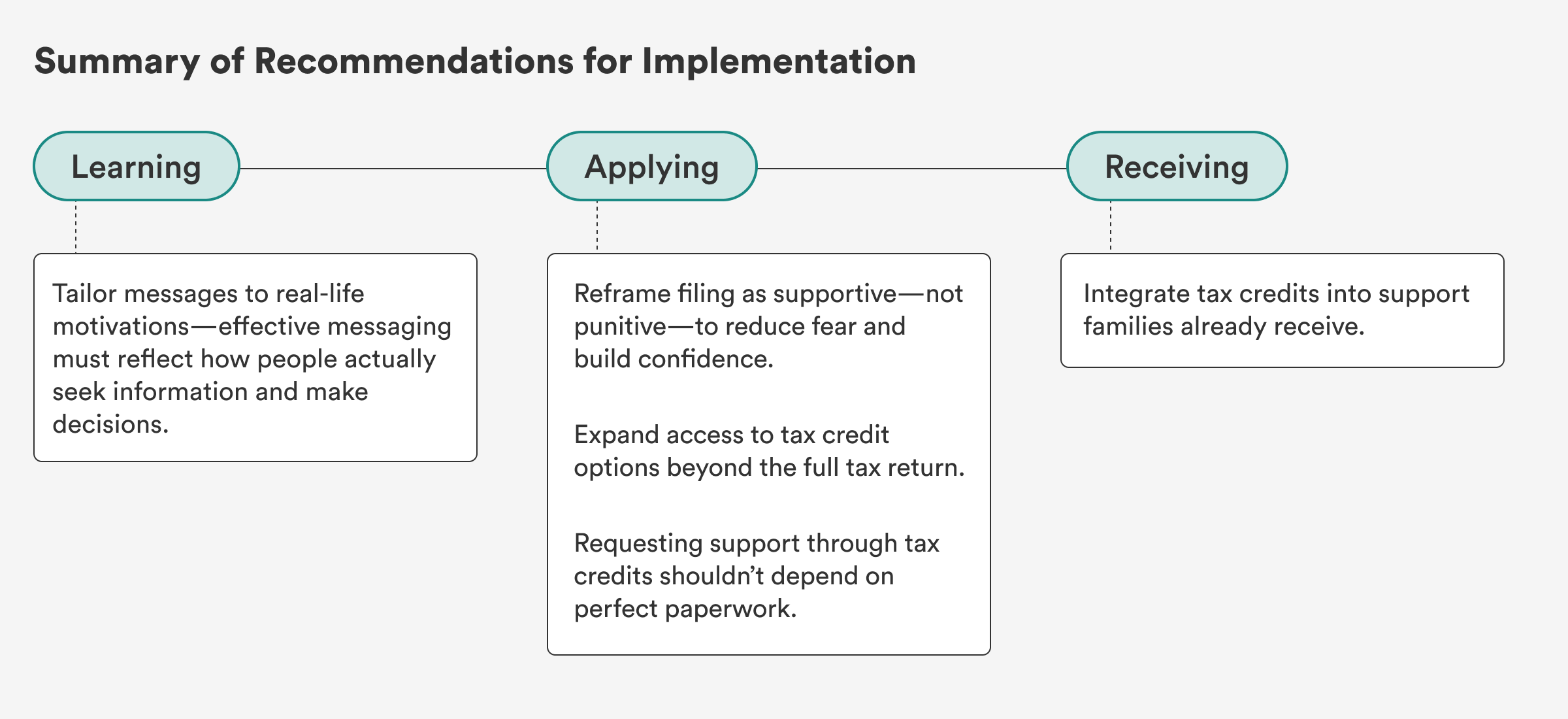
There’s growing urgency and opportunity to rethink how we deliver financial support to the families who need it most. Tax credits like the Earned Income Tax Credit and Child Tax Credit are meant to provide critical relief, helping people cover essentials like housing, child care, and everyday expenses.
Yet today, accessing that support often requires navigating a tax system that feels confusing, unfamiliar, or risky, especially for economically insecure households.
Households earning less than $65,000 a year are exactly the type of families that tax credits—through flexible, critical cash support—are meant to help. Yet these households are often the least likely to know the credits exist, to understand if they qualify, or to feel confident that filing taxes won’t create new problems. This isn’t a personal failure; it’s a structural one.
It’s worth asking: Should the tax system be the only way to deliver these benefits? Other programs like SNAP, Medicaid, and housing assistance already engage families through trusted, regular interactions. While these systems face their own challenges, they offer powerful entry points for connecting people to tax credits.
Filing through the tax system has real advantages: It combines compliance and benefits access into a single process. But when that process feels out of reach and complicated, it undermines tax credit delivery. Although simplification efforts like the IRS Direct File pilot are promising and urgently needed, access to critical support shouldn’t hinge solely on fixing the tax system.
If tax credits continue to run through the tax system, then the system itself needs to evolve. State Departments of Revenue must take on a broader role: not just enforcing compliance but proactively helping people access what they’re owed. That means simplifying pathways, coordinating with other programs, and showing up where families already are.
Ultimately, tax credits are only as effective as the systems that deliver them. And when those systems are designed with economically vulnerable families in mind, they work better for everyone.