Americans Are Frustrated with the High Cost of College but Disagree on Who Should Pay
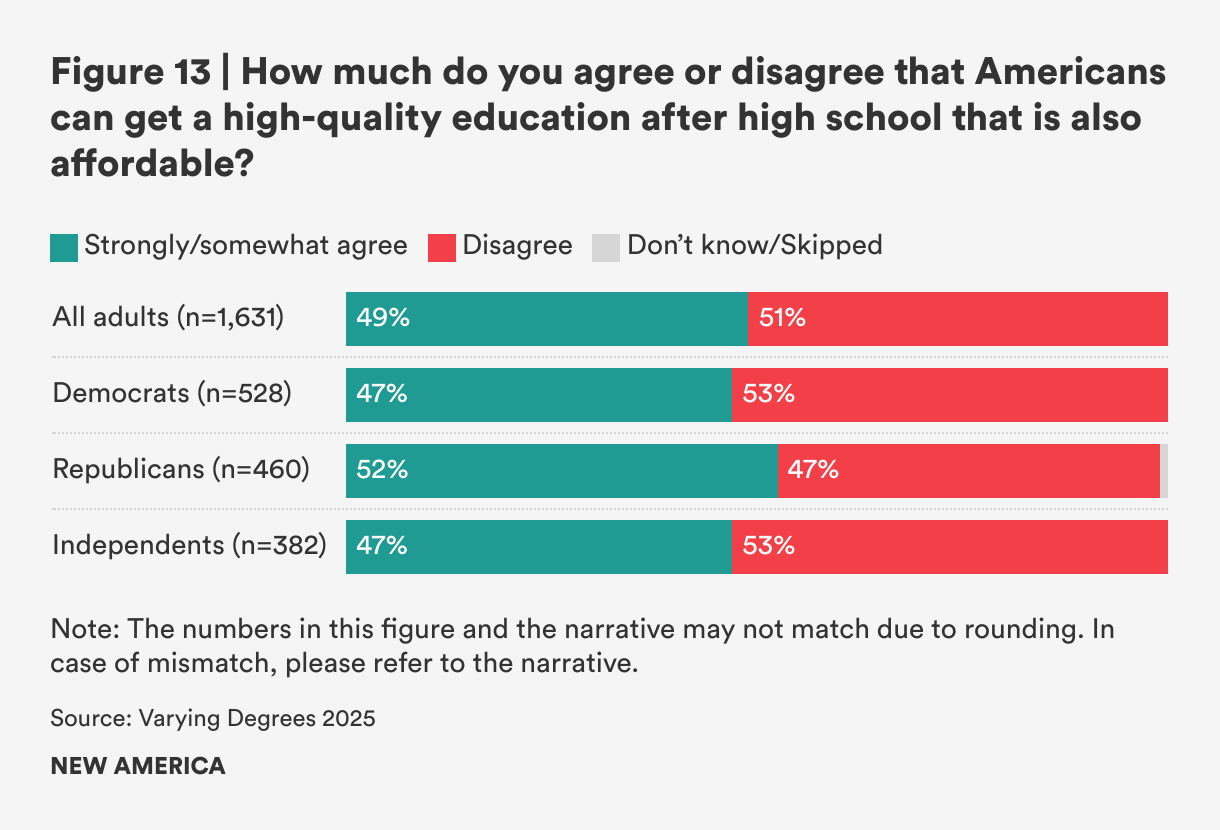
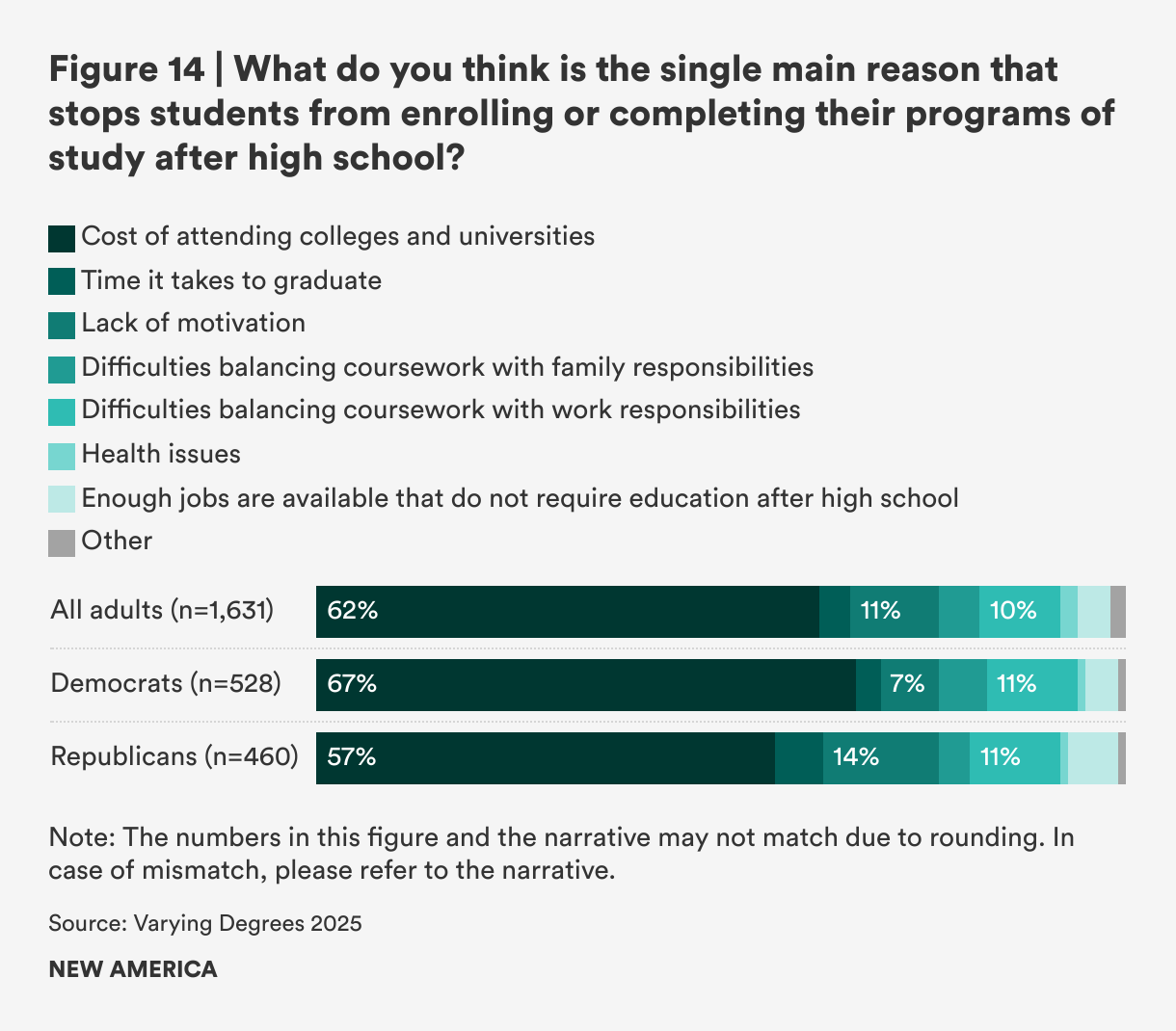
Only about half of Americans think they can get an affordable high-quality college education, and there is bipartisan alignment on this issue: 49 percent of Democrats and 53 percent of Republicans agree (see Figure 13). When asked to pick one reason among many factors that can stop students from enrolling or completing their programs, 62 percent of Americans picked the cost of attending, including 66 percent of Democrats and 56 percent of Republicans (see Figure 14).
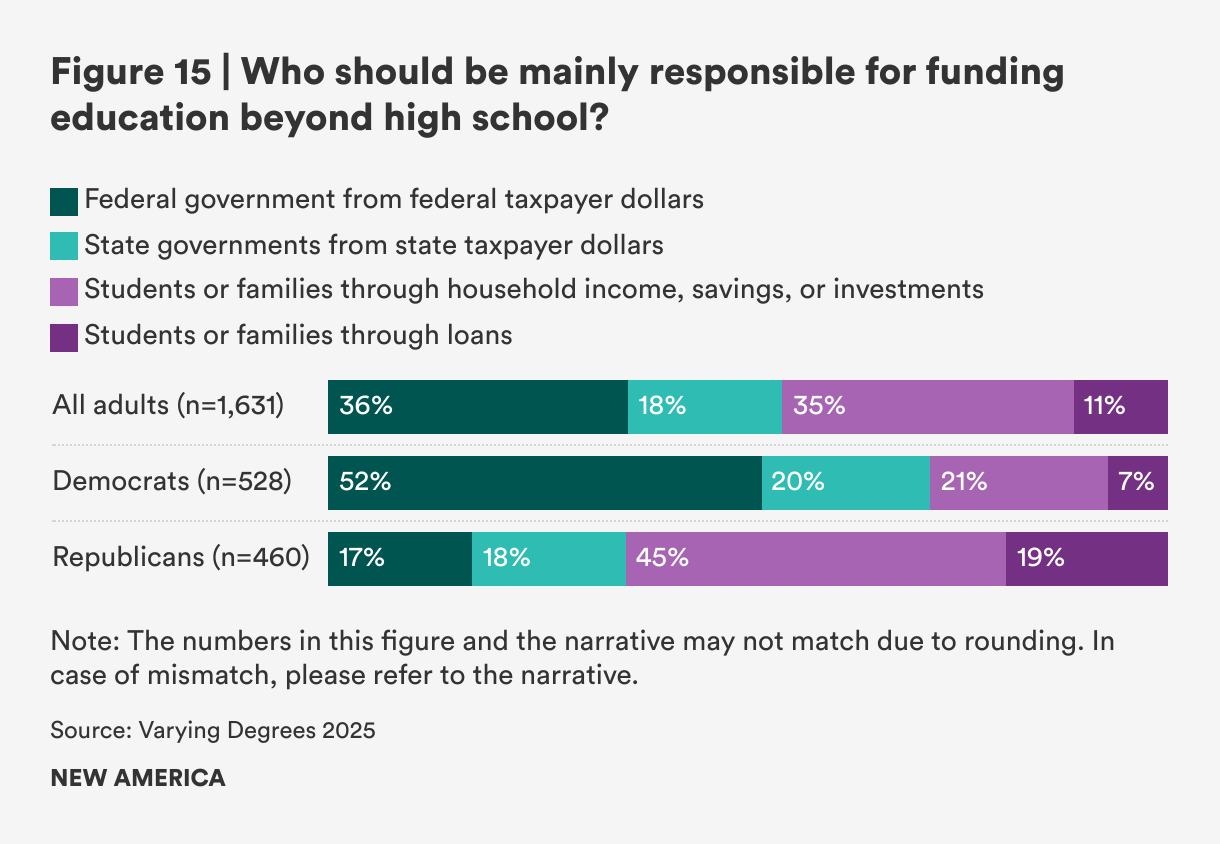
However, partisan differences show when it comes to how higher education should be funded. Half of Americans believe that the government (whether the federal or state) should be mainly responsible for funding education beyond high school, while 45 percent believe students and their families should fund education (whether through their own incomes and savings or loans). While both Democrats and Republicans acknowledge there is an affordability issue with higher education, they disagree on who should pay: 71 percent of Democrats believe the government should bear the main responsibility of college funding, while 64 percent of Republicans believe that students and their families should pay (see Figure 15).
The argument for more government funding for higher education is perhaps rooted in the idea that higher education is a public good and that society benefits from having an educated citizenry and a skilled workforce.7 On the other hand, those who argue students should bear the cost often frame college as a personal choice, since it is students who mainly accrue the benefits of more education, such as higher earnings and career advancement. Therefore, students should foot the bill.
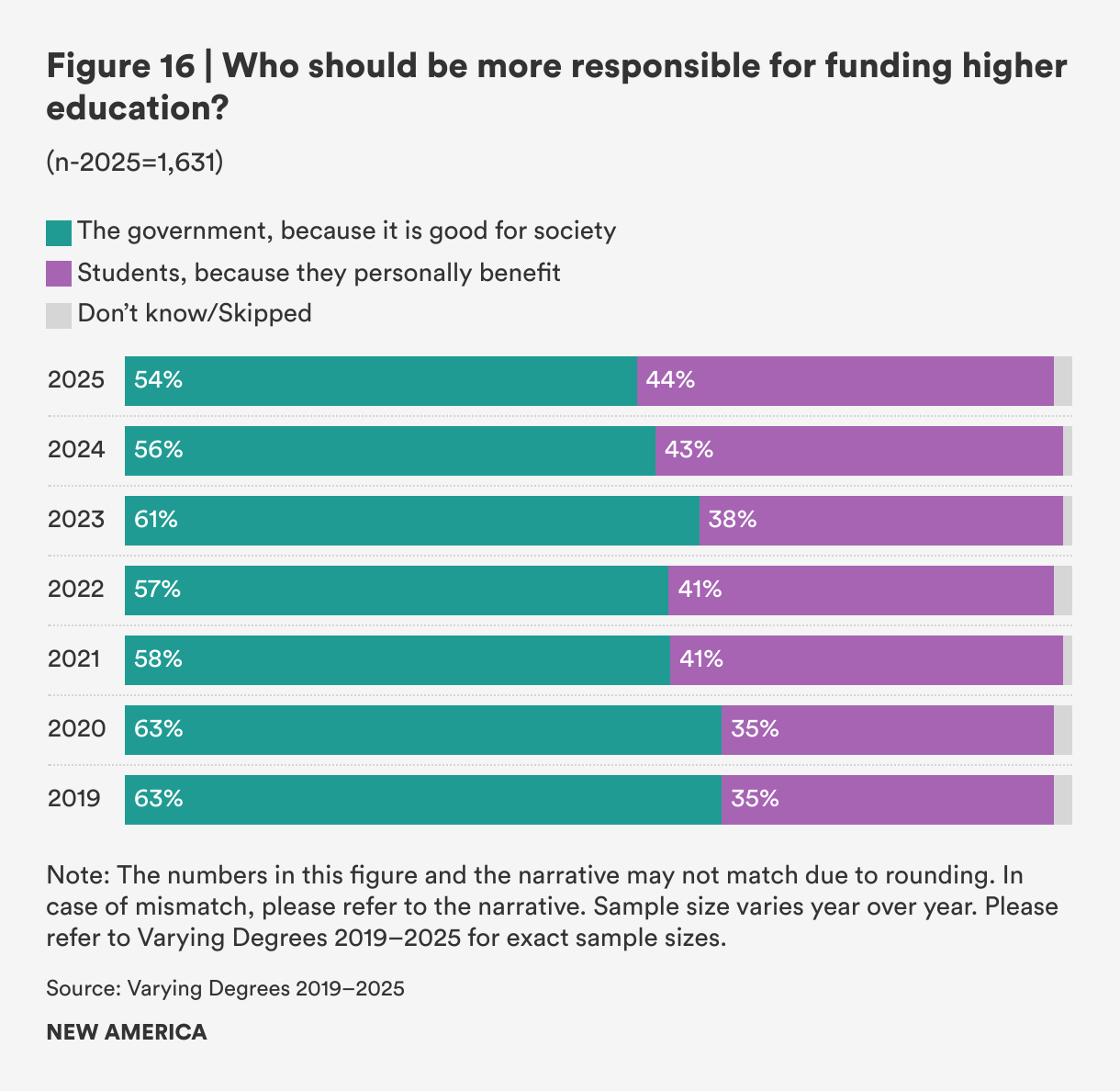
When pressed to choose who should fund higher education—government or students—more than half (54 percent) of Americans choose government, because higher education is good for society, while 44 percent choose students, because they personally benefit. The margin between the two views has gradually narrowed since 2019 (see Figure 16).
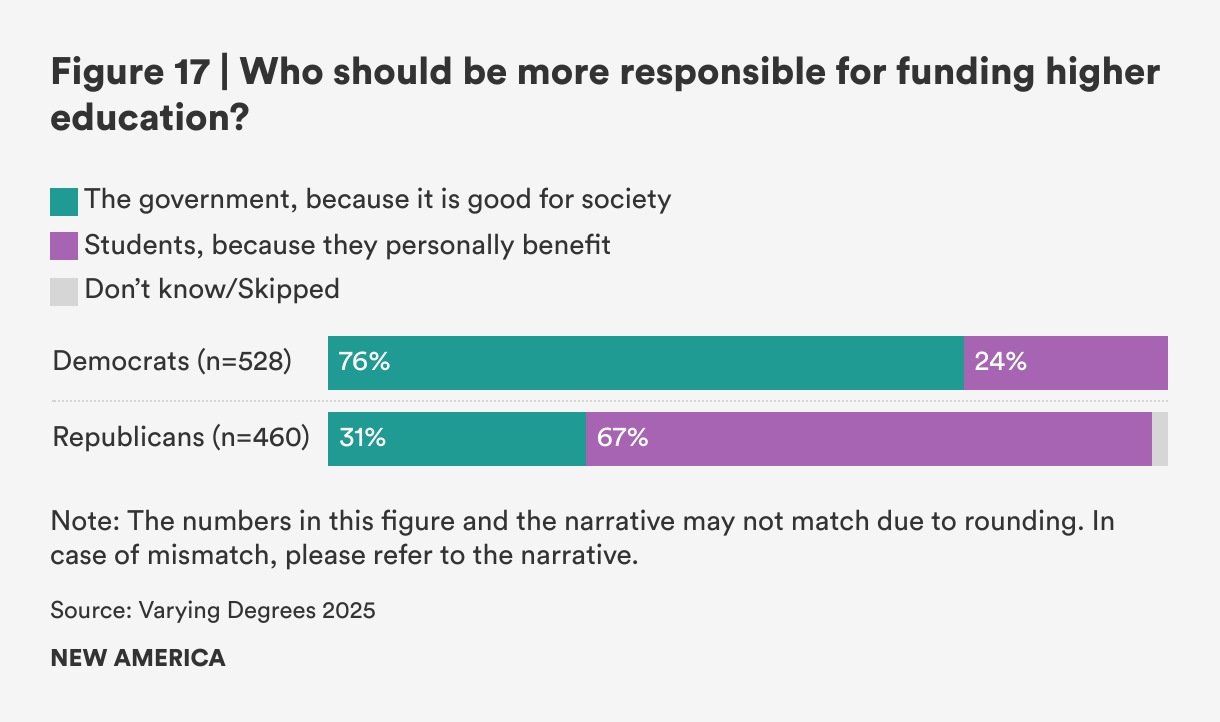
The question of who should fund higher education has historically shown a sharp partisan divide, and this year is no different. While 75 percent of Democrats believe the government should fund higher education, only 31 percent of Republicans think so. In contrast, two-thirds of Republicans believe that students should be responsible for the cost, viewing higher education as a personal investment (see Figure 17).
Americans Still Believe the Federal and State Governments Should Invest More in Higher Education to Improve Affordability
Although Americans may still be split on who should pay for college, a majority believe more investment from both federal and state governments should be made to make higher education more affordable.
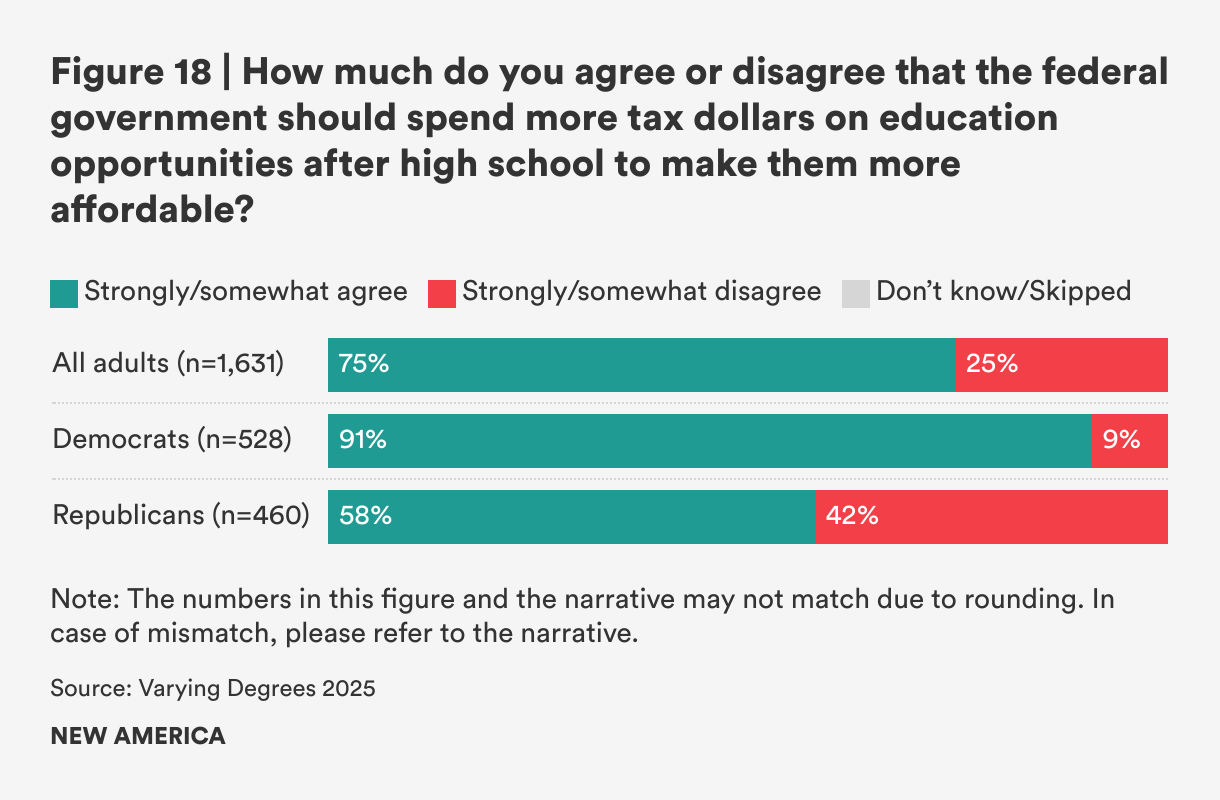
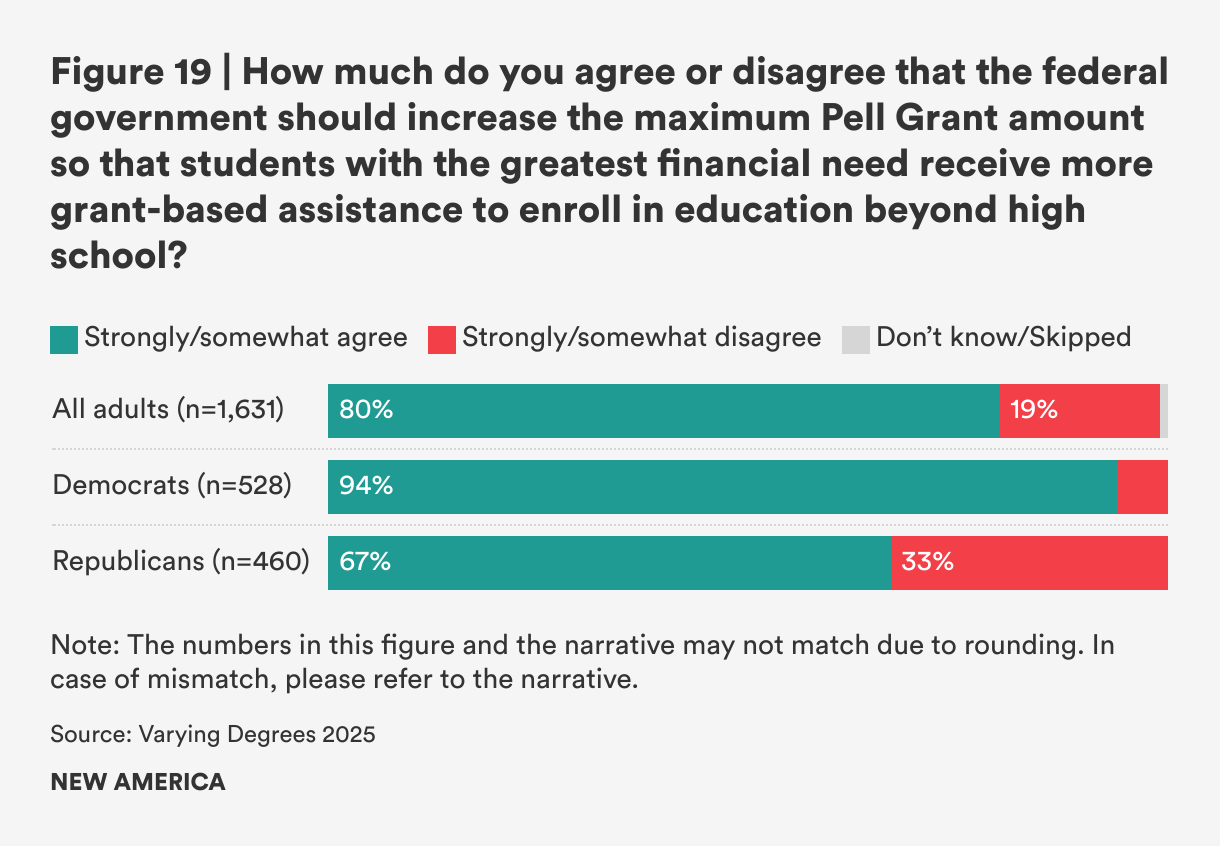
Three in four Americans believe the federal government should increase funding to make higher education more affordable, including 91 percent of Democrats and 58 percent of Republicans (see Figure 18). While there is a 33 percentage-point partisan gap in this question, 58 percent still indicates that a majority of Republicans support greater federal investment for higher education. Eight in 10 Americans agree that the government should increase the maximum amount of the Pell Grant, the largest federal aid program for low-income students. Increasing the Pell Grant receives bipartisan support, with 94 percent of Democrats and 67 percent of Republicans in favor of the idea (see Figure 19).
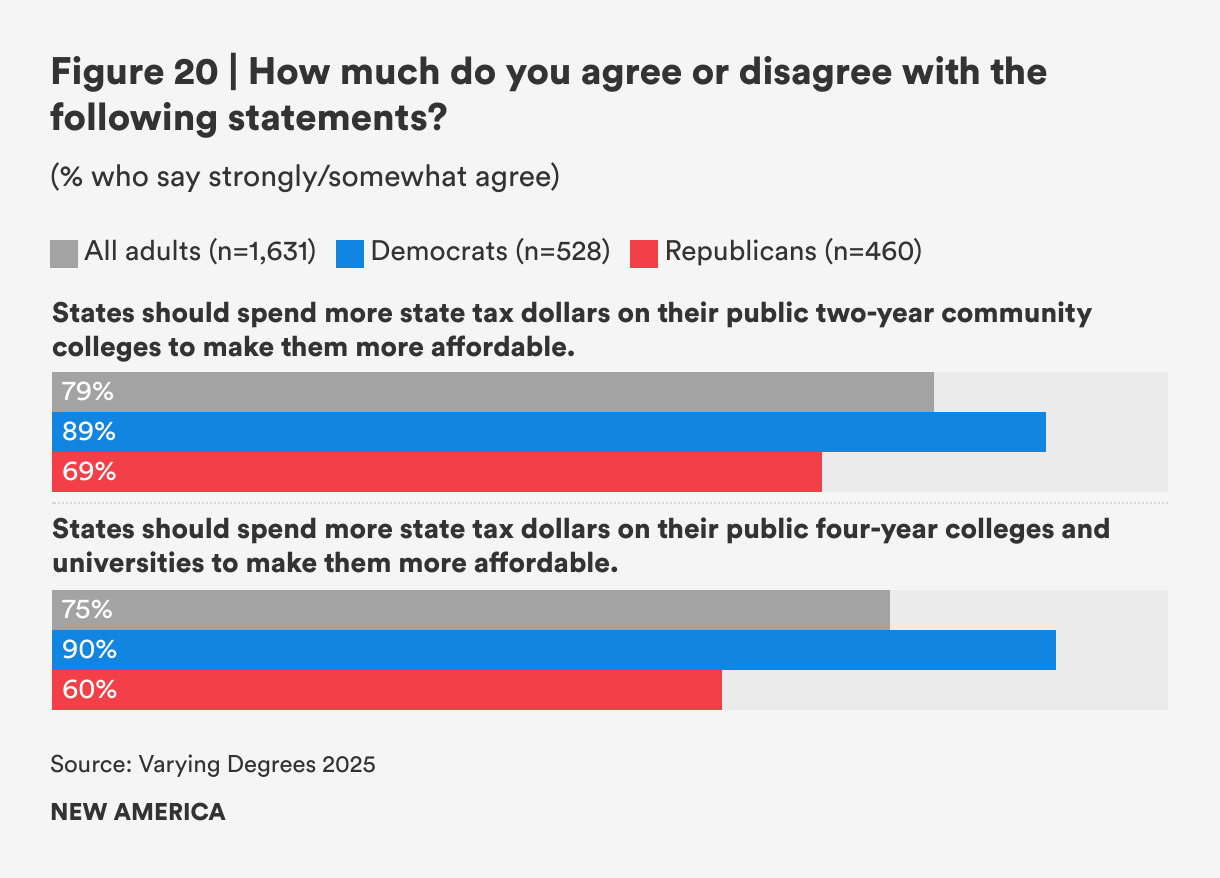
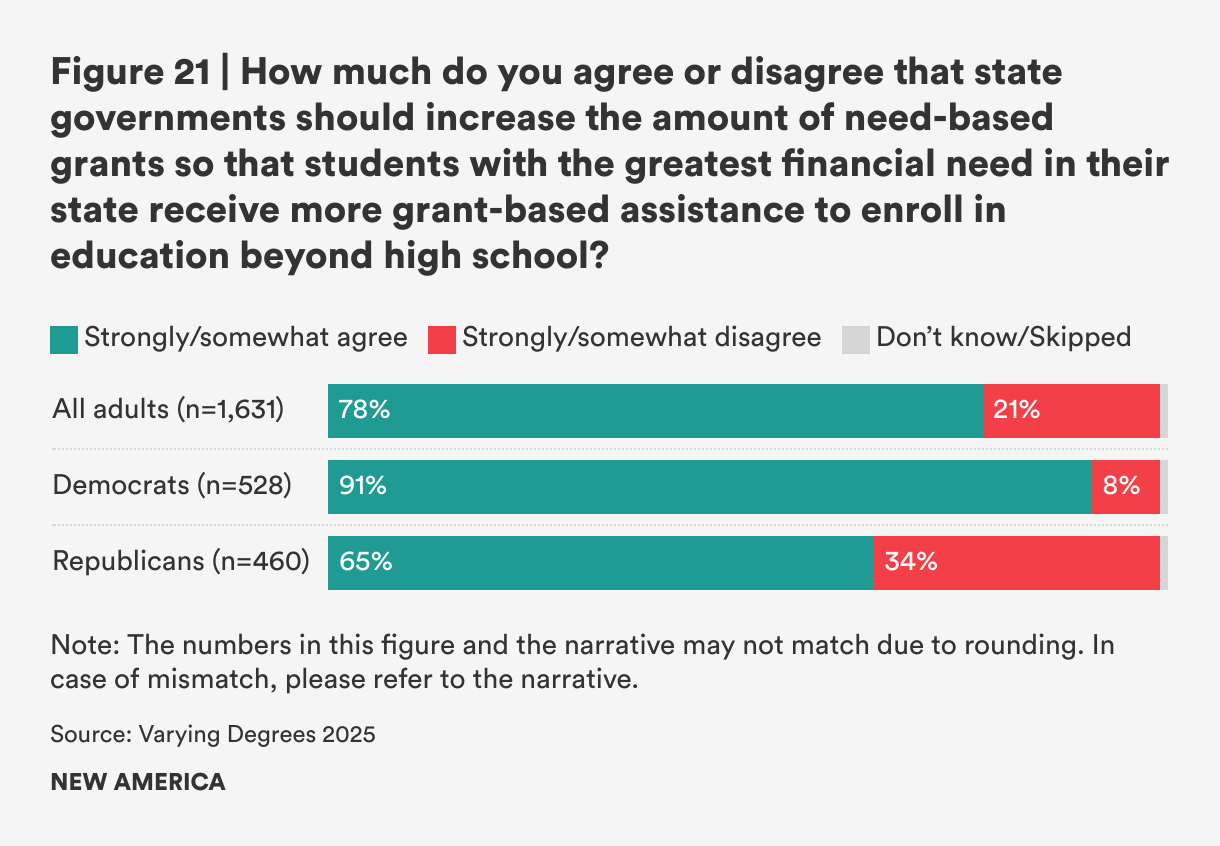
Public higher education in the United States relies heavily on state funding. Most (70 and 75 percent, respectively) Americans believe states should spend more to make community college and public four-year institutions in their states more affordable (see Figure 20). Nearly eight in 10 Americans believe states should expand funding for need-based aid programs so that more low-income students can afford college (see Figure 21). More state funding for higher education also receives widespread support across party lines, with majorities of Democrats and Republicans backing these investments.
Varying Degrees 2025: Americans Find Common Ground in Higher Education
- Executive Summary
- Preface
- Americans Broadly Agree on the Core Values of Higher Education, Despite Some Disagreements
- Americans Are Frustrated with the High Cost of College but Disagree on Who Should Pay
- Historical Trends: Even in Challenging Times, Americans’ Perceptions of Value and Investment Have Stayed Relatively Steady
- Explore the Data
- Appendix: Methodology
Citations
- For more, see Sarah Hebel, “From Public Good to Private Good,” Chronicle of Higher Education, March 2, 2014, https://www.chronicle.com/article/from-public-good-to-private-good/; Sandy Baum and Michael S. McPherson, “Is Education a Public Good or a Private Good?,” Chronicle of Higher Education, January 18, 2011, https://www.chronicle.com/blogs/innovations/is-education-a-public-good-or-a-private-good; and M. Douglas, “Public and Private: What’s the Difference?” Inside Higher Ed, March 6, 2006, https://www.insidehighered.com/views/2006/03/06/public-and-private-whats-difference.