A Chapter of: The Case for Child Care Plus Coworking: A Model that Empowers Families and Neighborhoods
Prologue: A Personal Need for Spaces for Work and Play
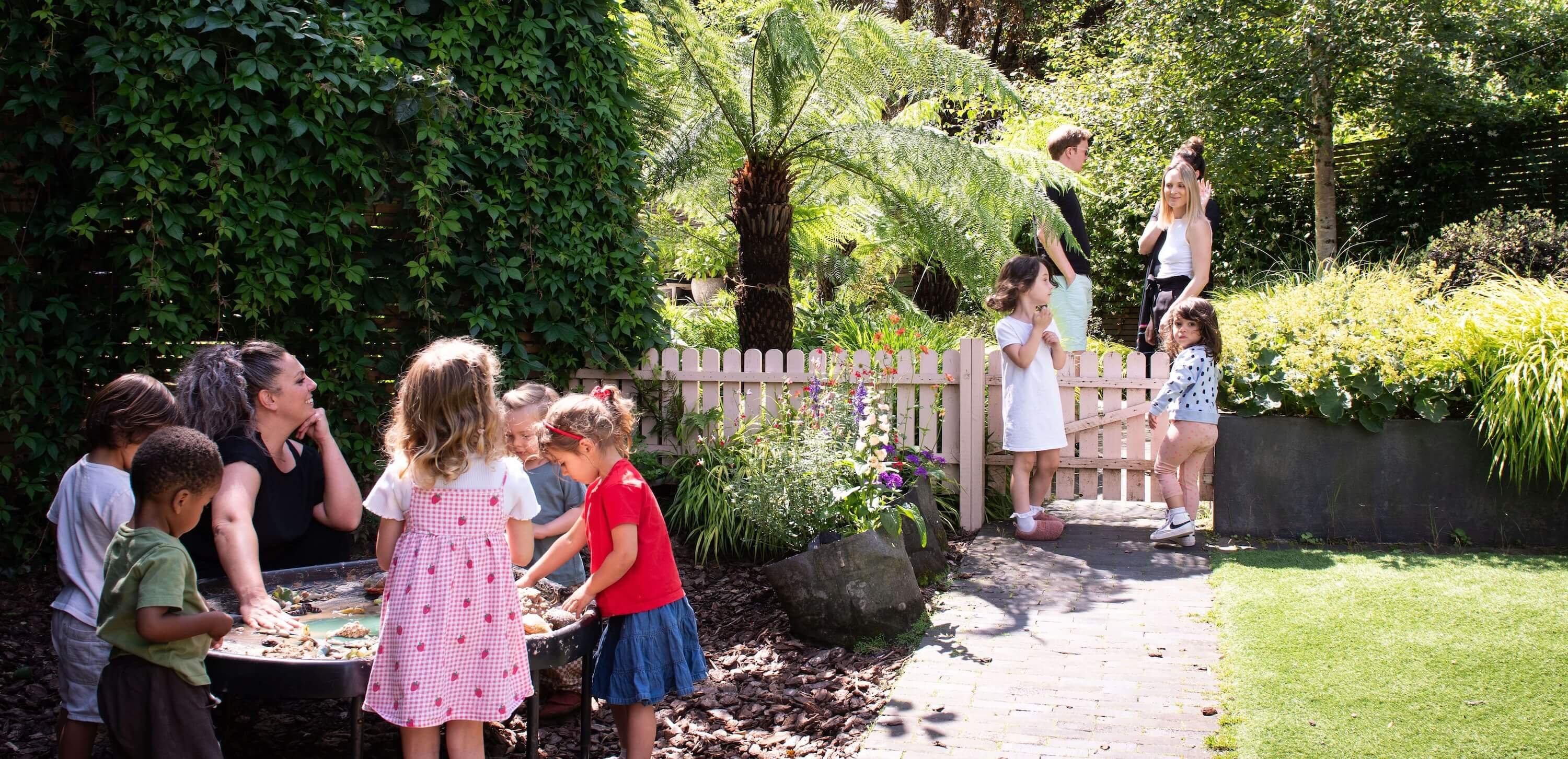
What got you through the pandemic? Many families struggled to reconcile how work and the care and education of children, once so separate and distinct, might be possible simultaneously in the home. When I started working from someone else’s home around the corner, and my two-year-old son accompanied me to play in the garden microschool there, we discovered a simple way that both generations could thrive. Playhood, in London, England, offered coworking space for parents on the same site as a preschool. A woman in my neighborhood, Karen Partridge, had previously worked in creating community spaces and bringing people together to share their skills and access public amenities. She decided to turn her home into just such a space when she discovered that child care options for her son tended to keep parents at arm’s length. She started small, turning a ground-floor apartment space in the north London suburb where I lived at the time into a devoted office for us adults, who arrived to remote work each morning after dropping our children in her garden behind the house. There, a little fence and gate demarcated the devoted space for our children: areas for playing and growing plants and a studio space fitted out as a classroom that was all overseen by two licensed Montessori-trained teachers. We spent four days a week just 80 adult steps (160 toddler paces) away from each other in our own distinct spaces, and yet it quickly became clear that there were many overlaps and connection points throughout the day.
In addition to Partridge, her two-year-old son, and us, two other local families initially signed up for this dual proposition at Playhood, which opened in June 2020. I soon discovered it was a step change from the hands-off experience I’d had with my older son back when he started nursery school. There, it felt as if the teachers only saw me as a mother who occasionally forgot the rainboots or snuck in chocolate. And, though I received reports about his week and diligently filled out every form required, it felt distant and impersonal—and sometimes uncomfortable and unfair even—that the drop-off door separated our worlds so completely.
Anecdotes from Co-Designing a Community
In my personal experience, the parents and staff embarked on a journey together to create both a conducive coworking space for parents and a high-quality, loving early childhood care and education experience for the children, at the same site. We found ourselves working in collaboration with each other, and increasingly with the teachers, to build a supportive local community for very unusual times. We contributed ideas and resources to the teachers’ design of the curriculum, based on discussion of our children’s emerging interests, seasons, or the festivals important to each family. Parents would give workshops and visit for observations. The teachers took turns to eat lunch with the parents. We had a chance to get to know each other, become friends, and develop a deep understanding and appreciation for the important work of teaching young children. And when crisis or illness hit, the community readily sprang into action, caring for one another’s children, bringing meals, and sharing advice. Reciprocity and grace for vulnerability established deep bonds, making the fun social connections and shared celebrations the benefits that came along with that earned trust.
For about $2,000 a month membership fee, I had a light, warm, clean, and quiet place to work flexibly between the hours of 9 a.m. and 5 p.m. Meanwhile, my son had a stimulating and joyful experience with a handful of friends aged 18 months to four years old. In between the two zones was the open-plan kitchen, centralizing the lunch and snacks and offering a place to casually gather for breaks. Visitors often worried that the children in such a setting would become dysregulated if they glimpsed at their parents and wanted to be with them. That is the experience oftentimes with traditional child care programs, where extricating is tricky for all concerned or a parent’s appearance can disrupt the day. Interestingly, at Playhood, the children seemed to find a real sense of safety in the awareness of their parents’ proximity. One of the older toddlers summarized, “At first I cried, but now I know mummy is just in the house doing her work.” In fact, they came to true pride and ownership of their own space.
The children understood the symmetry: As my son, just three years old at the time, said one morning to me, “We both take our backpacks and our water bottles. I’ve got a Show-and-Tell, and you’ve got your notebook.” There were many mirror lines in our days. A postpartum fitness session in the parents’ outdoor space would be humorously copied by the kids in their garden who spotted the moms from their climbing apparatus. When they headed out to the park or off on a neighborhood adventure, they’d wave through the workspace windows hollering, “Hello! Love you! See you later!” We each had a window into the other’s world and could come and go harmoniously, working or playing, neither privileged nor competing. “There’s no boss at Playhood!” announced a child one day—and it represented to me the possibility of flattening hierarchies in how we work and care.
Looking Beyond Our Walls
The Playhood community grew eventually to eight children and their parents each day, serving a total of 20 families in a north London suburb between 2020 and 2025. I remember the day I realized that I was giving my son the best possible start in life, hands down, even as I was able to build my career. And all while we are living through a pandemic. I wanted to explore the notion that something special was happening, beyond the convenience factor of a set-up without a commute or separate drop-off, and I began to wonder if others anywhere else were experimenting with this model. Did co-location elsewhere similarly unlock more than simplifying family routines?
To explore this, I first began searching on Google Maps, looking for coworking spaces that also listed child care facilities. I came across others sharing their story on Instagram, and decided to track what I found in a spreadsheet in order to compare the iterations of the model.
Having a background in research and strategy uncovering insights about family life to help brands develop products and services for parents, I worked with Karen Patridge, the founder of Playhood, on a case study about our model. We talked about new metrics for the success of the community, including professional networking benefits where our members had helped one another find work, and the money families saved by using our toy library and the redistribution of used kids’ scooters, bikes, and books. I’d been tracking reports about the shift to remote work and the impact of COVID-19 on the child care sector, and I knew that the feeling of resilience and thriving that we in the Playhood community were feeling was absolutely not the norm. As I continued searching, happily, it turned out that other grassroots communities and entrepreneurial partnerships discovered positive experiences of mutual aid, solidarity, and support with similar models of co-located independent work and care. I began reaching out to connect with founders and practitioners to attempt to document this emerging phenomenon and compare notes. Many founders I met were mothers themselves in search of their own work and care solutions, like Partridge. I also found that, far from a mother-only space, more fathers were becoming interested and involved in the model.
Interest from academics in examples of strong caregiver–parent partnerships, especially during a time of child care shutdowns, school closures, and social distancing, sparked exciting conversations with social entrepreneurs looking to rethink how we arrange work and care. The more I connected with others in the space, crossing borders of nation and culture, the more I discovered how transformative the experience of meshing our work, parenting, and child care could be for a wide range of families. I heard things like, “If I’d had a solution like this earlier, we would have had another child.” I heard how proximity to their babies and toddlers and peer support enabled moms suffering complex trauma to gain enough confidence to re-enter the workplace. I learned that businesses can be radically transparent and adaptable in collaboration with their service users. I saw that very young children could comprehend their parents’ work, rather than it being so hidden from them. I observed how community and neighborhood connections were strengthened, and how conversations moved fluidly from talking about miscarriage support to coaching for job interviews.
“The more I connected with others in the space, crossing borders of nation and culture, the more I discovered how transformative the experience of meshing our work, parenting, and child care could be for a wide range of families.”
These discoveries grew into a personal mission. I wondered if a model that got a handful of families through a pandemic could help many more cope in the face of new challenges to family, work, care, and well-being.
I wanted to shine a light on the shift from the moms-only membership model to shared use of the coworking space by partners, believing the growing participation of dads I was hearing about pointed towards greater relationship equity. At the same time, the respectful working conditions, fair remuneration principles, and investments in professional development for child care teachers and workers pointed to the possibility of uplifting a long-devalued child care workforce, in which immigrant women and women of color are overrepresented. In addition, the visibility of care-as-work, and the ability for young children to see their parents’ multifaceted identities close up, placed caregivers and parents shoulder-to-shoulder as equals in powerful ways for both. I knew these human stories had to be shared more widely so that the valuable learning didn’t get sidelined in a looming return to pre-pandemic norms.1 I set about interrogating how this model could be part of potential lasting structural change in how we work and care.
Applying for the Innovative Child Care Reporting Grant from the Better Life Lab in the spring of 2025 allowed me to carry out initial revelatory visits to co-located businesses in New Jersey and North Carolina to compare with the United Kingdom setting I knew so well. I conducted video interviews and virtual tours with founders, parents, and child care workers in Colorado, Georgia, Indiana, Iowa, Maryland, New York (Manhattan and Brooklyn), Oklahoma, Pennsylvania, Rhode Island, Washington, and Virginia. The list grew as I kept finding more small, independent settings. Some offered informal, drop-in care for three hours a day, others more structured, long-term work and care arrangements like my son and I experienced at Playhood. It turned out that very few even knew of each other’s existence: Founders were so focused on serving their immediate local communities, they’d not yet accessed any kind of peer support. Each was testing out hyperlocal and site-specific ways to grow a business. The next step in my desk research was to study and evaluate other settings I found operating in Arizona, California, Florida, Illinois, Massachusetts, Minneapolis, Ohio, Texas, and Wisconsin, collating findings in a spreadsheet to keep track of the types of child care provision (ad hoc or full-time programs) and workspace amenities (hot desking or private offices) along with details like their costs and membership terms. While reviewing their websites, media coverage, and social media accounts, I kept notes on descriptive language about their origin stories and services offered to analyze business value propositions and brand positioning, along with content and marketing strategies.
Venturing Even Further Afield
I sought to understand the wider context by interviewing five child care policy experts and leaders of neighborhood development organizations and looking up historical examples of co-location. I discovered that the model had been explored since at least 2008,2 but had repeatedly proven unsustainable. I looked at 22 co-located child care and coworking ventures in 12 countries that had closed down to understand the limitations of this model. I researched how, though some coworking spaces seek to meet the needs of female entrepreneurs, job-seekers, or families of color, most programs tend to reach middle-class knowledge workers who typically have more resources and options than single parents or those who work in hourly, service, and retail jobs. I looked into how the lack of public funding in the child care sector,3 particularly in the United States, limits possibilities for all kinds of child care, including this innovative model.
This fueled the determination to find out what the crucible of the pandemic could offer to catalyze a more stable, lasting solution. So I went global with the project and set about interviewing founders in Australia, Canada, Germany, Greece, and Scotland, while adding analysis of settings in Austria, Brazil, Chile, Colombia, the Czech Republic, Egypt, France, India, Italy, New Zealand, Russia, Singapore, Spain, Sweden, Switzerland, Taiwan, and Ukraine. It was astonishing and heartwarming to hear that essentially the same very simple idea was being piloted, primarily by mothers who’d decided to switch careers in order to establish care and work solutions for their communities, in such a diverse range of places and policy backdrops.
Given that this project was conceived as a narrative change effort aimed at envisioning an equitable, universal child care system in the United States that works for all families, this report begins with a brief introduction to coworking spaces, followed by a focus on sharing the stories of the families who founded these centers where work and care are jointly nurtured, as well as the parent community members who have benefitted from them. The second section delves into the workforce that enables co-located settings to thrive, showcasing their experiences and challenges. The final section of the report highlights promising early evidence from my investigation that benefits can extend beyond parent members and caregiver employees to include support for other local families and boost neighborhood engagement. It also recognizes current limitations of the coworking model, now available primarily to knowledge workers who can work at a computer, and proposes solutions to make it available to a broader array of workers, particularly hourly and service workers, as well as measures to improve sustainability. Finally, I call for the creation of a coalition of co-located settings founders to share their learnings with one another and collaborate globally to meet the needs of families with children everywhere.
Three Reasons Why We Need These Stories Right Now
This is a critical moment to recognize and explore this trend because the window of opportunity may be closing. There are three reasons for this.
- Remote work—an essential ingredient in hybrid spaces—is becoming increasingly precarious, thanks to a growing wave of back-to-office mandates.4 Economists say this backlash has contributed to many women, college-educated mothers in particular, being forced out of the workforce.5
- Accessible co-designed caring communities might be a grassroots counterweight to the growing number of premium private “family clubs.”6 These exclusive spaces focus on leisure and well-being or dining activities, along with spaces for parents to work and for children to play, for those who can afford the high-end membership fees.
- The social enterprise potential of the neighborhood co-location model offers further resistance to the trend towards private equity–backed care operations.7 These chains are buying up small child care settings and raising prices or shuttering locations in economically struggling communities, at a time when reliance on family, friend, and neighbor care is increasingly the choice or necessity for families. Care by families, friends, or neighbors accounts for almost 40 percent of child care in the United States today and is growing.8
The Case for Child Care Plus Coworking: A Model that Empowers Families and Neighborhoods
- Prologue: A Personal Need for Spaces for Work and Play
- Introduction: The Rise of Coworking Spaces and the Opportunity to Broaden Access
- Part I. Building Capacity for Families’ Resilience: Stories from Founders and Parents
- Part II. Boosting Opportunity for the Child Care Workforce: Stories from Practitioners and Parents
- Part III. Challenges and Opportunities for Scaling Shared Sites
- Conclusion
Citations
- Valentina Duarte and Jennifer Liu, “5 Years into the Remote Work Boom, the Return-to-Office Push Is Stronger than Ever—Here’s Why,” CNBC, March 23, 2025, https://www.cnbc.com/2025/03/23/5-years-into-the-remote-work-boom-the-return-to-office-push-is-stronger-than-everheres-why.html; Theara Coleman, “Trump’s Federal Return-to-Office Mandate Descends into Chaos,” The Week, April 9, 2025, https://theweek.com/politics/federal-return-office-mandate.
- “Cubes & Crayons, California,” Coworking Wiki, accessed September 10, 2025, https://wiki.coworking.org/w/page/16583802/Cubes%20and%20Crayons%20Coworking.
- Jackie Mader, “Child Care Crisis Deepens as Funding Slashed for Poor Families,” Hechinger Report, November 1, 2025, https://hechingerreport.org/child-care-crisis-deepens-as-funding-slashed-for-poor-families/; Larry Handerhan, “The Hidden Cost of HHS Cuts: Why Every Family Should Care,” Center on Poverty and Inequality, Georgetown University Law Center, May 15, 2025, https://www.georgetownpoverty.org/issues/the-hidden-cost-of-hhs-cuts-why-every-family-should-care/.
- Duarte and Liu, “5 Years into the Remote Work Boom, the Return-to-Office Push Is Stronger Than Ever,” https://www.cnbc.com/2025/03/23/5-years-into-the-remote-work-boom-the-return-to-office-push-is-stronger-than-everheres-why.
- Matthew Nestler, “The Great Exit,” KPMG, October 1, 2025, https://kpmg.com/us/en/articles/2025/october-2025-the-great-exit.html.
- Kim Velsey, “Here Come the Urban Country Clubs,” Curbed, July 16, 2025, https://www.curbed.com/article/luxury-private-clubs-families-brooklyn-heights-the-beginning.html.
- Elliot Haspel, “‘The End User Is a Dollar Sign, It’s Not a Child’: How Private Equity and Shareholders Are Reshaping American Child Care,” The 74, April 22, 2024, https://www.the74million.org/zero2eight/the-end-user-is-a-dollar-sign-its-not-a-child-how-private-equity-and-shareholders-are-reshaping-american-child-care/.
- Lauren Coffey, “Majority of Parents Rely on Friends and Family for Child Care, Report Finds,” EdSurge, May 2, 2025, https://www.edsurge.com/news/2025-05-02-majority-of-parents-rely-on-friends-and-family-for-child-care-report-finds.