7/3 FCC Comments On Legal Questions Surrounding 3.7-4.2 GHz C-Band
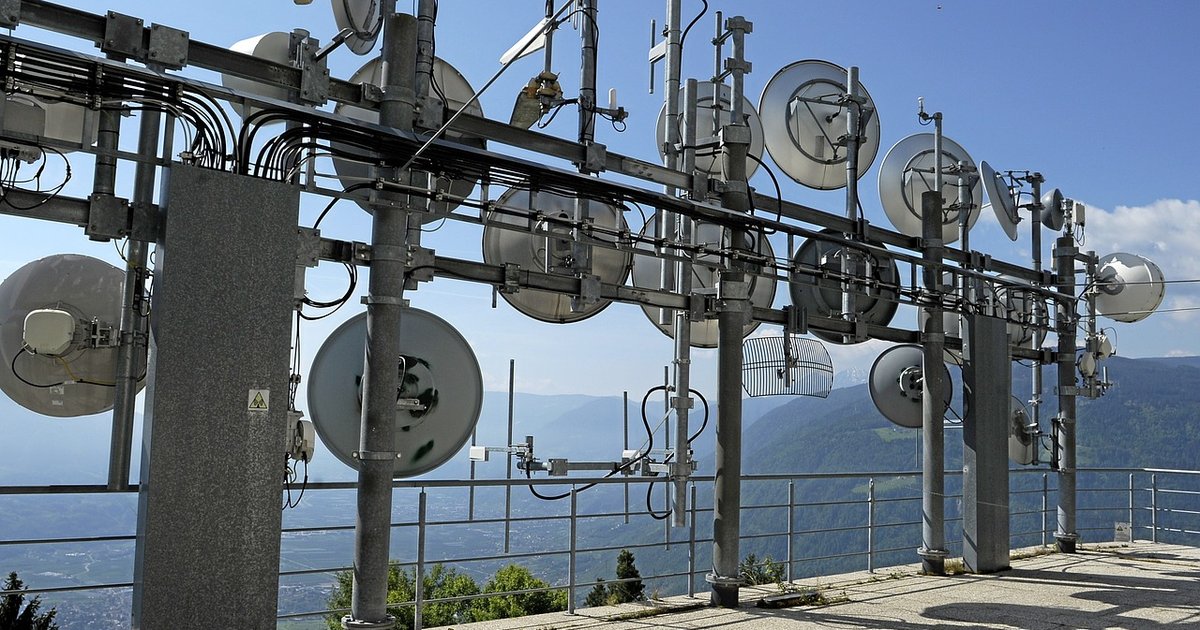
New America's Open Technology Institute submitted comments to the Federal Communications Commission (Commission) answering a series of legal questions surrounding the fate of the "C-Band", the 3.7-4.2 GHz band that is currently allocated for (but highly underutilized by) fixed satellite service providers. The C-Band offers great promise, if the Commission allocates some of the band for licensed, point-to-multipoint fixed wireless service to empower wireless internet service providers to bring high-speed broadband to rural and other hard-to-serve areas of the country. An introduction and summary is available below:
OTI continues to strongly support the overarching goal of the Commission’s NPRM, which at its most basic is to ensure that all 500 megahertz of today’s grossly underutilized C-band are put to work to both fuel America’s 5G future as well as to close the rural broadband divide. The NPRM’s clearing and sharing proposals each represent an essential component of a potential win-win-win solution that achieves three vital public interest outcomes: First, to enable fixed wireless providers to bring high-speed broadband access to rural and other underserved areas; second, to reallocate a substantial portion of the band available for mobile 5G networks; and third, to protect incumbent Fixed Satellite Services (FSS) licensees from undue disruption or harmful interference. OTI and the Public Interest Spectrum Coalition (PISC) continue to strongly support this balanced approach that includes a public auction for the portion of the band that can be cleared of FSS and, across the entire band, coordinated shared access to unused spectrum for high-capacity, fixed wireless point-to-multipoint (P2MP) services.
In response to this Public Notice, OTI reiterates what PISC and so many diverse parties have already stated on the record: The authorization of a private auction or sale would violate Section 309(j) of the Communications Act and willfully ignore Congressional intent and precedent. Congress has twice passed legislation ensuring that when the TV bands at 700 MHz and 600 MHz were consolidated for auction, local broadcast stations would either receive no windfall (the 2002 Auction Reform Act) or receive at most incentive payments limited by a competitive reverse auction (the 2012 incentive auction bill). The Commission has no legal authority to authorize, let alone oversee, a private auction. General provisions such as Sections 303(c), 303(r) and 4(i) cannot possibly provide the authority for a public or private auction that is not consistent with the explicit provisions of Section 309(j).
The private auction proposed by the C-Band Alliance is also likely to distort competition in the mobile market by excluding smaller ISPs and other potential entrants. Incumbents have a strong incentive to maximize their windfall rather than the broader public interest. Moreover, a private sale would set a dangerous precedent, suggesting that incumbent licensees should always wage maximum resistance against giving up or sharing unused spectrum unless the Commission agrees to give them all the public revenue that until now has always, with few exceptions, flowed back to the public, as Section 309(j) clearly intends.
The speediest, most straightforward option consistent with the Commission’s statutory authority is a traditional forward auction that consolidates FSS incumbents into the upper portion of the band and requires auction winners to reimburse incumbents for any eligible and reasonable costs. Unlike a private auction, which would clearly violate Section 309(j), the courts have consistently upheld the Commission’s authority to reorganize bands, modify licenses, and authorize mechanisms that reimburse incumbents’ costs. There is strong precedent from multiple prior proceedings to support license conditions that require winning bidders to shoulder the costs of relocating FSS incumbents and to voluntarily negotiate reasonable premium payments, as needed, to incumbents in exchange for expedited clearance.
Facilitating this approach is the fact that receive-only earth stations possess neither the “station license” necessary to have Title III rights cognizable under Section 316, nor the “licensed spectrum usage rights” necessary to be eligible to receive incentive auction payments authorized by Section 309(j)(8)(G). Following a Commission order that reduces the range of C-band frequencies on which FSS operates, new fixed service entrants (viz., the fixed point-to-multipoint deployments contemplated in the NPRM) would continue to be required to coordinate shared use of the band in a manner that avoids harmful interference to C-band incumbents.
Further facilitating a traditional auction and band reorganization here is the fact that the courts have repeatedly upheld the Commission’s broad authority under Section 316 to modify licenses at any time provided the agency makes a public interest finding and does not fundamentally change the license. Reducing the range of C-band frequencies in which space stations are guaranteed interference protection would not represent a “fundamental change” in their rights, provided that satellite operators are able to continue operating essentially the same service. Changing or reducing the frequencies used by a licensed service is a type of modification the Commission has ordered multiple times in the past
Finally, OTI and PISC strongly support the Commission’s proposal to end the antiquated “full-band, full-arc” coordination policy that allows FSS earth stations to reserve exclusive use of the entire 3.7 GHz band without regard to actual use. The effective warehousing of vacant spectrum that results from full-band, full-arc coordination violates basic principles of spectrum management, particularly now that mid-band spectrum is scarce and perfectly suited to provide faster and more affordable fixed wireless broadband in underserved areas.
Issues
Programs/Projects/Initiatives
Topics
Related


Joint Comments Urging FCC to Make Changes Ensuring Upper C-band Is Available for More Intensive Licensed and Shared Use