
8/7 FCC C-Band Comments On Behalf of Broadband Connects America Coalition
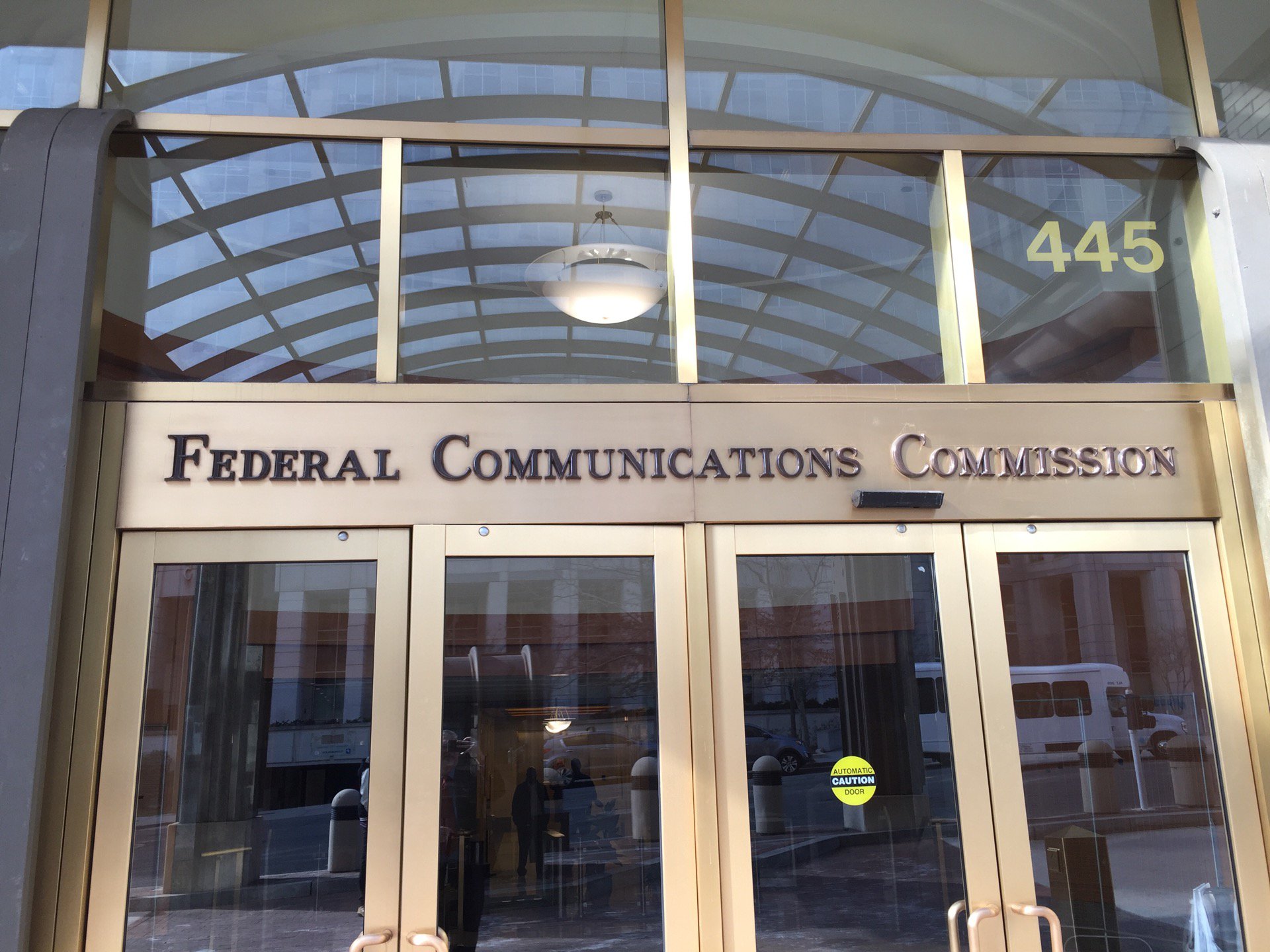
New America's Open Technology Institute wrote and submitted comments on behalf of the rural-focused Broadband Connects America coalition urging the Federal Communications Commission ("Commission") to open up the 3.7-4.2 GHz band ("C-Band") for authorized point-to-multipoint fixed wireless services in rural, Tribal, and other hard-to-serve areas to immediately provide relief to communities that currently lack high-speed broadband services. The comments are the latest in a series of filings in this proceeding, and specifically respond to studies filed in the docket that show the promise and the public interest benefits of fixed wireless services being deployed in the C-Band. The Center for Rural Strategies, Tribal Digital Village Network, California Center for Rural Policy, the Schools, Health & Libraries Broadband Coalition (SHLB), National Digital Inclusion Alliance, Institute for Local Self-Reliance, American Library Association, Public Knowledge, Access Humboldt, and X-Lab all signed on as well. An introduction and summary is available below:
Americans living in rural, Tribal and small town communities currently have lower rates of broadband access, few competitive choices, and often pay more money for worse service despite earning less on average than Americans in well-connected urban and suburban areas. The grossly underutilized 3.7-4.2 GHz C-Band can provide critical spectrum both for 5G (to enhance mobile network capacity) and for more immediate efforts to bridge the rural digital divide with high-speed and affordable fixed wireless broadband. Accordingly, the BCA coalition strongly supports the Commission’s proposal to open unused spectrum in the 3.7-4.2 GHz band for coordinated sharing by fixed wireless providers to extend high-speed broadband to underserved areas. Coordinated, shared use of unused spectrum in the Fixed Satellite Service (FSS) portion of the band by fixed wireless providers can make a major difference in bringing connectivity to areas where the business case has been lacking for fiber-to-the-home connections.
Fixed wireless point-to-multipoint (P2MP) deployments represent the most cost-effective option for high-capacity broadband in rural and other less densely-populated areas if sufficient mid-band spectrum can be made available on a very localized basis. The introduction of highspeed broadband access has been well-documented as a catalyst to local economies. Equipping thousands of local wireless internet service providers (WISPs), local communities, and other local and regional operators with otherwise unused C-Band spectrum capacity can immediately narrow the rural digital divide and boost the economies in those areas.
The Reed Engineering Study filed by WISPA, Microsoft and Google demonstrates that a combination of geographic protection zones and directional antennas allow the Commission to authorize localized high-speed P2MP fixed wireless broadband service in areas covering nearly 80 percent of the United States – mostly rural and less densely populated areas where 80 million Americans live. BCA agrees that the study establishes a strict frequency coordination requirement should remove any concern about harmful interference to FSS incumbents.
The Reed study reconfirms what the record and earlier filings already showed: that like the currently co-primary Fixed Service, P2MP fixed wireless operators can effectively use directional antennas and coordinate sectors of coverage with no risk of harmful interference to FSS earth stations. A strict coordination requirement should remove any concern about harmful interference from P2MP to FSS earth stations, a concern that is already mitigated by the static nature of FSS and the very directional nature of P2MP fixed wireless operations.
It’s also critical to understand that the Reed study focused on the more challenging and limited option for sharing FSS spectrum: Co-channel sharing. It did not consider the less challenging scenario – which is adjacent channel sharing, enabled by frequency separation – in large part because the overall size of the ongoing FSS band remains undecided. By making such conservative assumptions (e.g., that all earth stations are operating on every transponder across the entire 500 megahertz), if anything the Reed study greatly underestimates the potential for coordinated P2MP access to C-band to rapidly and affordably narrow the rural digital divide
In addition, the Commission can do even more to enable higher-capacity and more affordable broadband services in rural, tribal, and other less-densely-populated areas by making unused spectrum available as public infrastructure for P2MP services across the entire 3.7 GHz band. While the Reed engineering study demonstrates that every megahertz of the ongoing FSS band can be used to deploy P2MP fixed wireless services on a licensed basis in 80 percent of the country, this “rural dividend” can be hugely amplified if the Commission authorizes an automated frequency coordination (AFC) system to manage opportunistic access to the future flexible-use portion of the band, on a use-it-or-share-it basis, for as long as it remains unused. Just as the Spectrum Access Systems in CBRS will soon allow immediate, opportunistic use of Priority Access License spectrum until licensees commence service, an AFC can likewise absolutely avoid harmful interference to primary licensees across the 3.7 GHz band. And although coordinated sharing between P2MP and FSS can begin immediately, using traditional manual coordination, certification of an AFC will lower the cost and improve the reliability of shared access to unused spectrum across the entire band.
Issues
Programs/Projects/Initiatives
Topics
Related