It’s Not Babysitting: See ECE Teachers in Action
Videos that demonstrate the complexity of an early childhood educator's job
Research shows that teaching and learning environments for young children are most effective when they are based on findings from the science of child development, which include but are not limited to the provision of opportunities for children to engage in hands-on exploration, question-asking, and discovery; positive relationships and enriching back-and-forth social interactions; and targeted and personalized instruction that is tailored to a child's specific needs, growth, and development across multiple domains and subject areas.
What does this look like in practice? The videos below help to answer this question and point to the sophistication of the job of early childhood educator. These videos make the case for why educators working with children, birth to five, need increased credentials that equip them with specialized knowledge of how young children learn and develop. And, they help illustrate why educators should have compensation on par with their elementary educator peers. To realize these ideas, we need ways to untangle the knot that has slowed progress to transform the early childhood education field thus far and figure out how to finance a sustainable, equitable system that centers on providing high-quality programs and experiences for our youngest learners.
The videos below come from various organizations and programs and include never before seen footage captured during the filming of No Small Matter. We will continue to add videos to this page. For other resources and writing on promoting young children’s growth and discovery, check out this New America collection page.
Pre-K
The videos below take place in classrooms with three- and four-year-olds and several include footage captured during the filming of No Small Matter.
ECE Practitioner Perspectives Video - OSU
Watch video here or by clicking on the arrow in the bottom right of this window.
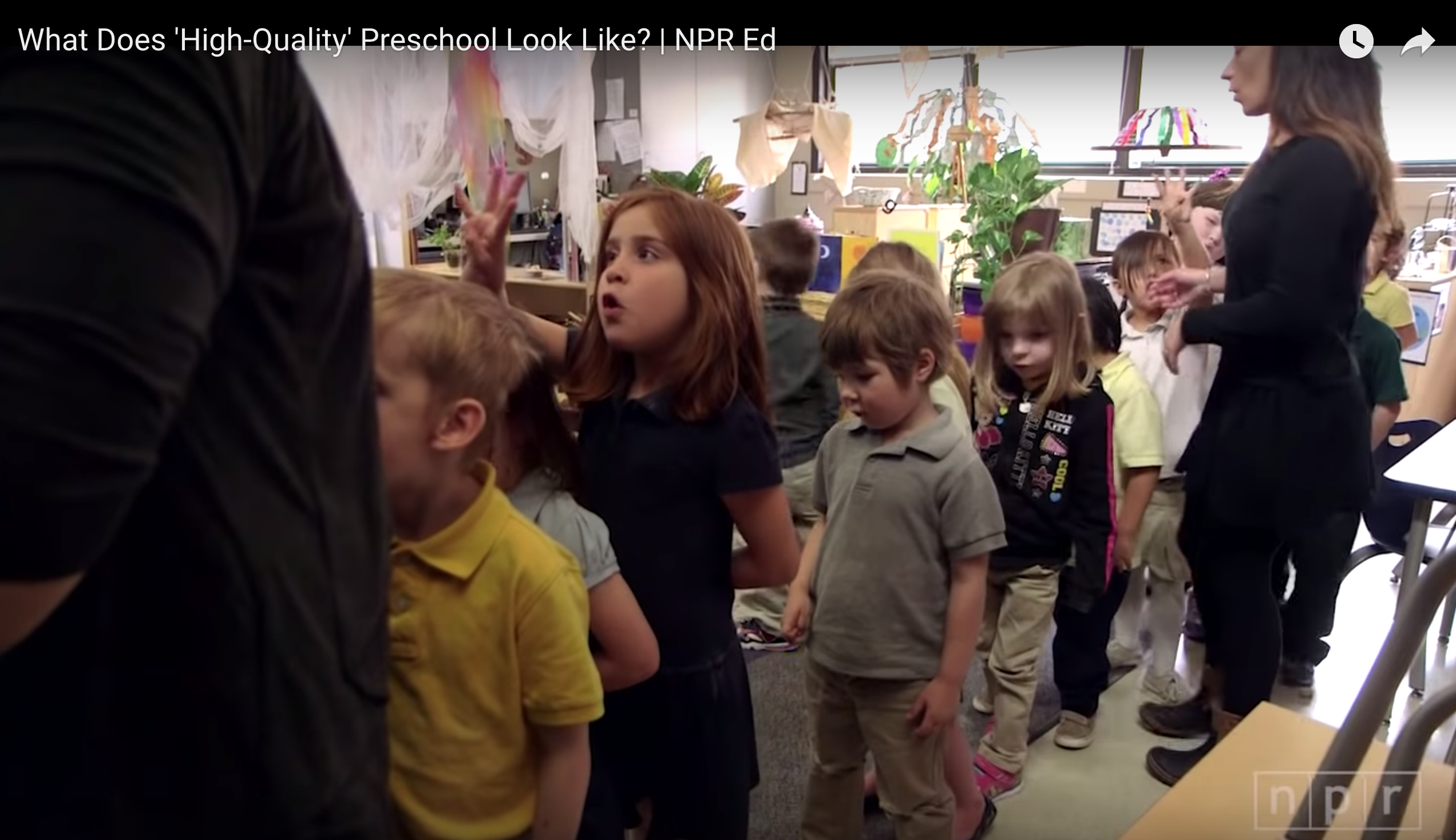
Teachers are a key voice in the discussion about early childhood quality. In this video, preschool and/infant toddler teachers from the A. Sophie Rogers School for Early Learning at The Ohio State University share their perspectives on what makes a quality early learning classroom environment. They share insights on quality interactions with both parents and children, tailoring lessons to children’s skill levels, and establishing positive, meaningful relationships with children.
*The A. Sophie Rogers School for Early Learning provides research-based education and child care to a mixed-income group of children in Columbus, Ohio. View more here.
A Little Bit of Magic | Quality Teaching is No Small Matter
Watch video here or by clicking on the arrow in the bottom right of this window.
Routines are an essential part of any high quality early learning environment. But sometimes, breaking the routine can be just as valuable.
What to look for in pre-K classrooms:
- Use of unusual materials to explore familiar topics
- Opportunities that are unfamiliar and exciting
This video is part of the series “Quality Teaching is No Small Matter,” produced by the creators of the documentary NO SMALL MATTER in partnership with New America’s Early & Elementary Education Policy program, and hosted by Rachel Giannini, the early childhood educator whose classroom is featured in the film. Watch to see why high quality teaching and classroom environments are essential to young children’s learning and growth.
Learn more at:
New America: https://www.newamerica.org/earlyed
No Small Matter: www.nosmallmatter.com
Facebook.com/nosmallmatter
twitter.com/nosmallmatter
Hosted by: Rachel Giannini
Editor: Alyson Quigley
Camera: Christopher Dilts, Ines Sommer
Writers: Rachel Giannini, Greg Jacobs
Director: Greg Jacobs
Producer: Laura Fallsgraff
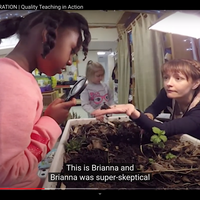
Encouraging Exploration | Quality Teaching is No Small Matter
Watch video here or by clicking on the arrow in the bottom right of this window.
Brianna hates bugs. But hands-on learning can inspire the impossible.
What to look for in pre-K classrooms:
- Recognition and respect for each student's comfort areas
- Patience and use of materials over a couple of days/weeks, which allows children to gain comfort and a deeper understanding
- Nature in the classroom
This video is part of the series “Quality Teaching is No Small Matter,” produced by the creators of the documentary NO SMALL MATTER in partnership with New America’s Early & Elementary Education Policy program, and hosted by Rachel Giannini, the early childhood educator whose classroom is featured in the film. Watch to see why high quality teaching and classroom environments are essential to young children’s learning and growth.
Learn more at:
New America: https://www.newamerica.org/earlyed
No Small Matter: www.nosmallmatter.com
Facebook.com/nosmallmatter
twitter.com/nosmallmatter
Hosted by: Rachel Giannini
Editor: Alyson Quigley
Camera: Christopher Dilts, Ines Sommer
Writers: Rachel Giannini, Greg Jacobs
Director: Greg Jacobs
Producer: Laura Fallsgraff
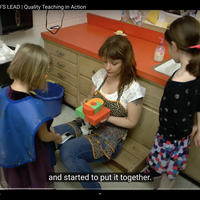
Following The Child's Lead | Quality Teaching is No Small Matter
Watch video here or by clicking on the arrow in the bottom right of this window.
Emily wants to build a camera, and there’s no better lesson than one a child initiates themselves.
What to look for in pre-K classrooms:
- Exploration as an opportunity to insert rich vocabulary
- Open-ended questioning
- Following a child's lead to provide a sense of empowerment
This video is part of the series “Quality Teaching is No Small Matter,” produced by the creators of the documentary NO SMALL MATTER in partnership with New America’s Early & Elementary Education Policy program, and hosted by Rachel Giannini, the early childhood educator whose classroom is featured in the film. Watch to see why high quality teaching and classroom environments are essential to young children’s learning and growth.
Learn more at:
New America: https://www.newamerica.org/earlyed
No Small Matter: www.nosmallmatter.com
Facebook.com/nosmallmatter
twitter.com/nosmallmatter
Hosted by: Rachel Giannini
Editor: Alyson Quigley
Camera: Christopher Dilts, Ines Sommer
Writers: Rachel Giannini, Greg Jacobs
Director: Greg Jacobs
Producer: Laura Fallsgraff
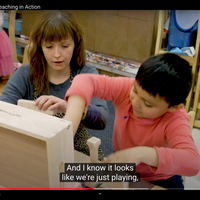
Low Ratios | Quality Teaching is No Small Matter
Watch video here or by clicking on the arrow in the bottom right of this window.
One-on-one time with Julian shows why low teacher-child ratios are about much more than basic safety.
What to look for in pre-K classrooms:
- Low teacher-child ratios are important for safety but also allow for:
- Rich interactions.
- Getting on a child's level. Simple things like sitting at eye level deepens the conversation.
- Relationship building, which is crucial in creating a rich social and emotional learning environment.
This video is part of the series “Quality Teaching is No Small Matter,” produced by the creators of the documentary NO SMALL MATTER in partnership with New America’s Early & Elementary Education Policy program, and hosted by Rachel Giannini, the early childhood educator whose classroom is featured in the film. Watch to see why high quality teaching and classroom environments are essential to young children’s learning and growth.
Learn more at:
New America: https://www.newamerica.org/earlyed
No Small Matter: www.nosmallmatter.com
Facebook.com/nosmallmatter
twitter.com/nosmallmatter
Hosted by: Rachel Giannini
Editor: Alyson Quigley
Camera: Christopher Dilts, Ines Sommer
Writers: Rachel Giannini, Greg Jacobs
Director: Greg Jacobs
Producer: Laura Fallsgraff
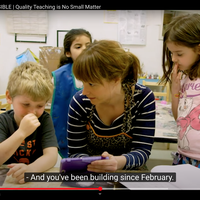
Making Learning Visible | Quality Teaching is No Small Matter
Watch video here or by clicking on the arrow in the bottom right of this window.
Thoughtful, thorough documentation is crucial for teachers, parents, administrators, and on this particular day, for Carson.
What to look for in pre-K classrooms:
- Documentation that provides opportunities for reflection in both students AND educators
- Documentation that is authentic examples of understanding
This video is part of the series “Quality Teaching is No Small Matter,” produced by the creators of the documentary NO SMALL MATTER in partnership with New America’s Early & Elementary Education Policy program, and hosted by Rachel Giannini, the early childhood educator whose classroom is featured in the film. Watch to see why high quality teaching and classroom environments are essential to young children’s learning and growth.
Learn more at:
New America: https://www.newamerica.org/earlyed
No Small Matter: www.nosmallmatter.com
Facebook.com/nosmallmatter
twitter.com/nosmallmatter
Hosted by: Rachel Giannini
Editor: Alyson Quigley
Camera: Christopher Dilts, Ines Sommer
Writers: Rachel Giannini, Greg Jacobs
Director: Greg Jacobs
Producer: Laura Fallsgraff
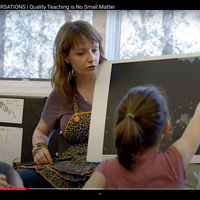
The Power of Conversations | Quality Teaching is No Small Matter
Watch video here or by clicking on the arrow in the bottom right of this window.
In high-quality early learning settings, you hear high-quality conversations. And that all starts with open-ended questions.
What to look for in pre-K classrooms:
- Strategies to cultivate high-order thinking through simple questioning
- Opportunities for children to connect with art on a personal level
This video is part of the series “Quality Teaching is No Small Matter,” produced by the creators of the documentary NO SMALL MATTER in partnership with New America’s Early & Elementary Education Policy program, and hosted by Rachel Giannini, the early childhood educator whose classroom is featured in the film. Watch to see why high quality teaching and classroom environments are essential to young children’s learning and growth.
Learn more at:
New America: https://www.newamerica.org/earlyed
No Small Matter: www.nosmallmatter.com
Facebook.com/nosmallmatter
twitter.com/nosmallmatter
Hosted by: Rachel Giannini
Editor: Alyson Quigley
Camera: Christopher Dilts, Ines Sommer
Writers: Rachel Giannini, Greg Jacobs
Director: Greg Jacobs
Producer: Laura Fallsgraff
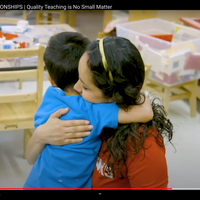
The Power of Relationships | Quality Teaching is No Small Matter
Watch video here or by clicking on the arrow in the bottom right of this window.
Jonathon’s surprising achievement is a reminder that high-quality early learning is all about relationships.
What to look for in pre-K classrooms:
- Teachers know each student’s developmental level (cognitive, social-emotional, physical) and are able to create meaningful learning experiences
- Teachers know the end result and work backward. (Example from the video: if we want Jonathon to get stronger at writing, what can we do to get him there?)
This video is part of the series “Quality Teaching is No Small Matter,” produced by the creators of the documentary NO SMALL MATTER in partnership with New America’s Early & Elementary Education Policy program, and hosted by Rachel Giannini, the early childhood educator whose classroom is featured in the film. Watch to see why high quality teaching and classroom environments are essential to young children’s learning and growth.
Learn more at:
New America: https://www.newamerica.org/earlyed
No Small Matter: www.nosmallmatter.com
Facebook.com/nosmallmatter
twitter.com/nosmallmatter
Hosted by: Rachel Giannini
Editor: Alyson Quigley
Camera: Christopher Dilts, Ines Sommer
Writers: Rachel Giannini, Greg Jacobs
Director: Greg Jacobs
Producer: Laura Fallsgraff
Family Child Care Providers
Family child care (FCC) is a common care and learning environment for infants and toddlers, children from families with low incomes, and children in rural communities. Many families choose FCC because of their family-like environments, geographic accessibility, flexible schedules often providing extended or overnight hours, and relative affordability. FCC providers often bring assets such as linguistic diversity and cultural competence and have the advantage of being embedded in and belonging to the communities they serve. The videos below take place in family child care settings.
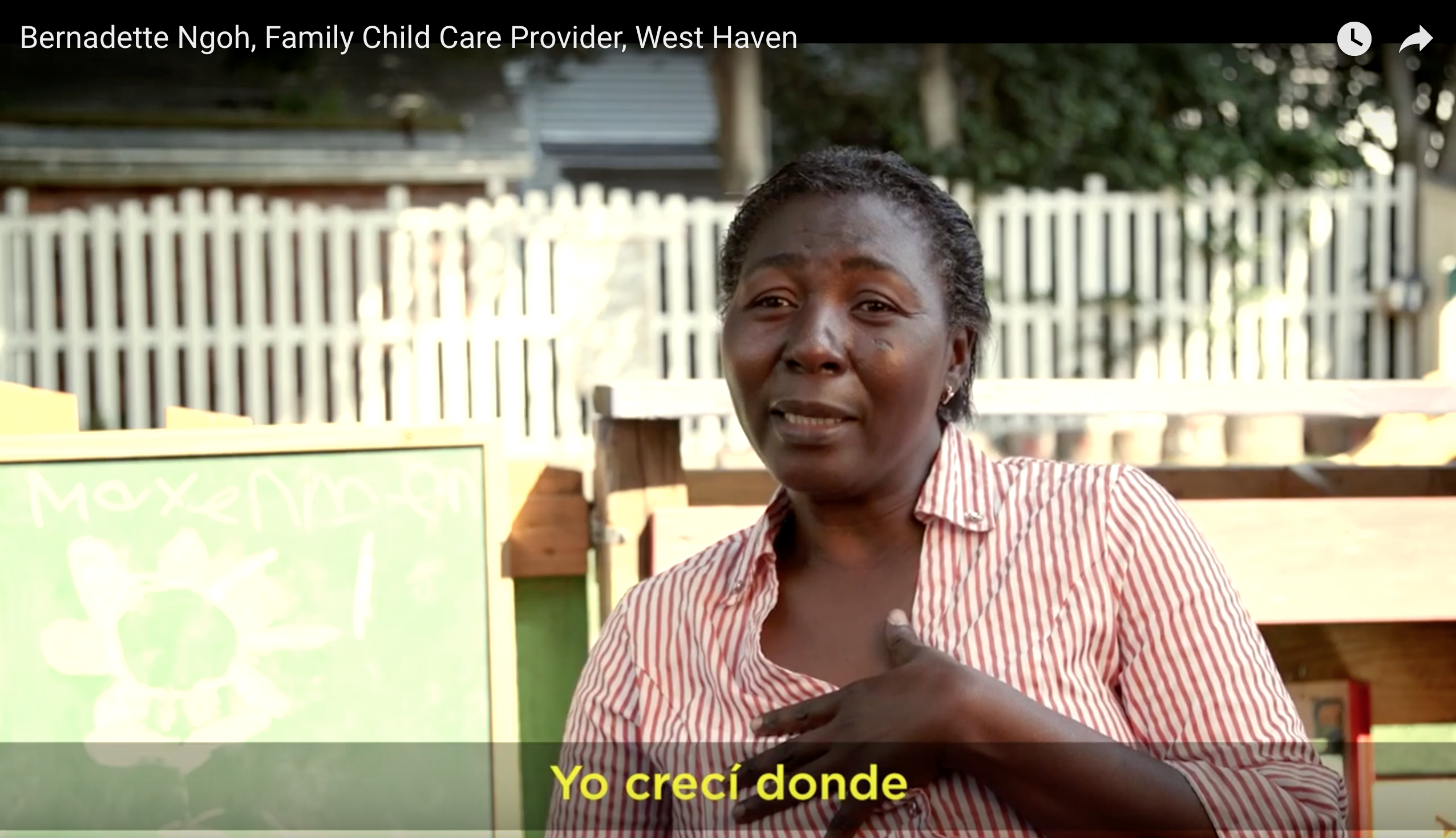
Bernadette Ngoh, Family Child Care Provider, West Haven
Watch video here or by clicking on the arrow in the bottom right of this window.
Family child care educator Bernadette Ngoh educates and cares for children in West Haven, Connecticut. In the video, Bernadette describes her approach to promoting young children’s learning and how this approach is informed by her own childhood: “I grew up where the child was raised by the community. What were they teaching me? How to help out. The listening ear. The listening feelings. Trying to understand that empathy. And that’s what I try to bring each day to my kids in my day care and to their parents.”
All Our Kin is a nationally recognized nonprofit organization that trains, supports, and sustains family child care educators to ensure that children and families have the foundation they need to succeed. Through All Our Kin’s programming, child care professionals succeed as business owners; working parents find stable, high-quality care for their children; and children gain an educational foundation that lays the groundwork for achievement in school and beyond.
Videographer: Travis Carbonella
Courtesy of All Our Kin
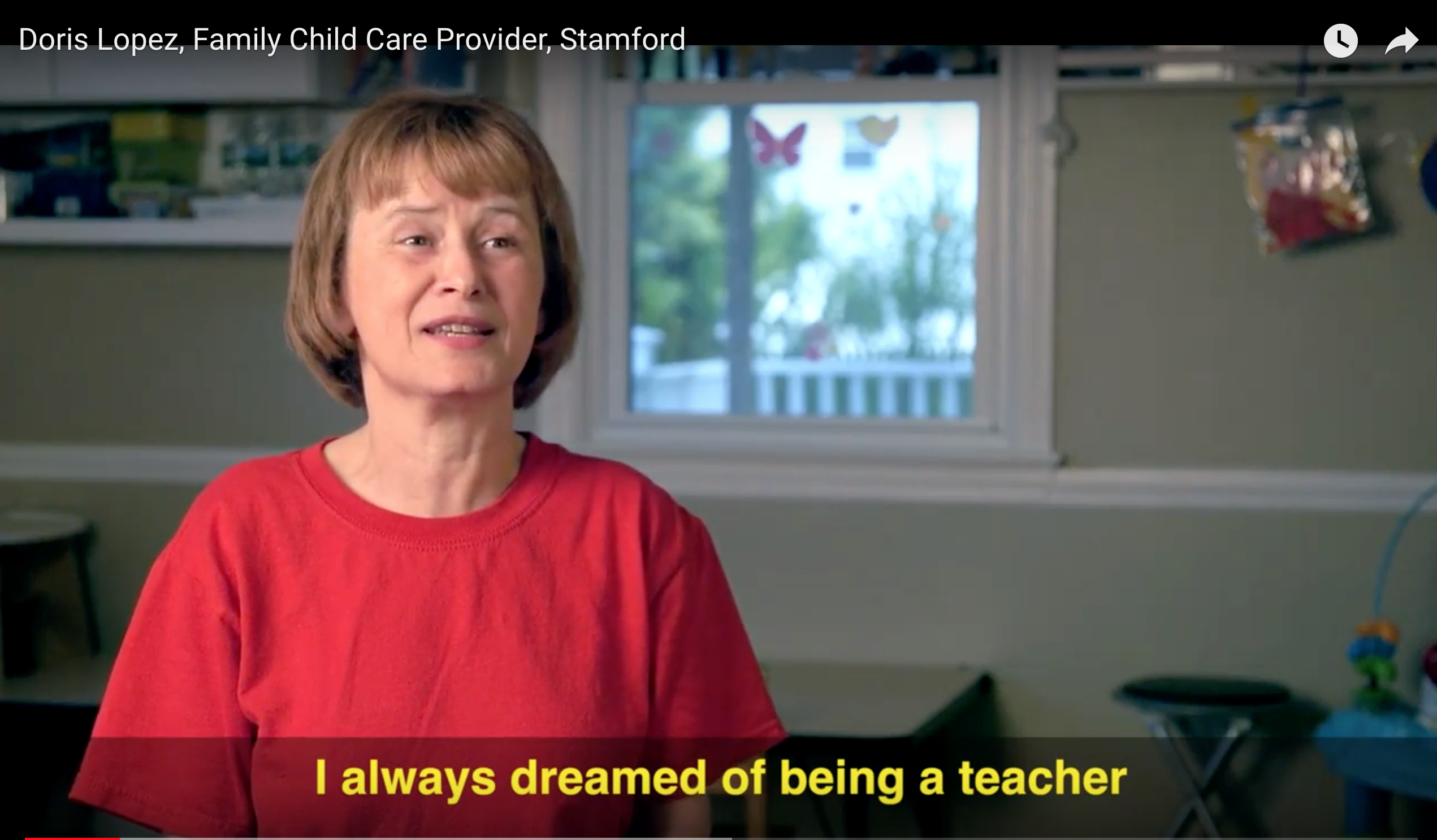
Doris Lopez, Family Child Care Provider, Stamford
Watch video here or by clicking on the arrow in the bottom right of this window.
Family Child Care Educator Dora Lopez educates and cares for children in Stamford, Connecticut. In the video, Dora describes the deep, trusting partnerships she builds with families to support young children’s learning, “When I notice that a child is changing, and their parents are happy to ask for my opinion about their child, and I have the answers for them – all this gives me great satisfaction: to contribute what I learn to the parents and to teach the children – to practice it."
All Our Kin is a nationally recognized nonprofit organization that trains, supports, and sustains family child care educators to ensure that children and families have the foundation they need to succeed. Through All Our Kin’s programming, child care professionals succeed as business owners; working parents find stable, high-quality care for their children; and children gain an educational foundation that lays the groundwork for achievement in school and beyond.
Videographer: Travis Carbonella
Courtesy of All Our Kin
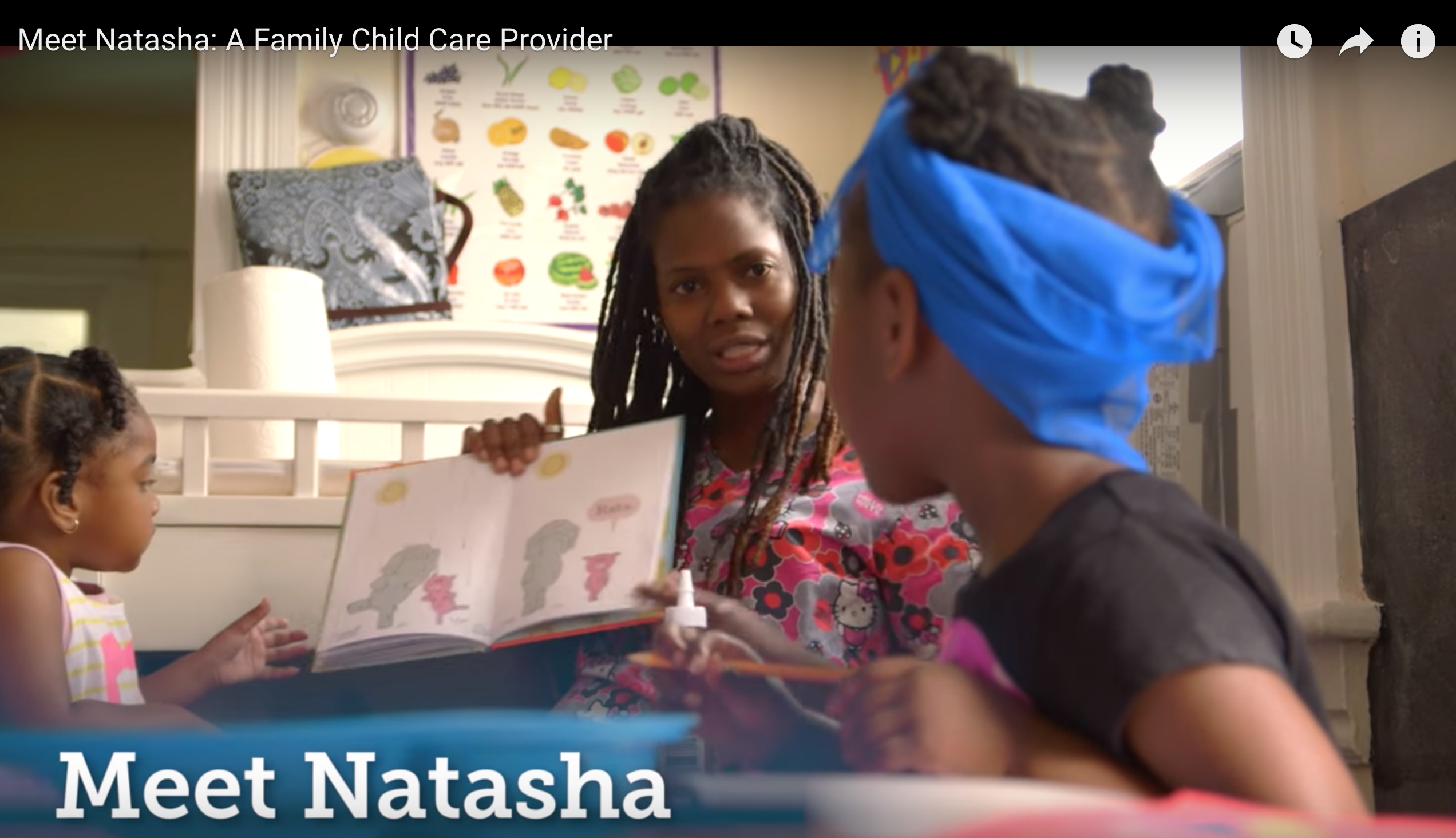
Natasha-Auguste Williams, Family Child Care
Watch video here or by clicking on the arrow in the bottom right of this window.
Former Family Child Care Educator and present All Our Kin staff member Natasha-Auguste Williams educated and cared for children in Bridgeport, Connecticut. While a family child care educator, Natasha shared, “I want to make a difference in a child’s life. Seeing children in my program and watching them learn new things makes me feel good. With All Our Kin’s support, we can do it! We can provide the highest quality day care to children who need it.” Today, as the All Our Kin Bridgeport site’s Provider Mentor and Community Specialist, Natasha brings her years of experience and expertise in the field to mentor and support family child care educators in her community.
All Our Kin is a nationally recognized nonprofit organization that trains, supports, and sustains family child care educators to ensure that children and families have the foundation they need to succeed. Through All Our Kin’s programming, child care professionals succeed as business owners; working parents find stable, high-quality care for their children; and children gain an educational foundation that lays the groundwork for achievement in school and beyond.
Video created by the Kindling Group and Siskel/Jacobs Productions as part of their No Small Matter documentary film and national campaign about early care and education in the United States.
Courtesy of All Our Kin
Infants and Toddlers
The video below takes place in a shared learning space for infants and toddlers. We will continue adding videos to this section.
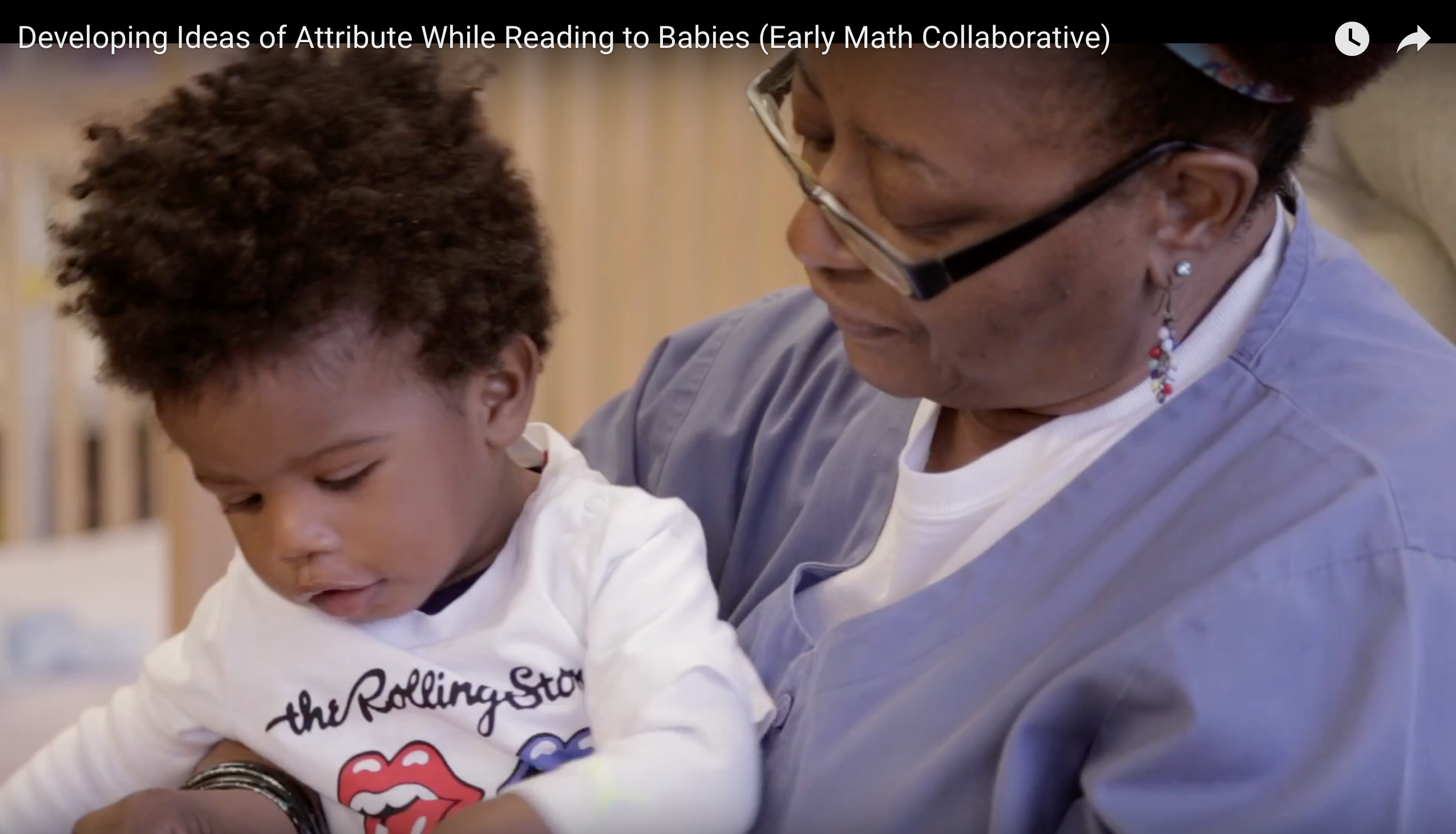
Developing Ideas of Attribute While Reading to Babies
Watch video here or by clicking on the arrow in the bottom right of this window.
Before true mathematical thought develops in childhood, reading to babies can help them explore precursor concepts of math. A caregiver reads a touch-and-feel book to an infant in her care. The emphasis is on supporting the child’s receptive understanding of attributes perceived through touch.
The child’s language is an advanced babble stage. While he isn’t vocalizing any recognizable words, his intonation makes it clear when he is asking a question or making a statement. She is responsive to his "conversation".
Why is this important?
The caregiver uses pointing and motions to establish joint attention and her language emphasizes attributes… soft, rough, fluffy. These interactions help the child begin to classify the world around him.
Precursor literally means “to come before,” and we believe that deep and meaningful engagement with these concepts must come before a child is ready to attend to the early mathematical Big Ideas in preschool.
Attributes are properties or qualities that allow us to describe and classify the world around us. This is the most basic.
- We perceive attributes of the world around us through our senses. –
- Attributes can be used to group. –
- Language allows us to describe attributes with increasing precision.
–The Erikson Institute Early Math Collaborative
Courtesy of Erikson
For more resources on Early & Elementary Education, please sign up for our weekly Early Ed newsletter or visit our website.