Reading the Signs from Suruc
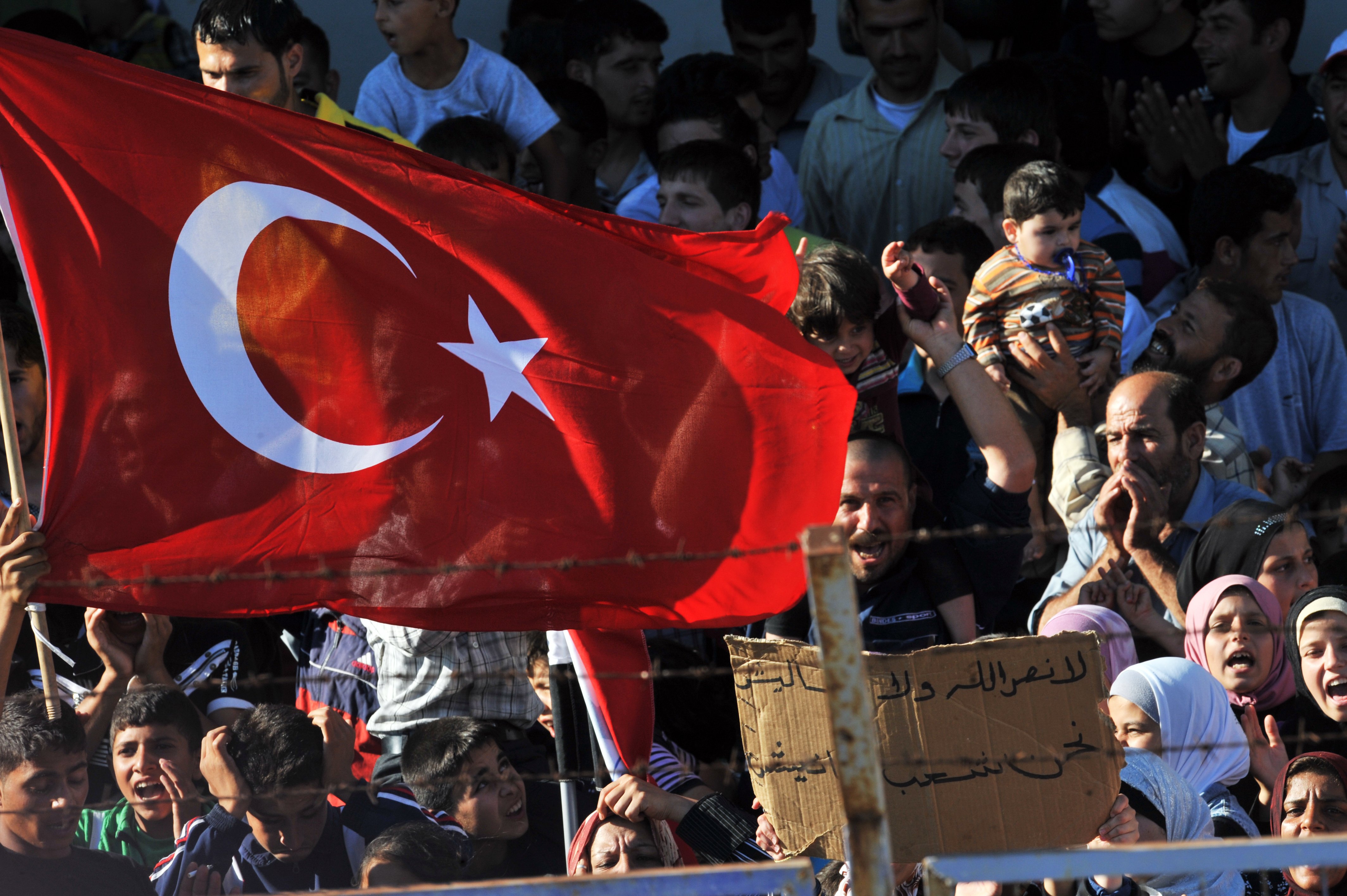
Suruc
is a dusty little town in southeastern Turkey that, until recently, was best
known for sitting across the border from Kobane, Syria, the Kurdish village that
the Islamic State of Iraq and al-Sham (ISIS) besieged for
months starting in late 2014. Now Suruc has a newfound notoriety as the
reason why Turkey has finally and necessarily gotten serious about fighting
ISIS.
Turkish
media and officials quickly blamed ISIS when a suicide bomber
killed 32 people
at a socialist youth rally in Suruc on July 20. Turkish authorities are still
delving into the past of the alleged bomber, a 20-year-old man who spent months
in Jordan prior to the bombing. But focusing on his specific
origin in Adiyaman,
a poor province in eastern Turkey that has spawned foreign fighters since the
Balkan wars in the 1990s, overshadows the broader problem of Turkey’s longtime
ambivalence about ISIS, itself a contributing factor to the recent violence. Instead,
Suruc is critical because it has prodded Turkey into re-thinking its approach
to ISIS and its neighbor Syria.
Turkey’s
Justice and Development Party (AKP) has equivocated about ISIS for years
because its singular
intention for Syria since 2011 has been the removal of Syrian President Bashar
al-Assad.
So Turkey backed a
grab-bag of players
in the ever-evolving mishmash of rebel groups seeking to oust the regime,
wantonly gifting food, money, logistical support, and weapons to opposition fighters
including the al Qa’ida affiliate Jabhat al Nusrah, from which ISIS
later split
to form its own, even more sinister, entity. And when it came to assessing
threats, Turkish officials, in line with public opinion that—before the Suruc
bombing—considered the separatist Kurdistan Workers Party (PKK) a greater
threat than ISIS, made ousting the PKK the top priority for its defense
dollars.
At
its most biting, criticism of the government’s ISIS policy before Suruc alleges
that the AKP’s anyone-but-Assad attitude led to its outright support for ISIS.
Accusations from Kurdish groups and the main opposition Republican Peoples
Party (CHP) center around one particularly suspicious incident in January 2014,
when trucks sent by Turkey’s intelligence agency were stopped at a military
checkpoint en route to Syria and found to contain weapons. Critics claim these
weapons were intended for ISIS and traveling at the discretion of AKP leaders
including President Recep Tayyip Erdogan. Erdogan insisted that the trucks
were carrying humanitarian aid. He also oversaw the arrests of the local
official and soldiers who respectively ordered and conducted the searches, and
barred Turkish media from reporting on the ongoing case.
For
their part, AKP officials unequivocally
deny
having backed ISIS, citing a gradual
increase in anti-terror measures in the last year—including several
high-profile arrests of would-be European fighters on their way to Syria. Crackdowns
on accused ISIS supporters in Turkey indeed picked up after two notable events
in 2014, including an alleged ISIS
member’s fatal shooting of two security officers and a truck driver at a
checkpoint last March, and ISIS forces’
takeover of the Turkish Consulate in Mosul last June, in which they took 49 consular
workers hostage and held them for more than three months.
These
incidents prompted Turkey to differentiate more forcefully and transparently
between ISIS and other rebel groups borne out of the Syria conflict, but they
weren’t enough to propel the AKP government to serious action. The AKP still
largely viewed ISIS as a nuisance rather than a threat.
As
result, ISIS has proliferated in Turkey just as it has grown throughout the Middle
East. Official Turkish figures released earlier this year suggest that Turkey
has spawned over 1,400 ISIS
fighters
and another 3,000
supporters
who may comprise “sleeper cells” in the country. And those admissions came from
a government that has tried to downplay the foreign fighter problem as much as possible—that
is, until Suruc.
The
July 20 bombing appears to be the watershed moment marking a reluctant Turkey’s
firm entrance into the ISIS fight.
Mere
days after the attack, Turkey has adopted a tougher stance against ISIS,
agreeing to let the U.S. use its Incirlik air base for airstrikes and launching
its own such airstrikes in Iraq and Syria. The U.S. and Turkey also announced
plans to bomb ISIS out of a 98-kilometer “ISIS-free zone” in northern
Syria, and Turkey released
elaborate plans
for a complex system of walls, fences, surveillance balloons, industrial
lighting, and even moats to secure a greater swathe of the border. Recent
arrests in over 100 locations nationwide brought 600
suspected terrorists into police custody (although most of these were PKK
militants, not ISIS members). Altogether, Turkey has moved harder against ISIS
in the last 10 days than otherwise in the last four years.
Yet,
even these strong anti-terror policies against ISIS will have complicating
ripple effects, like a further fracturing between Islamists and Kurds in Turkey
(many of whom in the latter group are more left- and secular-leaning, although
some ethnic Kurds fight on behalf of ISIS), and the angering of Turkey’s
homegrown extremists. For example, Turkish Islamists
claim
(without appreciable evidence) that the PKK conducted the Suruc bombing in
order to scapegoat ISIS and provoke Turkey into a military response.
The
anti-terror ramp-up may also add fuel to the fire of Salafi radicalism. Salafis
are very conservative Muslims who cultivate in very
insular communities
a radical fervor against anything deemed impure. Though a drop in the bucket of
Turkey’s 80 million or so Muslims, a few thousand
Salafis in Turkey
can succeed in generating homegrown ISIS sympathizers, potential ISIS recruits,
or future lone wolf attackers. As they continue to implement tougher policies
against ISIS, the Turkish government—in addition to arresting suspected ISIS
members—should consider increasing its monitoring of well-known Salafi leaders’
pro-ISIS statements, and undertaking public awareness campaigns to counter them.
No
amount of counter-measures can preclude the possibility of another terror
attack in a country with over 700 miles of winding borders with Syria and Iraq, swathes of which ISIS controls. The
question is whether Turkey’s stringent response will succeed in signaling to
ISIS a new era of firm opposition, and deterring ISIS operatives from targeting
civilians in Turkey again in the future.
In
the short term, a change in the players may be the best hope for the Turkish
government’s heightened efforts to stymie ISIS. June elections spelled the end
of single-party rule in Turkey as the AKP failed to win an outright majority for
the first time since 2002. Erdogan will remain the linchpin of Turkish decision-making,
but will have to form a coalition government that will at least bring other
ideas into the halls of power.
The addition of Turkish
bombs to the arsenal of those fighting ISIS probably won’t spell the end of the
terror group in the near future. But Turkey’s actions may show ISIS that Turkey
isn’t a patron state. Perhaps that shift alone can prevent another 30 people
from experiencing the horror that struck Suruc last week, and that’s something
to root for.
More About the Author
Related
The Education Department Gave Us the List of 2026 CCAMPIS Grantees
How Americans View a Changing Higher Ed Landscape

Middle Powers and the Shape of AI Governance: Three Experts Weigh In