
Don’t Blame the Oil Rigs

A year ago this month, China
moved its oil drilling rig, the HD-981, into waters around the Paracel
Islands. China’s exploratory drilling provoked a confrontation with Vietnam,
which also claims the area. Both countries deployed coast guard vessels and
fishing fleets to the drilling site. Ships collided and turned water cannons on
each other, sinking a fishing boat. In Vietnam, the incident sparked popular
protests; over 20 people were killed.
The rig withdrew in July, after two months of drilling. But
it left an unresolved question in its wake: is competition over the South China
Sea’s oil and natural gas resources a threat to regional security? This
question resonates across the region, as the Paracel Islands are not the only
area where hydrocarbon exploration could lead to clashes. In addition to its
disputes with Vietnam,
China is also involved in disagreements over resource authority with Indonesia,
Malaysia,
and the
Philippines. Could these countries’ attempts to exploit oil and gas spiral
into outright conflict?
The answer, happily, is probably not. The risk of regional “resource
wars” has been overstated. Sure, hydrocarbon competition can inspire
international spats, but as the HD-981 incident demonstrated, governments are
quick to contain them.
When it comes to maritime disputes, islands, not oil, are
the greater threat to international stability. Why? Because resources can be
shared but islands cannot. In a winner-takes-all environment, leaders have
little choice but to dig in their heels. If one country obtains sovereign
control over contested territory, the other loses it. But through joint development,
resources can be shared.
Over the last few decades, this difference has been
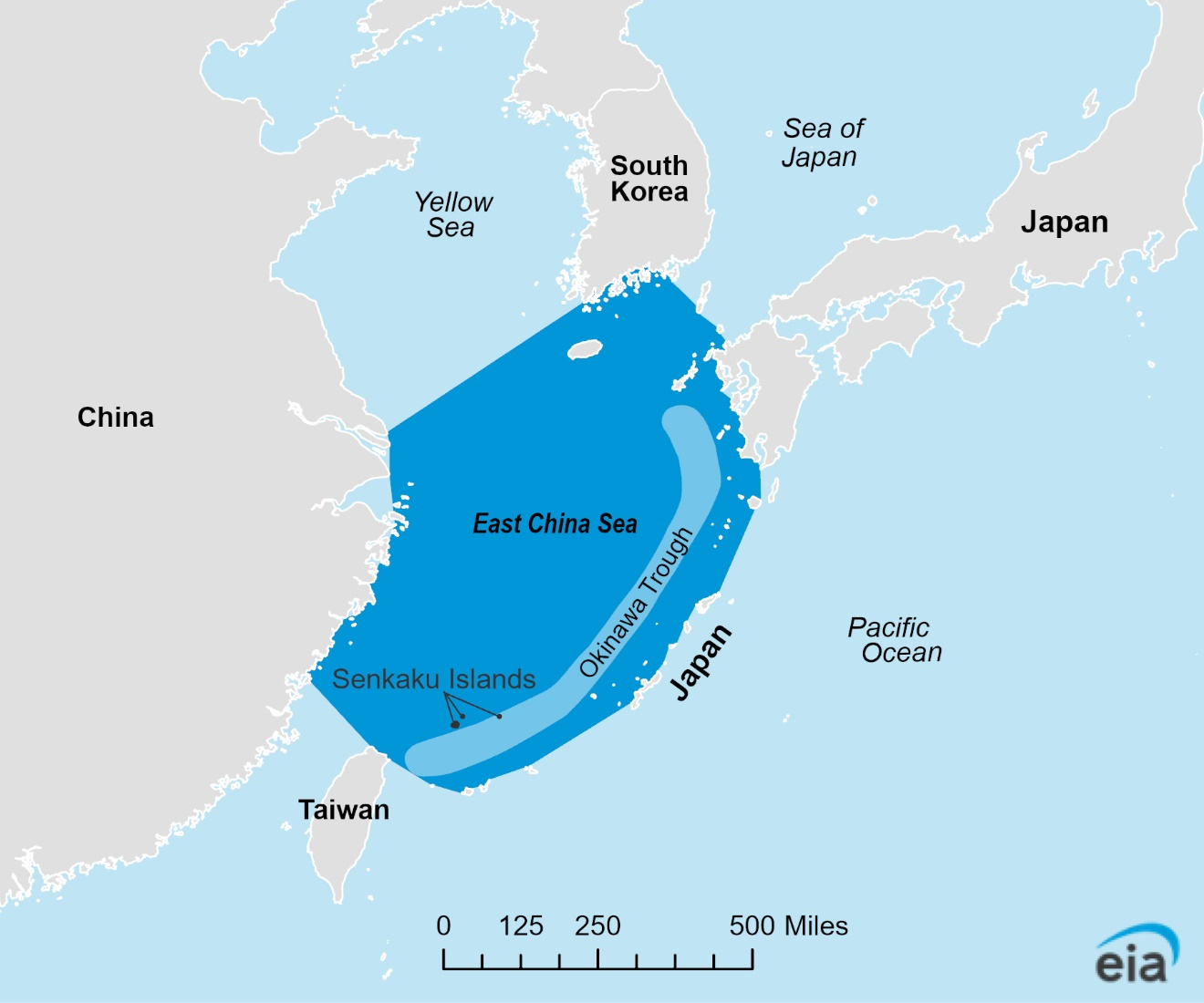
particularly evident in the East China Sea. There, Japan and China are
contesting control over a group of islands—known as the Senkakus in Japanese
and Diaoyus in Chinese—along with oil and natural gas fields, over 100 nautical
miles to the northeast of those islands. The dispute over the islands has
generated intense hostility
between the two countries. The struggle over oil and gas fields, by contrast,
has inspired constructive dialogue.
That path to restraint, admittedly, hasn’t always been
linear. Chinese oil companies began operating in the East China Sea in the late
1970s, where they made their first discovery, the Pinghu field, about a decade
later. Pinghu’s development was uncontroversial; the field is almost forty
miles west of where Japan draws its international boundary. In the late 1990s,
Japan even co-financed the construction of pipelines from Pinghu to the Chinese
mainland.
But friction increased as China’s search for hydrocarbons
moved closer to the border. In 2003, oil companies set up a production platform
above the Chunxiao gas field, one mile from the maritime boundary. Japanese
authorities demanded access to the field’s geological data to ensure that China
wasn’t siphoning off Japanese reserves. When the companies refused, Japan
launched its own exploration program. A seismic survey ship was deployed to the
border zone in July 2004. Beijing responded by sending in its navy.
Surveillance ships harassed the survey vessel and, in November, a Chinese
submarine was spotted in Japanese waters. Two months later, two Chinese
destroyers moved into the contested area.
Yet, Japanese and Chinese authorities managed to contain the
dispute. In October 2004, the countries launched a series of bilateral talks on
the East China Sea issue. Four years of negotiations eventually produced an
agreement to exploit hydrocarbon resources cooperatively in the border zone.
The agreement has not led to significant resource
cooperation, but China and Japan have avoided further confrontations around the
fields. This outcome stands in stark contrast to the dispute over the islands,
which continues to provoke tensions, as yet unaddressed by bilateral agreements.
The Senkaku/Diaoyu dispute also emerged in the 1970s, when
China started challenging Japan’s authority over the islands. It has gone
through periods of escalation, as activists from both countries have attempted to
land
on the uninhabited islands to reinforce their governments’ territorial
claims. In 1978 and 1996, Japanese nationalists landed on the islands and
erected lighthouses, prompting diplomatic protests from Beijing and deployments
of Chinese fishing boats. Activists from Taiwan and Hong Kong attempted their
own landings, some of which succeeded, in spite of resistance from Japan’s Coast
Guard. In 2004, activists from mainland China reached the islands for the first
time.
These incidents did not spiral into militarized clashes.
However, they provoked intense hostility and made the islands a flashpoint for
nationalist sentiment on both sides. The populations of both countries were
primed for further conflict—such as in 2012, when the Japanese government
acquired three of the islands from private owners. In China, the
nationalization was met with major anti-Japan protests. Beijing also retaliated
by increasing its military presence in the area. Violations of Japan’s
territorial waters skyrocketed from almost none to over seventeen per month
over the next year. In November 2013, China declared an Air Defense
Identification Zone (ADIZ) that included the islands.
In the last 18 months, violations have declined, but Japan
is still reporting an average of eight per month. Japanese and Chinese
officials have also made little progress towards resolving the island dispute. Last
November, the countries jointly issued a four-point
consensus, aimed at improving bilateral relations. One of the points
addressed the Senkakus/Diaoyus, observing that China and Japan had “different
views” of the situation, but would attempt to prevent it from escalating. Yet,
Japan still refuses to acknowledge the existence of a dispute and neither
country has offered concrete proposals for resolving it. Relations between Xi
and Abe may be thawing, but a cooperative island agreement is a very long way
off.
Chinese and Japanese officials are constrained by their
countries’ shared history. The islands issue has acquired enormous symbolic
significance in both countries, so attempts to reach a compromise settlement
will provoke intense domestic opposition. Consequently, island disputes are
likely to remain a thorn in governments’ sides, persistently at risk of
escalation.
Countries have many incentives to compete for authority in
the East China Sea and South China Sea, including islands, oil and natural gas,
fisheries, sea lanes of communication, and national pride. However, when it
comes to inspiring conflict, not all causes are created equal. Hydrocarbon
resources, alone, are not a significant threat to regional stability.
More About the Authors
Related

State Legislatures Weighing in on Workforce Pell

Q&A with Andrew Frederick: Transforming the Construction Industry Using Natural Materials

Confronting Harmful Federal Disability Policy in Health and Human Services