Hawai’i Joins the Pre-K Club

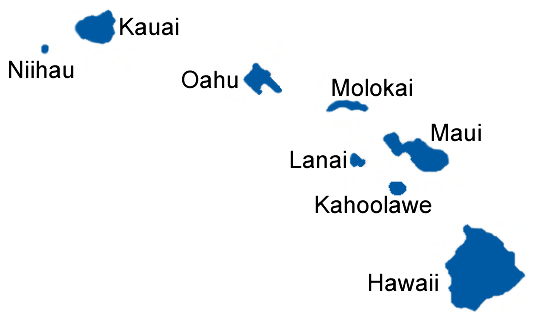 On Tuesday, the Hawai’i legislature passed legislation to lay the foundation for a pre-k and early education system in the state. Senate Bill 2878 authorizes the creation of a state Early Learning Council, also known as “Keiki First Steps,” that would work to expand and improve the quality of early education services in the state and serve as the governing body for Hawai’i’s early education system. The legislation also authorizes the Early Learning Council to make grants to early education providers and provides support for pre-k facilities.
This is good new for Hawai’i, which is one of only 12 states that the National Institute for Early Education Research identifies as lacking a state funded pre-k program. That characterization is subject to some dispute: Since the 1980s, Hawai’i has had a “Preschool Opens Doors” program that provides low-income families that are eligible for childcare subsidies and have four-year-old children with subsidies to pay part of the cost of preschool programs. But, because participation in Preschool Opens Doors is tied to parents’ eligibility for childcare subsidies, and children can lose eligibility over the course of the school year, NIEER does not regard this as a pre-k program. Hawai’i has also provided funding to support the construction of pre-k facilities–which are operated with private or federal funds–at public school sites. And the state is home to a number of private philanthropic initiatives to support pre-k access. By passing this legislation, however, Hawai’i has taken a firm step towards developing a comprehensive early education system, and joining the pre-k club.
The Honolulu Advertiser reports that some early education advocates in the state are dissappointed that the program will receive only modest funding–about $250,000–in its first year, rather than the $10.5 million they sought. That’s understandable–$250,000 doesn’t buy much in terms of services for children. But, in taking it slow, Hawai’i’s leaders are probably making a smart move, getting the infrastructure and technical assistance to support high-quality early education in place first and then building from that, rather than pouring an infusion of money into an undeveloped system, as some other states have done–with predictable problems.
 At the same time as Hawai’i’s state elected officials are supporting new pre-k investments, one of its two congressional representatives, Rep. Maizie Hirono, has introduced legislation to support such investments from the federal level. Hirono’s bill, which has the backing of 62 house members, including a majority of Education and Labor Committee members, would provide federal grants to states to improve pre-k quality and expand access. Such federal policies would provide a valuable complement to the efforts of state legislators and governors–like those in Hawai’i–to expand children’s access to high-quality early education programs. Hawai’i’s example shows how all levels of government–federal, state, and local–can play a valuable role–along with parents and private support–in supporting children’s early learning.
More About the Author
Issues
Programs/Projects/Initiatives
Related

Five Things Principals Can Do to Protect Kindergarten’s Three Indispensables

Federal Early Education Update: September 2026

Five Things States Can Do to Support High-Quality Kindergarten and the Early Grades