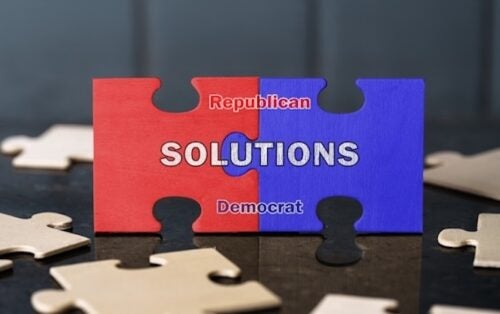
Broader, Bolder Follow Up

The edublogosphere is still buzzing about EPI’s Broader, Bolder Approach to Education, so here are a few points to follow up yesterday’s post on this:
Statement co-drafter Pedro Noguera has penned a Huffington Post column that doesn’t really add anything beyond what the statement says, but casts a clearer anti-NCLB light on this. Kevin Carey and Charlie Barone have some smart and important things to say about the statement, so check them out.
The Thomas B. Fordham Foundation’s Mike Petrilli, also writing on this, has a question for Early Ed Watch:
Second, the group’s big idea—that poor kids need high-quality preschool—is riddled with the same challenge as the big idea the group is challenging—that schools alone can narrow the achievement gap. Namely: we don’t have any experience bringing high-quality preschool to scale, just like we don’t have any experience bringing “no excuses” schools to scale. To my knowledge, the number of high-quality pre-K programs with strong evidence of effectiveness can be counted on one hand. So why should we feel any better about putting our eggs in the preschool basket?
Mike’s wrong on the latter point: We do have experience with high-quality pre-k at scale, most notably Oklahoma’s universal pre-k program and the Chicago Child Parent Centers Program, both of which operated at scale and with relatively modest public funding, and which rigorous evaluations have found produce significant positive impacts on children’s learning and, in the case of CPC, life outcomes (the children in the Oklahoma study are still in school).
But his first point, that efforts to provide high-quality pre-k at scale face the same challenges as efforts to deliver quality K-12 education at scale, is an important one that deserves repeating. Pre-k advocates frequently talk as though, if policymakers just provide the funding for universal pre-k, if we can just get all pre-k teachers to have bachelor’s degress, if we can just ensure that pre-k programs meet the 10 NIEER quality indicators, then all children will access to high-quality pre-k. But experience with K-12 education tells us it’s not that simple.
Let’s start with a simple premise: We know there is tremendous variation in K-12 school quality, that some public elementary and secondary schools are very good, some others are very bad, and far too many are mediocre. Now consider the quality standards pre-k advocates argue public pre-k programs must meet:
- Teachers have bachelor’s degrees and specialized training in early education,
- Assistant teachers hold at least a CDA credential,
- Teachers and assistant teachers receive ongoing professional development,
- Class sizes are under 20 students and adult: child ratios are better than 1:10,
- States have comprehensive early learning standards,
- Programs provide meals, screenings, parental engagement, and access to wraparound services.
Anything catch your eye? K-12 public schools already have most of the things that pre-k advocates want high-quality pre-k programs to get. K-12 teacher licensure and credentialing policies require public elementary and secondary teachers to have a bachelor’s degree and specialized education coursework. Certification policies in most states also require ongoing teacher professional development. NCLB requires most paraprofessionals in high-poverty schools to have at least two years of postsecondary education (a higher credential than a CDA).Forty-nine states have state academic standards for K-12 (although they’re often lousy and typically don’t address social and emotional development). Most public schools provide meals (at least lunch, often breakfast) through the National School Lunch program. The biggest exception is that many public schools have higher class sizes and adult: child ratios than pre-k advocates would like to see in pre-k. And K-12 schools also receive a lot more money per-pupil than state pre-k programs provide.
Yet despite the fact that K-12 public schools already have many of the things pre-k advocates argue are essential for quality, there are still many poor performing public elementary and secondary schools. That’s because having degreed teachers, small class sizes, sufficient funding, and so on isn’t the same as providing quality education. Educational quality lies, first, in the quality of the emotional and instructional interactions between adults and children in the classroom, and also in the quality of the curricular content conveyed through those interactions. Qualified teachers, managable class sizes, adequate resources, and so forth all help create the conditions that allow those interactions to occur, and increase the probability that they will occur, but they are no guarantee that good education is happening. That’s equally true whether we’re talking about K-12 education or pre-k programs.
That’s why talking about quality early education as a substitute for K-12 reform is misguided. Unless pre-k advocates and policymakers crafting pre-k systems are willing to grapple with the same structural issues school reformers are grappling with as they try to improve K-12 education systems, we’ll get a pre-k system that looks a lot like what we already have in K-12: Some really good programs, some really lousy ones, and a lot of mediocrity. And twenty years from now we’ll be debating what to do about lousy pre-k programs.
Unlike some school reformers, we at Early Ed Watch believe that high quality pre-k must be an integral part of K-12 school reform–not just because good pre-k will make children more prepared for K-12 schooling, but also because we believe good pre-k systems can be a force to catalyze greater transformation in our public education system. But unlike some early education advocates, we also believe that school reform–or at least the issues school reformers care about–needs to be an integral part of pre-k advocacy. We’re not going to get good pre-k programs without accountability, opportunities for parent choice and customization, proven curricula, research-based instructional strategies, and the right incentives and supports for educators, anymore than we’ll get better K-12 schools without them.
More About the Author
Issues
Programs/Projects/Initiatives
Related
Federal Early Education Update: September 2026

Five Things States Can Do to Support High-Quality Kindergarten and the Early Grades
Current Head Start Program Performance Standards Protect Children with Disabilities