
Boosting Early Ed Services for Native Americans

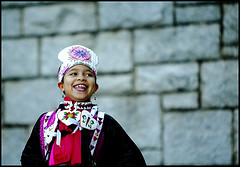 Native American students have distinct early education needs that are too often overlooked. Many American Indian and Alaska Native (AI/AN) children live in economically depressed neighborhoods of the country. Recent census data shows that nearly one in four Native American children live in poverty, and only 72 percent of Native American parents have a high school degree. As a result, Native American students are among the lowest performing student subgroups in assessments of reading and math skills. The number of Native American students receiving special education services for developmental delays is 2.89 times the average of other racial groups, and the high school graduation rate for Native American youth is below 50 percent, compared to 76.2 percent for white students.
The roots of these problems begin early, and the solutions can begin early too. There are more than 430,000 Native American children under age six in the United States, and research shows that improving their access to early childhood services will improve their chances of escaping these statistics. Unfortunately, Native American children are less likely than children from other racial and ethnic groups to attend high-quality early education programs.
The good news is that Native American enrollment in preschool is growing, but it still has not caught up with national trends. Data on Native Americans and early childhood is hard to come by, but according to data compiled by Dr. Tarajean Yazzie-Mintz of Indiana University, only 46 percent of three- and four-year old Native American children are enrolled in some form of preschool (public, private, or Head Start), compared to the national average of 49 percent. Another mounting concern is the quality of services the children receive.
Last week, the national pre-k advocacy group Pre-K Now hosted a national conference call that focused on the challenges to brining quality early education to Native American children. Chief among them is tribal-state relations. American Indian and Alaska Native tribes are recognized as sovereign nations, and the health of their relationship with state governments varies from state to state. Some tribes are very distrustful of state governments and what can be seen as outside intrusion into their education system. Similarly, early education is often a low priority when representatives from the two governments meet.
In many cases, it may be up to states to identify early education “ambassadors” from each tribe, initiate dialogue, and construct a sustainable collaboration with tribal governments regarding early education. For example, Wisconsin has found a strong partner in the Great Lakes Inter-Tribal Council, which helps coordinate the delivery and alignment of early education services among the 11 recognized tribes in the state. Even once a relationship is established, the nation-to-nation status of tribal-state relations can create a challenging blend of jurisdictional authority. This underscores the need for regular and sustained collaboration, and a dose of creativity. Some tribes, for example, have found creative ways to “braid” federal, state, and tribal funding streams to support tribal early education programs.
A second challenge is finding ways to integrate native customs, history, and language into the early childhood curriculum. Tribal leaders place high importance on the need for a “culturally responsive” program, and so does the research. Early education programs must enable children to communicate and participate in their home culture and language. Yet creating culturally responsive programs can be particularly challenging given that the majority of Native American children live in urban areas and study in mixed classrooms. Similarly, there is shortage of early education instructors able to teach native languages and culture. These challenges, however, are also an opportunity for states to work with local educators and tribally-operated institutions of higher education to develop culturally sensitive curricula, train more native teachers, and ultimately, create a more organic early education program for their children.
The federal government has been making small steps toward making sure Native American children have access to quality early childhood programs. The 2007 Head Start reauthorization bill included more attention to and funding for programs serving Native American children. The National Indian Head Start Directors Association (NIHSDA) has also recommended that federal legislation specify requirements for states to engage tribal governments in the provision of state-funded pre-k programming. Head Start currently has 153 tribal Head Start programs in 27 states serving 188 federally recognized tribal governments.
The challenges of expanding and enhancing early education services among Native American children are great, but they are not always unique. Pre-k and Head Start providers face similar problems of trust, collaboration and culturally responsive curriculum when trying to reach out to other minority groups, especially isolated immigrant populations. Bringing children from these groups into pre-k classrooms requires a significant amount of outreach, patience, and cultural sensitivity. Keeping a close eye on effective strategies to engage these groups may inspire further partnerships with Native American groups as well.
Image courtesy of Flickr user Joe_Focus, used under the Creative Commons license.
More About the Author
Issues
Programs/Projects/Initiatives
Related
Multilingual Students with Disabilities Deserve Stronger Support
Five Things Principals Can Do to Protect Kindergarten’s Three Indispensables
Federal Early Education Update: September 2026