Congress and the PART

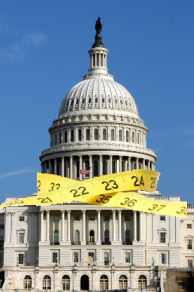 While PART ratings have a limited affect on the President’s budget request, it appears they have almost no affect on the actual funding levels Congress appropriates. Programs rated “ineffective” largely continue to receive funding, while programs rated “effective” do not necessarily get increases in funding.
Why ?
- Many people in Congress are unaware of the PART or have limited information about it. We called several congressional staff and asked whether they thought the PART ratings were useful and whether they were actually used to make decisions about funding levels. The majority of staffers told us that they either didn’t know what the PART was or had only limited information about it. Committee staffers were more aware of the PART, but did not always have a clear sense of what it actually was or feel that it was particularly useful. If Congress doesn’t have a good understanding (or in some cases even know) of PART, it is difficult for them to factor it into its funding decisions.
- PART results come from the executive branch and in Congresses eyes are often considered to be subjective. The PART is run by the Office of Management and Budget, which is part of the Executive branch under the control of the President. While PART results are reported to Congress, Congress does not play a role in implementing the ratings. Additionally, as we’ve mentioned in the past, PART is not an entirely objective process and may be vulnerable to ideological influence. One staff person we spoke to called the PART a “political ploy” used to justify programs the Administration supports. Because Congress is removed from the PART process and may not trust its results, they are less likely to use it.
- Influenced by their constituencies, their beliefs and their politics, Members of Congress will often support particular programs whether or not they are found to be effective. Many members of Congress have specific programs or policies that they champion as a result of their constituencies, their politics, or their beliefs. Even if Congress was fully aware of the PART and trusted its results, it is unlikely that members would abandon their favorite programs based on a bad PART review. Because many programs have strong constituencies of beneficiaries and service providers, it is difficult for Members to cut funding without political repercussions.
Some members of Congress have spoken about and do use PART results on occasion – when it serves their purposes. Primarily, Members use PART to provide evidence for increasing funding for programs they support, and cutting funding for programs they don’t. A report from the Journal of Public Budgeting and Finance examined the congressional record to see how often Congress actually used the PART. In the 109th Congress, members of the House Committee on Education and the Workforce and the Senate Education Labor and Pension Committee discussed PART results in only 2 percent of hearing reports.
A number of bills supporting or refuting the PART have been introduced in Congress. In 2005, Representative Todd Platts (R-PA) introduced the Program Assessment and Results Act (PARA). The bill would have required OMB to review programs every five years in a format based on the PART.
In 2006, a 2007 appropriations bill from the House Appropriations Committee on Labor, Education, and Health and Human Services included language that prohibited the use of funds to conduct PART reviews on programs administered by those agencies unless Congress specifically approved a study. Ultimately Congress rolled this appropriations bill into an Omnibus Appropriations Bill without the added language/condition.
While Congress hasn’t used PART much in the appropriations process, PART reviews are sometimes considered during the reauthorization process. After undergoing a PART review, each program is given an improvement plan with recommendations on how to strengthen management and performance. These recommendations sometimes include working with Congress to strengthen the statute or change the program design.
During the recent reauthorization of the Higher Education Act, for example, information from the PART reviews of TRIO and the Federal Family Education Loan program were considered during debates surrounding the legislation.
The upcoming reauthorization of the No Child Left Behind Act provides a good opportunity to use information from PART to strengthen programs and improve accountability. Similarly, Congress may want to consider building some of their own accountability measures into the new legislation. That way Congress can ensure that evidence exists to inform PART reviews and help direct how programs are assessed by PART and other evaluations. Ultimately, Congress may be more likely to pay attention to PART results if they play a role in developing the assessment framework.
Up next in the Ed Money Watch PART Series: An in-depth look at an individual program’s PART assessment
More About the Authors
Issues
Related
Public Comments on DOL’s Independent Contractor Rule

Unraveling the Case for Credentials in High School

Launching a Torrent of Youth Apprenticeships in Florence, Alabama