Lisa Guernsey
Senior Director, Birth to 12th Grade Policy; Co-Founder and Director, Learning Sciences Exchange

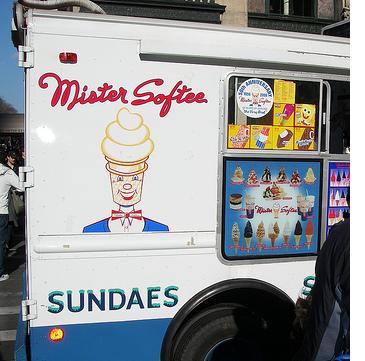 It’s August, which means that a perennial of the media landscape is in bloom: Eye-brow-raising stories about modern-day parenting that fill that slow summer news hole. Last week’s piece in the New York Times about parents protesting the serenades of Mister Softee fit the bill perfectly.
But more on that in a second. Because first, it’s worth pausing to digest a fascinating article just published in the journal Qualitative Sociology. It has arrived in time to give us some interesting context for what these parenting stories might be signaling at societal level, not to mention explain what educators are seeing play out in today’s families. The article — “Children’s Autonomy and Responsibility: An Analysis of Childrearing Advice” — was written by Markella B. Rutherford, a sociologist at Wellesley College. A catchier title for it might be: Today’s Kids: So Many Choices, So Little Freedom.
Rutherford compared childrearing advice in Parents magazine from 1929 to 2006, poring over 300 texts comprised of advice columns and articles on child development, discipline, parenting methods, and family relationships. She was looking for moments in the texts where authors talked about giving children choices – such as choosing what or when to eat, what activities to be involved in, what kind of chores to do or when to do them. What she found is that parents have, over the decades, given their kids more choices at home while tightening the leash once outside the house.
“Instead of increased autonomy,” Rutherford wrote, “there has been a historical trade-off in children’s autonomy; while Parents portrays children as having gained some kinds of autonomy in the private spaces of their homes, they have lost much of their public autonomy outside the home.”
In the 1930s, at the height of behaviorism and its emphasis on regular routines, good parenting meant training children to sleep when told to sleep and eat what was placed in front of them. That shifted by the 1940s, Rutherford writes, when new findings in psychology led experts to talk about not pushing children too hard, allowing them to find their own will and sense of independence. This has led to parents to encourage children to make their own choices. (Here, for example, is the common refrain in our house: “How do you want your noodles: sauce or no sauce?”)
Yet in the public sphere, the trends have moved in an opposite direction, with children having less freedom of movement and responsibility. As Rutherford argues: “Children have fewer opportunities to conduct themselves in public spaces free from adult supervision than they did in the early and mid-twentieth century.” Afterschool time, for example, has shifted from children making their way home alone to being in structured activities under adult supervision or being shuttled in cars from one place to another. The automobile-centered nature of today’s neighborhoods can make autonomy very hard. This has worrying implications, she suggests, for the ways that children learn to participate in their communities.
 Now, consider the choices-versus-freedom paradox in light of “When Parents Scream Against Ice Cream,” a story that describes a growing horde of parents who are starting to become irate at ice cream vendors and their repetitive chimes, trying to lure children from the pool or playground to come buy a frozen treat. As Times writer Helene Stapinksi puts it so well: “In a greener, more health-conscious, unsafe world, the ice cream man has lost some of his mojo.” On Double X, a relatively new blog from Slate, moms have been chiming in themselves and chiding each other for being overly protective or overly annoyed at what so many of us remember as a rite of childhood – that walk up to the ice cream truck, all by yourself, with a crumpled dollar bill hot in your hand and a dripping popsicle in your future.
(For more on the Rutherford article in Qualitative Sociology, check out last week’s posts on Science News and the Core Knowledge Blog.)
Photos courtesy of Klingon65 (above) and kaytethinks (right) under the Creative Commons license.
Senior Director, Birth to 12th Grade Policy; Co-Founder and Director, Learning Sciences Exchange