
Africa: The Last Frontier for Microfinance?

Undoubtedly, Africa is the last frontier for microfinance. Almost all of Africa’s poor are unbanked; in Ethiopia for example, only 1% of the rural population has access to formal financial banks. Similarly, in rural Niger, there is one bank branch for every 844,000 people.
To be sure, high rates of illiteracy and HIV/AIDS coupled with dispersed rural population across a vast landscape do not always lend themselves well to the traditional Grameen- style microfinance model; the financial needs of Africa’s poor are different and delivering such services a challenge. Fortunately, CARE’s recent report on the microfinance sector in Africa reveals not only the continent’s deafening potential but that many in the microfinance field are innovating several products and programs in order to meet it.
Even though Sub-Saharan Africa is amongst the most unbanked regions in the world, the report illustrates a number of formal, collective, group-based, and the more homegrown local and informal financial services that are available to the poor.
Here are some I found interesting:
- Since 1991, CARE has invested in 54,000 village savings and loans associations (VSLA) in 21 countries across Africa, serving over a million members. A VSLA typically consists of thirty women in a village who, together create a pool of savings and then lend portions of it out to members.
- Small Enterprise Foundation (SEF) is an MFI that serves 55,000 of South Africa’s poorest in remote, rural areas. Microfinance institutions, like SEF, have the potential to have an impact on other problems such as proper training and use of retroviral drugs for HIV/AIDS effected clients. For example, SEF has partnered with a South African NGO called the IMAGE project to offer training and counseling services related to HIV/AIDS and gender-based violence and abuse at the meetings. An evaluation showed that among SEF clients as compared to a control group, there was 24% increase in the use of condoms and 60% in voluntary testing for HIV.
- In a land devastated by civil war and famine, people had gotten used to subsisting on aid in Amhara, Ethiopia. The Amhara Credit and Savings Institution (ACSI) was established in 1995 and serves 740,000 clients today often reaching their clients on horseback and mules. In a drought prone region, ASCI clients are taught rain water harvesting as part of their pre-credit training and encouraged to invest in assets and livelihoods that are off-farm and less dependant on water.
Technology promises to make access in rural areas more affordable. Last year, PlaNet Finance received $1.8 million from the Gates Foundation to co-develop a mobile banking project with Orange telecom in Senegal; while CARE has partnered with IBM to develop a centralized monitoring and information system for MFIs working in Africa.
There are 5 million Africans who borrow from MFIs and 9.5 million savers. Take for instance, deposit collectors who are popular in West Africa. They make the rounds to clients’ houses everyday and provide a safe place for their savings. This service comes at a price: 10% of the client’s savings is used as a fee.
Given this high demand for savings products and an asset-based approach by the poor themselves, more resources, innovation and research is needed to scale-up these initiatives.
What can donors provide?
- Venture capital or seed money to help start microfinance programs
- Value-chain analysis and help clients diversify their enterprises and livelihood activities so the market is not flooded with same types of businesses
- Technological support to increase access and improve monitoring systems
- Link microfinance and asset building to broader development issues like climate change mitigation, HIV prevention and treatment etc.
Watch this space for an announcement to launch an “Assets in Africa” report by Jamie Zimmerman and Fred Ssewamala that makes the case for promoting an assets-based approach to poverty reduction in Africa.
Shweta S Banerjee is a consultant with the Global Assets Project at the New America Foundation.
More About the Author
Issues
Programs/Projects/Initiatives
Topics
Related
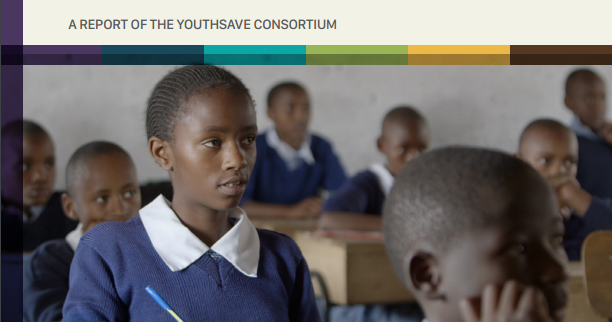
85,000 Low-income Youth Open Savings Accounts through YouthSave
A Conversation on the Weekly Wonk: Should We Bank On It?
Global Anti-Poverty Targets Tepid