Lisa Guernsey
Senior Director, Birth to 12th Grade Policy; Co-Founder and Director, Learning Sciences Exchange

It’s always risky to get into the forecasting business, but as Early Ed Watch prepares for the year head, we couldn’t help but predict where we will see the most action, innovation and consternation in 2010. Here are the hot spots we see, along with a peppering of questions related to each one. Do you agree with our picks? Our questions? Have we missed anything? Let us know by posting a comment below or dropping us a line. We’d love to get your input.
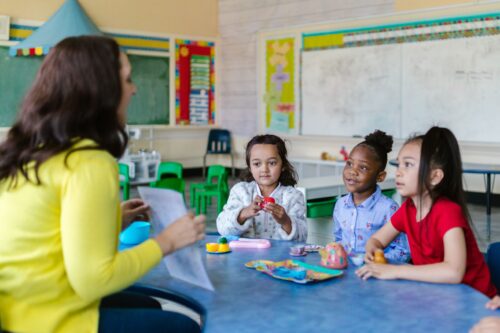
<div><b>Early Learning Challenge Grants: </b> With the Senate’s passage of health care legislation, it can now turn its attention to the Student Aid and Fiscal Responsibility Act – <a href="../../../../../../blogposts/2009/wheres_safra-18439">the bill that includes the proposal for Early Learning Challenge Grants</a>, a $1-billion-a-year program to improve the quality of programs for children birth to age 5. The bill <a href="http://www.newamerica.net/blog/early-ed-watch/2009/house-clears-way-early-learning-challenge-fund-14685">cleared the House last fall</a>, and we expect it to be introduced in the Senate this winter. If passed, states will have another round of grants to compete for, coming on the heels of the <a href="../../../../../../blogposts/2009/department_of_education_releases_race_to_the_top_application-18437">Race to the Top grants</a> that they are vying for right now. Which states are going to be in the best position to win these federal early learning grants? And is there any chance they could work in tandem with the RTT money, helping states to build full PreK-3<sup>rd</sup> systems?</div> <div> </div> <div><b>Full-Day Kindergarten: </b>The effects of the recession will continue to reverberate, especially at the local level where cities and counties continue to struggle with the loss of tax revenues due to diminished real estate values. <a href="../../../../../../blogposts/2010/a_bad_move_districts_cutting_or_stalling_out_on_full_day_kindergarten-25909">We are already seeing some signs</a> that full-day kindergarten could be a casualty of these tight budgets. Until recently the worry has focused on whether pre-K programs will suffer from the downturn. Could kindergarten lose ground too?</div> <div> </div> <div><b>Reauthorization of ESEA:</b> Education policy experts are gearing up for the reauthorization of the Elementary and Secondary Education Act, which was known as No Child Left Behind throughout most of the ‘00s. Some seasoned observers have reported that the U.S. Department of Education, despite its full plate, has indicated a desire that Congress address the law this year. (See <a href="http://blog.eduflack.com/2009/10/01/hold-on-esea-reauth-is-coming.aspx">this post</a> and <a href="http://blog.eduflack.com/2009/11/20/beginning-of-ed-for-esea-reauth.aspx">this post</a> from EduFlak.) Will reauthorization happen in 2010? And if so, will we see a continued emphasis on high-school completion? Or will the primary years gain some of the spotlight? Could new policies be crafted that could take into account the mounting research on the importance of high-quality educational experiences in the pre-K through 3<sup>rd</sup> grades?</div> <div><b> </b></div> <div><b>The Role of Playtime: </b>In 2009, parents and early childhood experts sounded alarms about preschool, kindergarten programs and other primary year programs becoming overly academic with not enough emphasis on play. Will 2010 provide more of the same? Will camps continue to become unnecessarily polarized over what children’s early years should look like? Or could we reach a new level of understanding among principals, preschool directors and the public about how to couple playtime with learning time? Here in the <a href="file:///C:/Documents%20and%20Settings/guernseyl/Local%20Settings/Temporary%20Internet%20Files/earlyed.newamerica.net">Early Education Initiative</a>, <a href="../../../../../../publications/articles/2009/kindergarten_need_not_be_a_pressure_cooker_12826">we have advocated for a play=learning strategy</a>, in which children’s schools harness playtime to propel learning. The Tools of the Mind program <a href="../../../../../../blogposts/2009/two_antidotes_to_kindergarten_cram-18568">has taught us</a> that it can be highly valuable for teachers to act as unobtrusive guides, gently encouraging kids to <a href="../../../../../../blogposts/2009/pretend_play_self_control_and_5_year_olds-18467">take their make-believe play to new levels</a>, introducing new characters for role-play, new words to try out, or new domains to explore. (Playtime without adult guidance is important for children’s development too; we suggest that the best place for kids to engage in completely adult-free play is at recess and at home.) Will play=learning make any headway in the classrooms of 2010?</div> <div><b> </b></div> <div><b>Reading and Literacy: </b>New reading scores from the National Assessment of Education Progress are <a href="http://nces.ed.gov/nationsreportcard/reading/">due out this spring</a>. And Sen. Patty Murray (D-Wash) introduced <a href="../../../../../../blogposts/2009/comprehensive_literacy_legislation_introduced_in_senate-18440">legislation last fall</a> to integrate literacy programs from pre-K to high school. (The language of the bill, called <a href="http://www.govtrack.us/congress/bill.xpd?bill=s111-2740">the LEARN Act</a>, may be incorporated into the ESEA reauthorization.) So there is no question that literacy programs will become a hot-button issue in the coming months. Will the NAEP scores show any progress, or will they remain dismally low? In 2007, only 33 percent of fourth-graders nationally scored at or above “proficient” in reading. Put another way, that means that two-thirds of students were unable to understand the literal and figurative meanings of a fourth-grade text, and, as <a href="http://nces.ed.gov/nationsreportcard/pdf/main2007/2007496_2.pdf">the NAEP report card</a> explains, “extend the ideas in the text by making inferences, drawing conclusions, and making connections to their own experiences.” Will a federal-level re-thinking of literacy programs shine a spotlight on what actually works to help children succeed in reading?</div> <div><b> </b></div> <div><b>Head Start</b>: In addition to the funding boost that Head Start is starting to receive through last year's stimulus bill, at least two big events <i>should be </i>on the horizon: 1) The next edition of the Head Start Impact Study – a controlled study of how Head Start children are faring in school compared to non-Head Start children -- has been due out since the end of September. We hope to see the results soon. Is there any chance that <a href="http://www.newamerica.net/blog/early-ed-watch/2009/checking-assumptions-about-school-readiness-14507">the modest gains that appeared in children’s first year out of Head Start </a>will carry over into children’s 2<sup>nd</sup> year in school? Will the study take into account how their achievement is either accelerated or stymied by the quality of the kindergarten and 1<sup>st</sup> grade experiences they have likely experienced? 2) When will the Administration for Children and Families release its proposal for how to create a “re-compete” system that requires non-compliant or troubled Head Start programs to re-compete for their grants? Based on the timeline given in the 2007 law reauthorizing Head Start, <a href="../../../../../../blogposts/2009/seeking_signs_of_change_since_head_starts_2007_reauthorization-18485">a proposal with a request for comments was due to appear</a> in the <i>Federal Register</i> nearly 10 months ago. How will that re-compete proposal be received within the Head Start community? </div> <div> </div> <div><b>Home Visitation: </b><a href="http://thomas.loc.gov/cgi-bin/query/D?c111:4:./temp/%7Ec1110BKBZ4::">Both</a> <a href="http://thomas.loc.gov/cgi-bin/query/F?c111:1:./temp/%7Ec111RQC3wI:e1245810:">versions</a> of the healthcare bill that passed the House and Senate included a proposal for federal grants to support home visitation, a program that sends nurses or other professionals out to visit low-income mothers and their babies at home, providing information and tailored advice related to their children’s development. The question now is: Which version will become law when the healthcare bill is reconciled, as expected later this month? And once enacted, how will the law change the way states currently approach maternal health and childhood programs? How will Early Head Start, the Head Start program for mothers and babies up to age 3, be coordinated with these new home visitation programs?</div> <div> </div> <div><b>PreK-3<sup>rd</sup>: </b>In 2009, the Early Education Initiative took a long look at how two states were faring in their attempts to deliver high-quality education for the pre-K through third-grade years. We published papers on <a href="../../../../../../publications/policy/on_the_cusp_in_california">California</a> (where the state is on the cusp of making gains, if only new reforms can somehow take hold during very trying budget times) and <a href="../../../../../../publications/policy/education_reform_starts_early_0">New Jersey</a> (where real progress has been made in several districts and yet where reforms are vulnerable to being diluted). Now the question is, how can the lessons learned by these states be incorporated into the plans of districts throughout the country? Which states or districts will emerge as new leaders in PreK-3<sup>rd</sup> reform?</div> <div> </div> <div><b>Children and Media:</b> The previous decade was marked by the rapid adoption of electronic media, and it was even more intense in the children’s market. In 2010, whether the media consists of videos marketed for babies or software designed to help children learn mathematics, one question will remain front and center: Can new media become a partner in education or will it continue to be seen as an adversary? We see some positive signs in <a href="http://www.joanganzcooneycenter.org/pdf/GameChanger_ExecSum.pdf">the push for more truly educational or health-based games</a>, and it was nice to see research-based content get some <a href="../../../../../../blogposts/2009/sesame_street_and_the_whole_child-18554">attention on Sesame Street’s 40<sup>th</sup> anniversary</a>, but we have also seen some troubling statistics on <a href="http://birthtothrive.thrivebyfivewa.org/post/2009/11/23/Preschoolers-Watch-More-Than-2-hours-of-TV-a-Day-in-Many-Childcare-Settings.aspx">family-based childcare providers who put children in front of television screens</a> for several hours a day. We hope that this year comes with a renewed emphasis on creating more high-quality content (instead of cheesy TV shows and games that make no attempt to take children’s learning to a new level) and a more prominent role for parents and teachers who have the potential to greatly enhance and build on what children watch and play on screen. </div> <div> </div> <div>Did we miss a hot spot? Did we overlook one of your areas of interest? What will you be watching for in 2010?</div> <div> </div> <div> I’ve borrowed the construction “<a href="http://udel.edu/%7Eroberta/play/">play=learning</a>” from the work of Roberta Golinkoff, Kathy Hirsh-Pasek and Dorothy Singer, three highly regarded scholars in child development who held a <a href="http://udel.edu/%7Eroberta/play/">conference</a> on the subject in 2005 and followed up with a <a href="http://books.google.com/books?id=9EaIvUQziRgC&dq=play%3Dlearning+hirsh+pasek&printsec=frontcover&source=bl&ots=Q7IjYppT__&sig=SuPvHNH-Hm-ZifopTQhyz71-ol8&hl=en&ei=tmpCS5TRCtC8lAfX3riWBw&sa=X&oi=book_result&ct=result&resnum=3&ved=0CBkQ6AEwAg#v=onepage&q=&f=">book</a> in 2007.</div>
Senior Director, Birth to 12th Grade Policy; Co-Founder and Director, Learning Sciences Exchange