
Investing Millions to Provide Savings Accounts to the Poor

Imagine that you are a farmer in rural Uganda, for whom it takes at least a day of grueling travel to reach a bank, which might or might not open an account for you to keep what they consider meager savings and to make that trip to the Bank you would lose two days worth of income.Such a story is commonplace throughout much of the developing world: the poor want and need a safe place to store their money, but are all too often limited to costly and risky options of saving with money collectors or “under the mattress.” With innovative mobile technology, training banking correspondents and some $38 million, the Bill and Melinda Gates Foundation hopes to change that.
One of the biggest ideas of the last century – microfinance – is now moving to another, much older one (at least in theory): savings. Until now, most MFIs have focused on credit. Offering saving services, especially in remote, rural areas was equally costly for MFIs as it was for formal banks. The poor often relied on deposit collectors who charged an interest to keep their savings safe.
These grants aim to provide financial security for the poor through savings accounts. It will help 18 MFIs expand their portfolios and offer savings accounts for 11 million poor across 12 countries in Asia, Africa and Latin America. By using mobile technology, hand-held devices, banking correspondents and deposit collection through local shops, transaction costs will be vastly reduced.
Acknowledging the enormous demand for saving services, the grants will create innovative ways of making these services reach the poor and generate awareness of the importance of savings through marketing campaigns. For example, it will fund the production of a television serial in the Dominican Republic to promote the benefit of savings.
Some examples of how MFIs will be transformed:
- Krishna Bhima Samrudhi Local Area Bank in India will expand its reach by sending messengers on motorbikes with handheld devices to rural clients
- Women in Pakistan will gain access to savings accounts through the Kashf Microfinance Bank which will launch online banking kiosks in Kashf Foundation branches
- Finca will launch “micro branches” to provide savings services in Uganda, Equador and Democratic Republic of Congo in already existing village banks.
This is all great news. But the one thing missing in their press release is this: where are the grants dedicated to creating an enabling policy level environment that will finally ensure sustainability of these innovations and other provision of effective savings services for the poor? In the absence of appropriate policy and institutions, financial inclusion of the poor will undoubtedly remain an elusive goal. For example, in some countries women cannot open bank accounts without their husband’s support as they are not property owners or in instances where MFI’s are not allowed to take deposits because of regulatory framework restrictions.
Innovations in both practice and policy are crucial to reach all poor with savings services.
For more savings-based policy ideas, you can read more on conditional cash transfers and an overview of child development accounts by Jamie M Zimmerman. For more on savings-led microfinance in the Foreign Policy Magazine, click here and you can also read about innovative match-savings account ideas here.
Shweta S Banerjee is a consultant with the Global Assets Project at New America Foundation.
More About the Author
Issues
Programs/Projects/Initiatives
Topics
Related
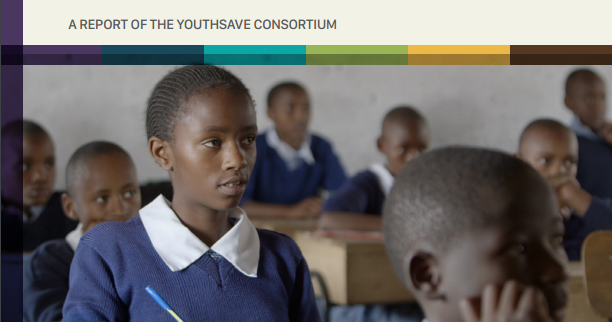
85,000 Low-income Youth Open Savings Accounts through YouthSave
A Conversation on the Weekly Wonk: Should We Bank On It?
Global Anti-Poverty Targets Tepid