
Government 2 People: Direct Cash Transfers Can Bank the Poor

Recently, CGAP released their latest focus note on banking the poor through G2P payments. It points out that Governments make payments to 170 million worldwide for social programs or wage payments but less than one quarter of these payments actually helps further financial inclusion. How can we make these direct cash transfers offer other products such as savings accounts, for which there is a high demand and low supply?
For example, the Indian government opened “no frills” accounts for the 45 million participants of the National Rural Employment Guarantee Scheme (NREGA) but 85% of these accounts remain unused. This is because the transaction cost of operating a traditional bank account for a rural dweller is too high. The average recipient spends an entire day to travel to a bank and loses a daily wage, and spends an equivalent of half a day’s wage on getting there and back.
Technology can change that.
Some G2P programs are coupled with innovative financial services which better meet the needs of poor participants. These include:
- Recipients of the Caixa Economica in Brazil can use easy accounts through more than 20,000 touch points available in the country, including POS-equipped merchants who handle deposits and withdrawals, ATMs and branches.
- The Opportunidades program in Mexico offers a full savings account in a state owned bank and more than 1.5 million participants have elected to use that.
- 45% of the recipients in Malawi of the Dowa Emergency Cash Transfer scheme which ended in 2007, are still using their bank accounts more than two years later.
So if technology can indeed overcome the hurdle of banking the poor, my next question is can it also overcome problems of accountability? How can we make sure that (a)the money reaches the poor for whom it is intended and (b)that it can be used for what it is intended? Take for instance, India’s flagship cash transfer, NREGA, on the strength of which the Congress party won its second term of power last year. In rural areas of states such as Bihar and Jharkhand, there are serious issues of transparency and accountability. Powerful landowners often manipulate the system to pilfer benefits for themselves, paying the farmers in kind or only half their entitlement. Some poor women farmers I met in Bihar told me that they were getting a lower daily rate than men for the same amount of hours and they had been told that was the rule.
CCTs have to include a well targeted information campaign as well as social accountability measures that community members can evaluate and report themselves on how the program is working.
For more examples of G2P work, refer to the policy brief on savings-linked conditional cash transfers (CCTs) by my colleague and Director of the Global Assets Project, Jamie Zimmerman. This brief provides a tour of what the global experience has been so far with conditional cash transfers, what is working and what the future looks like. In essence it asks how CCT programs can be structured so they promote economic opportunities and create assets and wealth for the poor.
Recently, Gates announced a multi-million dollar grant to help advance financial services for the poor through cutting edge technology. Read about that here.
Shweta S Banerjee is a consultant with the Global Assets Project at the New America Foundation
More About the Author
Issues
Programs/Projects/Initiatives
Topics
Related
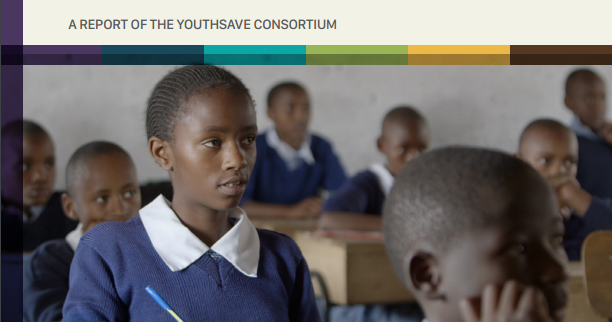
85,000 Low-income Youth Open Savings Accounts through YouthSave
A Conversation on the Weekly Wonk: Should We Bank On It?
Global Anti-Poverty Targets Tepid