Earlier this month, two large national organizations released a
draft of what they think every student should know at the end of each year of formal schooling — from kindergarten to 12th grade. This enormous undertaking
has already elicited a range of opinions from many education groups and interested observers. Comments on the proposed standards are due April 2nd.
The draft is the work of the
Common Core Standards Initiative, a group comprised representatives from the Council of Chief State School Officers and the National Governors Association. When the group formed last year, 48 states and the District of Columbia announced their participation. (Alaska and Texas opted out.) If the standards are adopted by these 48 states, two key elements of our modern education system – curricula (what students learn) and assessments (what they are tested on) — may change significantly nationwide.
From the beginning, the Obama administration has embraced the standards project. States vying for the Department of Education’s
Race to the Top grants are at an advantage if they participate in the initiative, and the standards are an integral part of the administration’s
Blueprint for Reform, the outline of proposed changes to the Elementary and Secondary Education Act, known most recently as No Child Left Behind.
But very little has been aired publicly about how these standards will affect the way teachers work with young children. The exception is a March 16th letter from the
Alliance for Childhood, an advocacy group based in College Park, Md., that
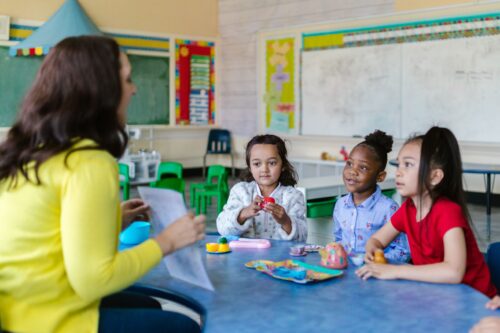
calls for the suspension of the creation of these standards for grades K-3. More than 200 health and child development professionals have signed the letter, which argues that the standards will lead to inappropriate testing and long hours of didactic literacy and math instruction without enough hands-on learning opportunities.
The Alliance’s concerns deserve thoughtful debate, though whether these particular standards will automatically lead down that path is the question. Here at the
Early Education Initiative, we see standards as an important piece of education reform. When designed well, standards should aid teachers in creating stimulating, enriching experiences that build on what children already know and are starting to think more deeply about. (That’s why the larger education reform conversation has to include the need for better professional development and strong, language-rich and content-rich curricula as well.)
Now that the proposed standards are public, it is time for outside content experts, child development specialists, educators, administrators, and national advocacy groups to pore over the details. (Earlier drafts of the standards for math and English language arts, not publicly distributed but
obtained by Ed Week, prompted pointed critiques from groups that thought they were too confusing.)
Here at Early Ed Watch, we are hopeful that as independent experts come forward with their opinions, they will be looking at standards for the primary grades with an eye toward ensuring that they are rigorous, aligned year to year, rich in content, and developmentally appropriate according to the latest science on children’s needs, stages of cognitive and social development, and capacity for learning. In fact, we’d argue that those criteria should apply throughout students’ school years.
We also caution that because
pre-kindergarten standards are not included in this effort, there is a risk of yet more
disconnection between the learning experiences that children have in their pre-kindergarten years and what they face in kindergarten. (We’d love to hear your take on this too. Please join in by adding comments below or sending us email.)
And if you are a subject-matter expert, early educator or child development specialist who has not yet started reviewed the standards but wants to provide feedback, you’ll need to act fast. The deadline for submitting comments – which are being collected via an electronic survey with multiple-choice questions and space for commentary — is a week away.