Lisa Guernsey
Senior Director, Birth to 12th Grade Policy; Co-Founder and Director, Learning Sciences Exchange

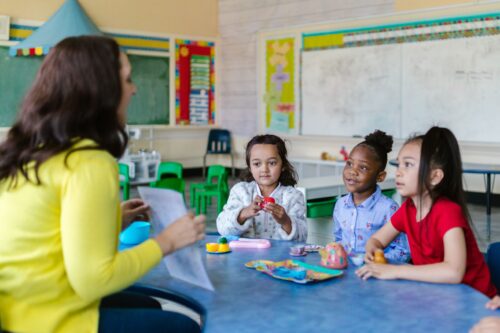
<div>The report comes at a key moment for education reform in the United States, as Congress takes up reauthorization of the Elementary and Secondary Education Act. It also follows the release last week of national test results showing that two-thirds of American fourth graders cannot read at grade level. And it reflects decades of research on how much high-quality learning experiences in children’s earliest years and throughout elementary school can produce gains in their academic and social well-being that carry through to adulthood.</div><div> </div><div>The report is part of the <a href="http://nsc.newamerica.net/home">Next Social Contract Initiative</a> at New America. Other papers in the series advocate for a <a href="http://www.newamerica.net/events/2008/family_based">family-based social contract</a> (full paper <a href="/downloads/family_based_social_contract.pdf">here</a>) and a <a href="http://workforce.newamerica.net/publications/policy/citizen_based_social_contract">citizen-based social contract</a> (full paper <a href="/downloads/NSC_Citizen_Principles_Paper_7_10_07.pdf">here</a>). This latest edition incorporates ideas from both of those papers and argues for new social contract for education that fosters a more seamless system connecting districts, schools, Head Start and independent centers of early learning (like preschools or high-quality child care centers). It recommends a “PreK-3<sup>rd</sup>” approach that includes voluntary universal pre-kindergarten programs, full-day kindergarten, and high-quality standards and curriculum for pre-k through the third grade. It also requires parental engagement and highly qualified teachers who share data and professional development within and across grades.</div><div><div> </div><div>The report recommends the following policy changes to spur the creation of this seamless system:</div> <ul><li>Establish proficiency in reading, math and social and emotional skills by the end of third grade as a foremost goal of our educational system.</li><li>Move the starting point for public education from five years old to three years old.</li><li>Integrate pre-kindergarten into a reformed education finance system.</li><li>Establish clearly articulated, aligned high-quality national standards for what children should know and be able to do at the end of 3rd grade and at each step in the PreK-3rd continuum leading up to that.</li><li>Redefine the roles of early childhood and elementary grades teachers and principals to allow for collaboration and shared professional development, as well as equitable pay and credential requirements.</li><li>Diversify educational delivery to allow for the incorporation of a variety of high-quality providers in the publicly funded education system.</li></ul><p>At an <a href="http://earlyed.newamerica.net/events/2010/nsc_primary_years_of_education">event</a> at New America's offices today, I'll be presenting ideas from the paper. David Gray, director of our <a href="http://workforce.newamerica.net/home">work force and family program</a> and a senior advisor for our education policy team, will be moderating a discussion with three panelists: Jacqueline Jones, senior advisor to the secretary on early learning for the <a href="http://www.ed.gov">U.S. Department of Education</a>; Jerry D. Weast, superintendent for <a href="http://www.mcps.k12.va.us">Montgomery County Public Schools</a> in Maryland.; and Robert H. Dugger, chairman of the advisory board for the <a href="http://www.partnershipforsuccess.org/index.php?id=01">Partnership for America's Economic Success</a>.</p>Hope to see you there!</div>
Senior Director, Birth to 12th Grade Policy; Co-Founder and Director, Learning Sciences Exchange