
Green Micro Technology Helps the Environment and Those in Poverty

It’s been quite a week for Mother Earth: devastating floods in Pakistan and China, which have killed thousands, fires/smog in Russia, a large glacier breaking off from Greenland, and record heat elsewhere. It’s striking that the most serious natural disasters often occur in already vulnerable developing regions, such as Sub Saharan Africa, South and South East Asia, where large populations live in poverty and lack access to consistent energy that inhibits economic growth. These regions also grapple with poor environmental conditions that exacerbate the serious effects of these environmental catastrophes, which many believe to be connected with global warming trends. Indeed, recent events indicate that those at the bottom of the pyramid are the most at risk.
But what does the recent plethora of depressing environmental news have to do with asset building and microfinance? For one, it’s clear that MFIs, private equity firms, and governments have a role to play in supporting green technology in the developing world. Investment in these types of projects will not only offer credit and opportunity to entrepreneurs, but also offer access to clean energy and power to entire communities, while potentially reducing the effects of global warming.
For instance, I am encouraged by recent microfinance investment in energy saving technology as well as small businesses that support renewable energy for homes and businesses that badly need it. Access to clean energy allows children to study, machines to run, and people to work for their financial betterment at all hours, while reducing unhealthy and archaic lighting and heating methods.
Green Forest Social Investment Trust is an NGO committed to just this type of project, especially through women entrepreneurs. Encouraged by the recent reduction of solar technology import taxes by the Kenyan government, and aided by technical training from Barefoot College of India, they have begun a program in several villages to train local women to construct and install rooftop solar panels. Households and businesses that draw energy from the panels then pay a low monthly fee to the cooperative for the cost of the kits, labor, and program fees, which are less than the monthly cost of kerosene and other fuels. It has inspired a larger pilot project called Lighting Africa sponsored by the IFC and Kenyan government, which will operate like an MFI and distribute solar kits to communities and households and allow them to pay off the costs over time.
Husk Power Systems, started in 2007 by two MBA students, is another such enterprise. It builds small power generators that run on gas created by heating (abundant and previously wasted) rice husks in small villages throughout India’s rice belt. Used husks are then used as agricultural fertilizer or to make concrete. So far, the for-profit but socially conscious, company has provided power for over 50,000 rural Indians, employed local villagers and has plans for expansion.
Energy saving green technology is also creating interesting opportunities in the developing world. Vortex ATMs are a low cost alternative to traditional ATMs. They require minimal power and are compatible with solar powered grids. In addition to saving energy, many believe the machines will increase financial inclusion for the unbanked. They hope that the low purchasing and operational costs will encourage banks to introduce them to rural areas that lack brick and mortar banks. Another company, D.light, sells a variety of solar powered lights and lanterns with the intention of eliminating dirty and relatively expensive kerosene lamps, whose pollutants are believed to kill over 1.5M people per year. So far D.light has sold over 100,000 lanterns in 30 countries.
These projects and innovations do more than give light to communities and help the environment. They provide countless economic benefits to participants by creating employment for building, distributing, and administering products and services, by offering less expensive energy and light alternatives, and by bringing financially excluded communities into the formal business and transactional fold. These projects also have the capability of producing revenues for communities and national governments as cap-and-trade policies expand in developed nations. Microenergy Credits is an enterprise that has taken note of this and have encouraged these initiatives by connecting MFIs that invest in clean energy with carbon markets looking to purchase credits.
Instead of households and businesses burning kerosene, coal, or fuel wood for energy, all of which can be unsafe, deplete natural resources, and harm the environment through their carbon output, renewable energy from small hydro-electric dams, solar paneled roofs or lanterns, and bio-energy from corn/rice husks can be used for light and power. On a large scale, even green micro projects can make an impact in reducing environmental degradation, making global-warming related natural disasters less likely, while also improving social and economic conditions for those in poverty. These projects show that there are opportunities abound in rural areas of the developing world where clean and renewable energy is needed and the consequences of global warming are being felt the most. Green technology should be supported by public grants, private investment, and government policy.
More About the Authors
Issues
Programs/Projects/Initiatives
Topics
Related
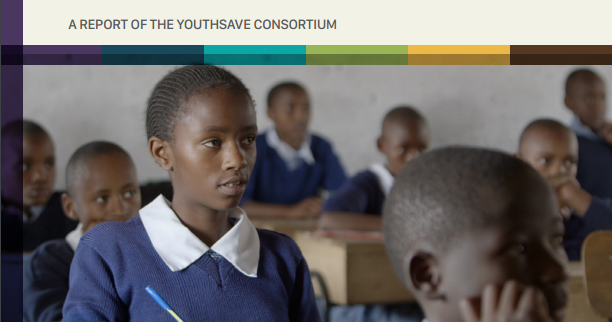
85,000 Low-income Youth Open Savings Accounts through YouthSave
A Conversation on the Weekly Wonk: Should We Bank On It?
Global Anti-Poverty Targets Tepid