U.S. Dept of Ed’s Dashboard Starts with 3-Year-Olds

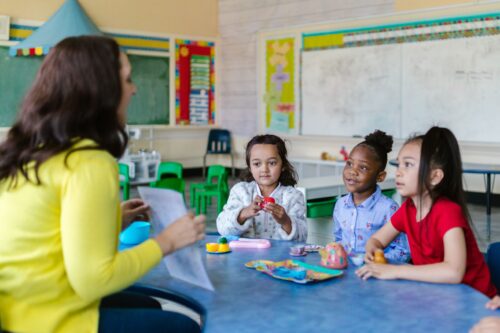
A new online “dashboard” created by the U.S. Department of Education is yet another sign of the growing awareness that children’s education should start well before kindergarten: The website includes data on 3- and 4-year-olds.
This nod to early learners may not seem like a big deal to those already convinced that public education should, of course, be inclusive of children at these ages. And it may even seem like a slight to those who wish it could include information starting at a child’s birth. Regardless, it is an important tool for prompting recognition among the broader public, not to mention activists in the education policy community, that early learning is part of public education.
The dashboard was designed to show indicators of progress toward the Administration’s goal of having the highest proportion of college graduates in the world. At the moment, according to the dashboard, only 42.3 percent of young adults have completed an associate’s degree or higher. President Obama wants that number to go up dramatically so that the U.S. leads the world by 2020 in the number of adults with a college degree.
How easy will it be to reach that goal? Enrollment in preschool is the first indicator on the dashboard, and it illustrates the uphill climb we face. Citing data from a nationwide survey conducted by the U.S. Census, it shows that less than half of American children are in preschool:

The next round of indicators on the dashboard are test scores of fourth and eighth graders (data from the National Assessment of Educational Progress), the national graduation rate for high school students, and the number of public school graduates who took Advanced Placement tests. Though these data points show that there has been some improvement over time, none of them reflects that the majority of American students are ready to attend college.
Showcasing those shortcomings is exactly why dashboards like this are important instruments.
(We should pause here to direct readers to a similar source, created by our Education Policy team here at New America: The Federal Education Budget Project, which also provides NAEP and federal spending data at the district level, instead of just the state level as the Department of Education has done.)
The online dashboard is not perfect, however. Data nerds like us wonder how reliable the dashboard might be and whether it actually shows what a general reader might presume it to show. This is a fair question when it comes to the dashboard’s preschool data. Even the creators of the dashboard highlight a good number of caveats. They note, for example, that the dashboard tells us nothing about the quality of the preschool programs, nor the extent to which high-need children are participating in preschool – whether it is high-quality or not.
Let’s take a moment to see how the preschool question looked on the questionnaire used by the U.S. Census – the American Community Survey. The preschool question is posed in the section on “educational attainment.” Respondent are asked to check a box for what “grade or level” of education a person in their household has attended at any time in the last three months. There’s a box for “Nursery school, preschool,” a box for “Kindergarten,” a box for “Grade 1-12” (with a place to specify which grade), etc.
When respondents check “nursery school, preschool” are they seeing that as distinct from childcare centers, which may or may not be providing children with experiences that we would call “early learning?” And might some parents who send their children to high-quality childcare centers – places that do immerse children in rich learning environments – be hesitant to check that box because they are not technically sending their child to something called a preschool? These are the kinds of questions that highlight just how much clarity is needed around what constitutes a good experience for young children and what helps them to develop socially and cognitively so that they will thrive in school.
Still, we see this dashboard as an important first step. The U.S. Department of Education deserves kudos for creating a source for straightforward and easy-to-digest information – something that has not always been forthcoming from the federal government in the past, and is not exactly pouring forth from state or local governments either for that matter. Let’s hope that this continues to build awareness of the need for early learning to be included in any conversation about ensuring that more Americans complete a college degree.
The U.S. Department of Education has created a dashboard to show whether students are making progress toward attaining a college degree.
Issues
Programs/Projects/Initiatives
Related

New Report Offers Bipartisan Solutions to State Child Care Woes

Five Places to Watch: Where Kindergarten Is Being Rediscovered
