Laura Bornfreund
Senior Fellow, Early & Elementary Education

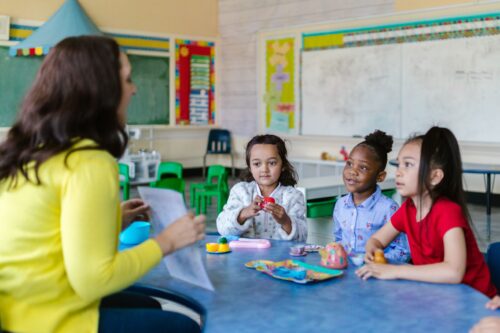
Picture a kindergarten classroom with one teacher and 41 children. No, this is not the plot of a scary movie; it’s the reality for one struggling school in North Las Vegas. It is ranked among the bottom 5 percent of schools in the Clark County School District.
According to an article this week in the Las Vegas Sun by Paul Takahashi, Elizondo Elementary School offered full-day kindergarten for the first time this year and anticipated an enrollment of about 78 students. But 123 children enrolled and were divided among the school’s three kindergarten classrooms.
How did this happen? Well, the state of Nevada has class size caps in place for first through third grades, but not for kindergarten. The ratio for first and second grade is 16:1 and third grade is 19:1.
According to the article, the average size of kindergarten classrooms, however, has been on the rise across Nevada, with an average ratio of 30:1. At Elizondo, if classes reach 51 students teachers may get an aide.
Here at Early Ed Watch we actively promote the importance of full-day kindergarten, but as one attendee at our March forum pointed out, full-day kindergarten by itself is not enough. It must come with guidelines for quality. To do otherwise means risking the gains that research has shown to come from full-day programs, especially for disadvantaged children.
Thinking about my own experience as a teacher, I wouldn’t have wanted to have that many children in my fourth grade classroom. (I taught fourth grade for four years in Florida.) Meeting the individual learning and developmental needs of my 26 to 28 students was challenging enough. I can’t even imagine being a kindergarten teacher with 30 students, much less 41: Assessing where all 41 children are developmentally and academically when they enter the classroom and developing individual plans to meet their learning needs, maintaining contact with 41 families and managing a classroom of 41 children, which for some may be in their very first structured learning environment, would be a daunting task.
Research on class sizes and how much they matter to student achievement has been mixed. The answer is not clear about whether it matters and if it does for which students in which grades. A recent review of past research, though, from the Brookings Institution suggests that smaller classes may make the most difference in the early grades of elementary school. So, 41 students in a high school classroom, maybe. But in the early grades, and especially in kindergarten, this is a recipe for a very poor start.
Senior Fellow, Early & Elementary Education