
Random Reflections on “Great Expectations” of Financial Inclusion

This post originally appeared on the SPINNAKER Network.
In the Charles Dickens classic Great Expectations, the impoverished protagonist Pip finds himself in a constant battle between ambition and a loathing sense of dependence. As he strives toward costly goals, Pip suffers from a mental barrier to success due to a perceived reliance on Miss Havisham, a decrepit and perverse recluse, as his benefactor.
So what does Pip have to do with asset-building? He reminds us that behind the finances, the savings for the poor community is working with actual people and ambitions, not just clients and products. As funders, researchers, practitioners, and policymakers, it’s our collective responsibility as a community to ensure that savings products are developed and understood in a truly human context. As Kentaro Toyamo of the University of California, Berkeley reminds us, “What really matters in microfinance — and much of international development — is not just the ability of impoverished clients to consume a product provided to them on a platter, but to grow from the experience so that even if the service were suddenly to vanish, they would emerge stronger people who are better able to take care of themselves”.
Savings are more than individual asset-building. Going beyond the numbers, savings provide a gateway toward empowerment and allow people to feel in control of their lives and future. Just like Pip’s desire for education and upward mobility, making a business investment or paying school fees are commendable goals to achieve – but the method in which they are realized is just as important. There is a certain sense of accomplishment and contentment one feels when reaching goals via savings (that is, by one’s own means) rather than credit (depending on others). Only after a jeering plot twist in which we discover that Pip’s ambitions have actually been financed by his own past good deeds does he begin to feel somewhat at ease.
There exists a plethora of evidence, anecdotal and RCT-tested, citing the impact of savings on self-confidence and empowerment. In the Philippines, one study found that women with access to savings accounts have increased decision making power within their households. Another RCT in rural Kenya found that women with opposing financial preferences to their husbands were more likely, when given access, to open individual rather than joint savings accounts. As for individual stories, major news outlets such as the BBC and New York Times tell them best. There’s Sumitra in Ahmedabad, India who, with the help of Women’s World Banking, created her own business and subsequently built up her assets in order to send her children to school and care for a sick husband.
Or, take a look at a recent New York Times article detailing roving bank agents who travel to rural Indian villages and, with the help of laptops and biometric systems, have succeeded in setting up over 74 million savings accounts. What’s more interesting is the story behind the actual agents – the article describes one female agent who receives about USD 200 per month (compared to a rural average income of USD 65). While building assets is empowering in itself, technology and innovation allow the savings field to multi-task and provide outlets for employment that encourage self-confidence and self-reliance.
Financial services for the poor, especially credit-focused institutions, often run the risk of promoting economic efficiency in lieu of understanding what the base of the pyramid desires, both financially and psychologically. Although savings are fundamentally opposite from loans, they are not immune from similar “economic efficiency” risks. Hidden fees and high costs to clients often create distrust between clients and formal financial institutions. Yet the profit motive and customer needs do not have to be at odds. For example, M-PESA levies transaction fees but it is clear in its pricing and clients are satisfied with Safaricom’s customer service. They have understood and responded to client demands which have in turn allowed customers to accept the costs as “fair”.
When Dickens originally wrote his novel, it ended with Pip fatigued and forever losing the love of his life. But the author succumbed to an audience that wanted a sense of optimism and resilience by publishing an alternate ending where Pip gets the girl and remains battered but content. Microfinance started with credit, but its alternate ending (or at least, second round) should revolve around savings, with the community focused on transforming cost-effective savings accounts from “great expectations” into widespread realities.
More About the Author
Issues
Programs/Projects/Initiatives
Topics
Related
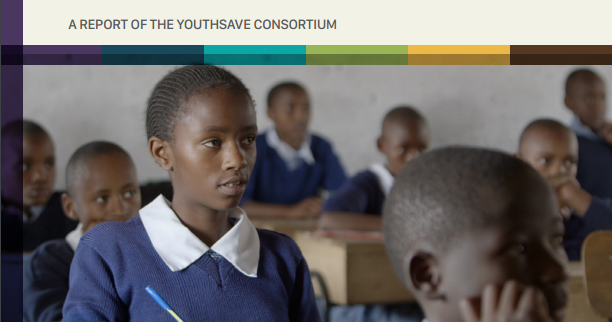
85,000 Low-income Youth Open Savings Accounts through YouthSave
A Conversation on the Weekly Wonk: Should We Bank On It?
Global Anti-Poverty Targets Tepid