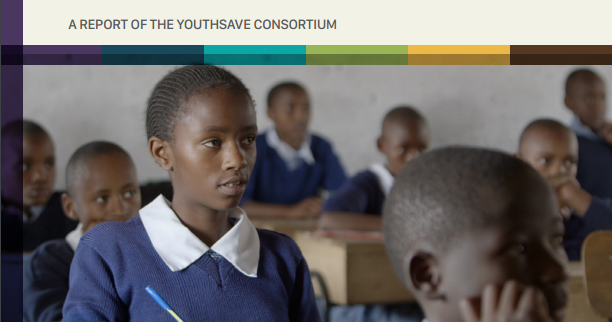
New Market Research Paper on Youth Demand for Savings Services Released

Originally posted on youthsave.org.
By Rani Deshpande, Save the Children
When YouthSave and our partner banks first set out to design youth savings products two years ago, we had not much to go on, as there was precious little information on youth demand for savings accounts available in the public domain. So our market research teams had to start basically from scratch: studying a wide range of youth sub-segments, and asking everything from whether kids saved, to whether they were even vaguely interested in learning more about personal financial management (and if they weren’t, what they were interested in – so that we could leverage that!).
In the process, we ended up speaking with almost 2500 people in our four project countries – Colombia, Ghana, Kenya, and Nepal – to find out what youth savers want. Through over 350 focus groups and 225 in-depth interviews, we asked young people questions like whether they save (turns out they do!), how they do it, what they like about their savings methods, and what they thought about banks. We then used that information and the perspectives of key adults in their lives, to figure out how banks could offer youth a compelling value proposition in savings.
Our findings are encapsulated in a recently released report meant to help financial institutions and others designing youth savings products, start a step ahead of where we did. Though there were numerous variations and nuances across our four countries, several key commonalities also emerged. Here’s a sample:
- Most youth are saving informally – though most parents don’t seem to be aware of that fact. What makes this finding even more surprising is that most youth income actually comes from parents and family members.
- Youth prize the secrecy of their savings, fearing that their parents might appropriate their funds or stop supporting them financially if they find out.
- While they value the simplicity and accessibility of informal savings mechanisms, youth also realize that these traits make it easy to spend their savings, and would value help in accumulating larger amounts over time.
These findings indicate an opportunity for banks to offer young people savings instruments that provide more security than informal mechanisms, while getting the level of “practical liquidity” – that is, a combination of product features and physical accessibility – just right. This should be enough to enable emergency access, but not so much that it discourages longer-term asset accumulation. We also discuss the kinds of mechanisms banks need to put in place to offset any potential risks created by youth using formal-sector savings services, and the adult involvement it frequently entails.
We hope the broad, common outlines of youth demand for savings services that we’ve drawn in this paper become the hypotheses that more financial institutions will test with their own youth clients in more locations. We look forward to hearing whether these contours remain constant, or how they shift, as we learn even more about what youth savers want.
On July 26, the YouthSave Consortium will discuss some of its market research results, in addition to a discussion about its most recent data on the financial preferences of low-income youth and methods to encourage positive financial behavior. Join the Youth Save Consortium as it explores the ideas about the future direction of the field and examines new insights on youth savings at this event.
Issues
Programs/Projects/Initiatives
Topics
Related
A Conversation on the Weekly Wonk: Should We Bank On It?
Global Anti-Poverty Targets Tepid