Laura Bornfreund
Senior Fellow, Early & Elementary Education
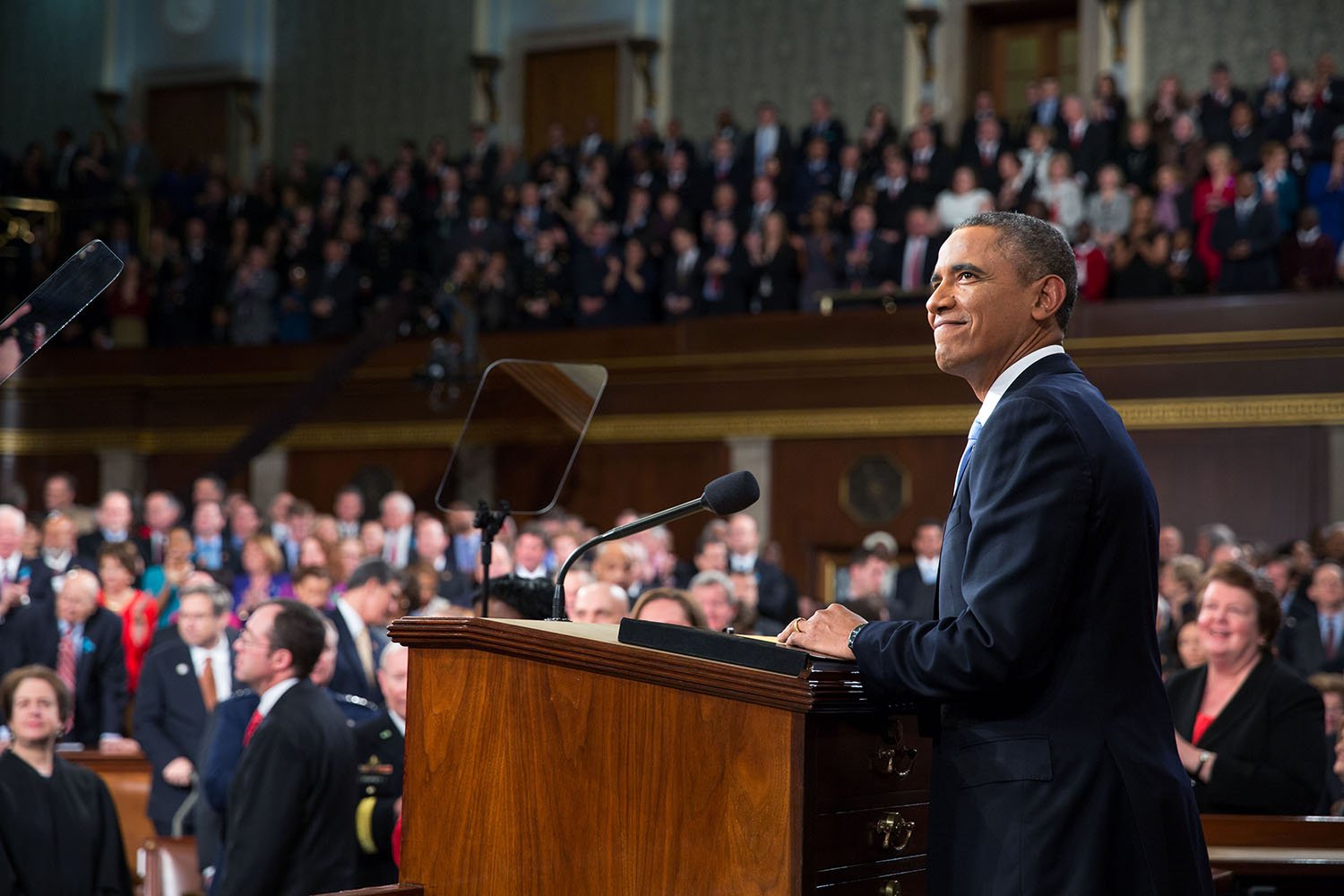
President Obama released his fiscal year 2016 budget request to congress this week. The Education Policy Program at New America has reviewed the president’s budget and generated a list of key questions that policymakers, the media, stakeholder groups, and the public should ask about the proposals. These are divided into three categories. Those covering PreK-12 are below. Those covering Higher Education are available here. Those covering Workforce Training will be available here.
The President’s fiscal year 2016 budget request, “Investing in America’s Future,” presents a wide set of education investment priorities, from pre-K through college. This year’s budget narrative underscores the progress states have made for introducing more rigorous college- and career-ready standards, and introduces significant funding increases to support states’ education reform efforts. Echoing previous years’ proposals, the budget request includes $75 billion over the next ten years in mandatory funding for Preschool for All, a proposal to partner with states to provide high-quality pre-K to more low- and moderate-income children. And, in addition to upping spending on competitive grants like Investing in Innovation (i3), School Improvement Grants (SIG), and Promise Neighborhoods, the administration proposes increases to Federal formula grants, including a big hike in Title I and modest boosts in English Language Acquisition and Individuals with Disabilities Education Act (IDEA) grants.
Current congressional priorities for the reauthorization of the Elementary and Secondary Education Act (ESEA), however, underscore how far apart this Republican Congress and the Administration are on education policy. Case in point: many of the programs this budget would grow are completely cut in Senator Lamar Alexander’s draft bill (e.g., SIG, i3, Promise Neighborhoods). While it is far from given that Congress will be able to pass an update to ESEA that the President will actually sign, it seems equally unlikely that Congress will pass a budget by October that resembles this Budget Request for education.
But as in past years, at least some of these proposals will get air time and may even make it into a final budget. At the very least, they signal the President’s vision and priorities for the country. So, on that note, here are our questions regarding the 2016 Budget Request:
Additionally, Preschool for All would promote access to high-quality full-day kindergarten. This is the third year that the Administration has made full-day kindergarten a priority and, unfortunately, Congress has not followed suit. As we have asked in previous years, does this signal that full-day kindergarten is a stronger priority for the Administration than for Congress?
The first of these programs, Leveraging What Works, would provide $100 million in competitive grants to districts that agree to use a portion of their Title I funds, in combination with state and local resources, to provide evidence-based programming that advances low-income students’ outcomes. But the number and size of districts this bonus money will reach remains unclear. Would the bonus funds go toward districts most in need of them, spurring new local investments in evidenced-based programming for disadvantaged students, or would they go toward those already providing such strong supports on their own? Likewise, how would districts guarantee that the additional funds target students most in need?
The second, the Equity and Outcomes pilot, would entail no additional cost and provide up to 10 districts more flexibility in how they spend Title I funds, exempting them from federal reporting and fiscal requirements, in exchange for demonstrating comparability in state and local funding between high- and low-poverty schools. Districts would need to report on student outcomes linked to expenditures to demonstrate effective and efficient use of funds. But what guidance would the Department provide to districts around comparability? And is incentivizing equity through competition between a few districts the best strategy, when equity should be a requirement for all?
Meanwhile, the Teacher Incentive Fund (TIF) Grant program, which provides grants to districts to develop performance pay systems linked to student outcomes in high-needs schools, would expand in scope and funding. Under a new name, Excellent Educators Grants, the Administration proposes $350 million—up from $230 million last year—to help districts and states design and implement comprehensive human capital systems beyond performance pay, from teacher recruitment to development and retention on the job. Given the mixed research on performance pay and the critical need for stronger teacher development and growth opportunities, the expanded program promises to help grow and recognize quality teaching in high-needs schools. But, while the Excellent Educators Grants offer a substantial overall increase in TIF funding, is it enough to match the program’s significantly broadened scope? How much would be allocated for each human capital system component?
Lastly, the Administration calls for the replacement and consolidation of three programs—Teacher Quality Partnership, Transition to Teaching, and School Leadership—into Teacher and Principal Pathways, a $139 million competitive grant program that would support improvements in teacher and leader preparation. The proposal echoes the Administration’s 2010 Blueprint for ESEA reauthorization. Grants would be provided to both institutions of higher education and nonprofit organizations that partner strategically with districts to strengthen teacher and leader pathways. Considering the Department’s newly proposed regulations for teacher preparation programs, how would this proposal align?
This year’s budget has dropped the ConnectEDucators program name, but has proposed the same dollar figure, $200 million, to go toward Education Technology State Grants. These grants would also be aimed at increasing teacher supports for implementing technology in the classroom. In this iteration, states would make competitive subgrants to high-need districts to support exemplary models for using technology in the classroom. As with the ConnectEDucators proposal, however, districts could only be awarded grants if they already have sufficient broadband infrastructure. But how would the federal government ensure districts with insufficient infrastructure do not fall farther and farther behind, exacerbating the digital divide? Further, what guidance would the Department offer states to ensure that districts with high needs apply for funding, as well as what qualifies as an exemplary model for using technology in the classroom?
“
Senior Fellow, Early & Elementary Education