At 4:45 on April 21st, it abruptly started to
hail at my house in the suburbs of Washington, DC. Little chunks of ice, the
size of a quarter or even larger. And then, according to my husband, the hail
suddenly started shooting sideways, as though there were a hail cannon aimed at
our home. The noise was ferocious, and some antediluvian hunch drove my
husband and youngest son rushing into an interior stairwell.
Sharon Burke
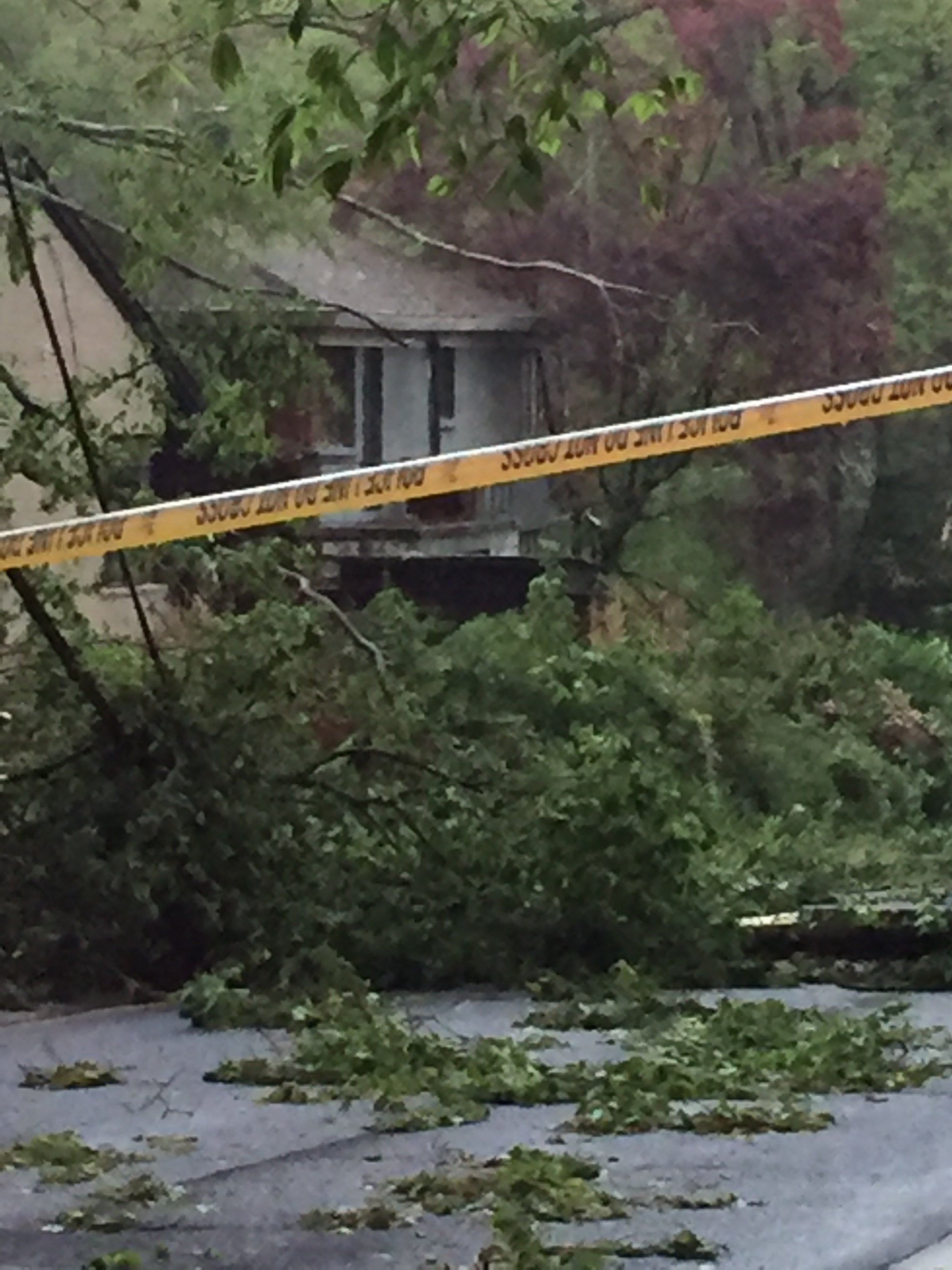
When the racket died down just a few minutes — minutes — later, eight
trees had fallen in our yard and in our neighbors’ yards, three of the trees around 100
feet tall. Two utility poles were sheared off at the base, our yard a
tangle of live wires. A subcontractor for PEPCO, our local electric utility,
cut down a ninth tree two days later, as the wind had ripped the entire canopy
off, leaving an unstable 70-foot tall remnant.
Our neighbors and we were incredibly, improbably lucky. The
trunks, some as thick as five feet in diameter, fell between the close-clustered
houses, and while we all suffered some damage, it was largely superficial. No
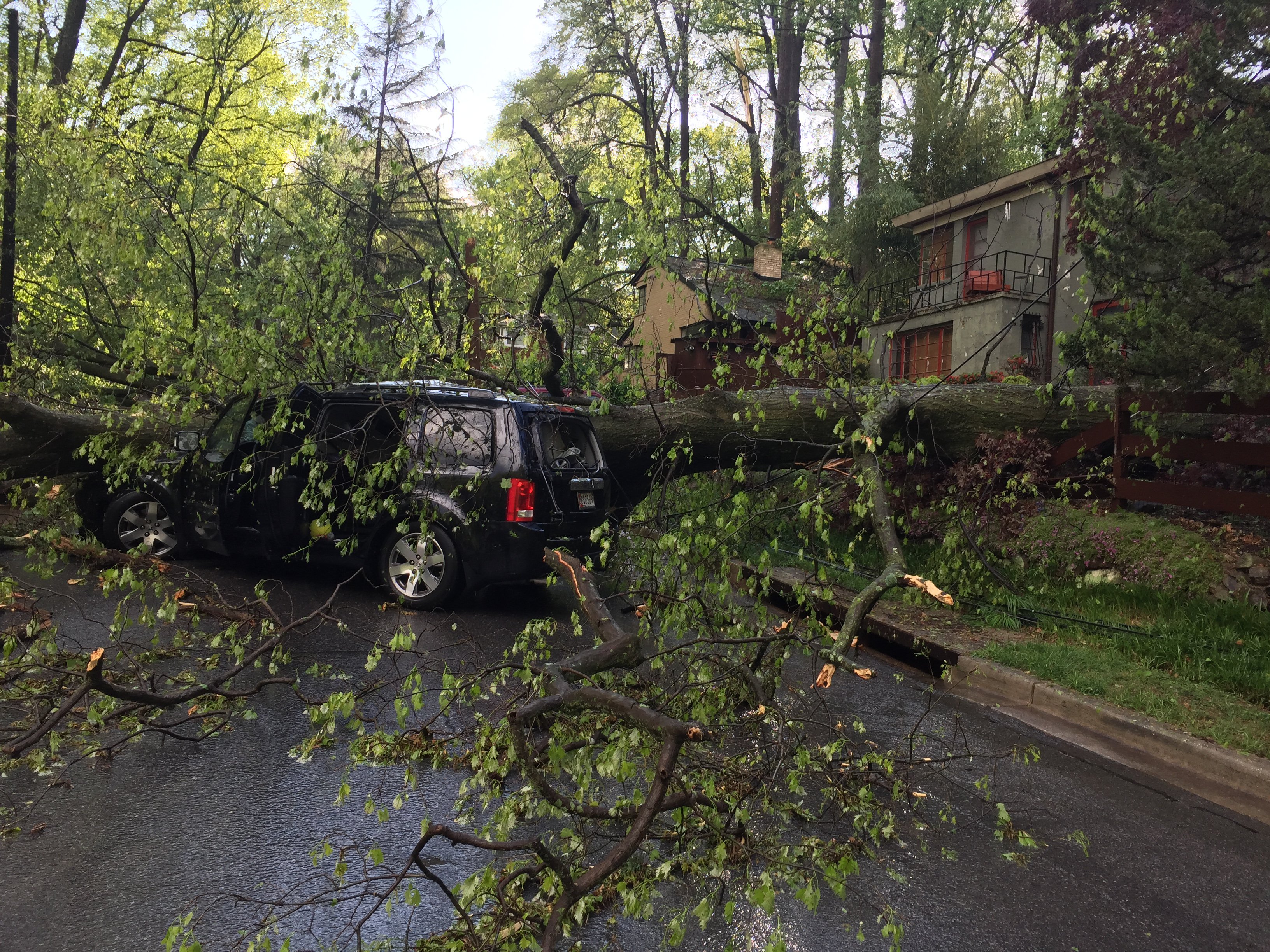
one was seriously hurt. One of the trees did come down right onto a car driving
past, crushing the front passenger side of the cabin. Fortunately, no one was
riding in that seat and the driver and his baby in the back seat survived with
minor injuries, a near miss of seconds and inches.
Paul Fagiolo
We were also lucky that whatever wind phenomenon hit our
nook of the neighborhood, it did not directly tap our homes. My friend, Mike
Schichtel, who was working as the lead forecaster for the National Weather
Service that day in the College Park office, later told us that the sudden storm
“may have had a small hook echo briefly that can be
associated with potential tornadic development,” but can’t confirm anything
beyond strong winds. The National Weather Service’s Storm Prediction Center has
reports of the damage at this site.
This amazing
piece in the Washington Post explains really well what happened. The Capital Weather Gang, when they wrote
this, did not know about the scale of damage to our half-block area, so they
offer no insights as to what might have actually happened. Was this a
microburst? Wind shear? The briefest kiss of a funnel? We’ll never know, I guess.
I found it all ironic, given that we’re in the midst of our “Weather Eye” project
at New America, and I wasn’t expecting such an intimate lesson in severe weather. For the project, we’ve been using NOAA and FEMA
data as a guide to hard-hit parts of the country, but our plan is to go beyond
the data to talk to people about the weather they live with. My own experience
validates this approach: the data on the Storm Prediction Center site is mildly
misleading, in that our neighborhood is described twice using two different
street names and two different damage assessments. Also, saying half a dozen
trees and wires are down doesn’t really communicate the scale of the damage,
which probably would have been more clearly communicated if any of those
monster trees had actually landed directly on a house or caused a fatality. In
other words, only the humans present could have communicated how bad this event
really was.
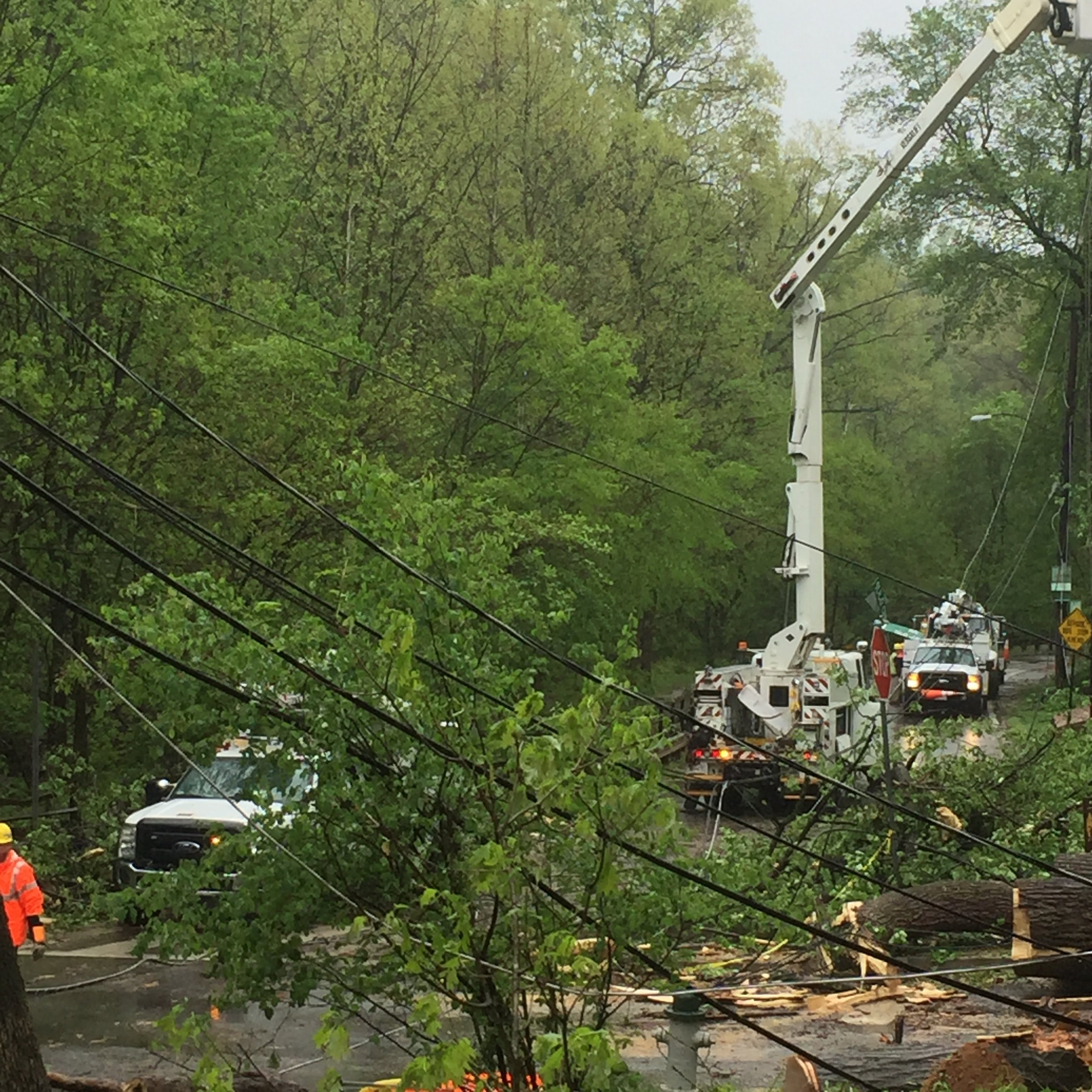
Sharon Burke
Finally, it’s been an interesting experience in resilience. PEPCO
was on the scene the same night of the incident with a subcontractor, cutting
up trees throughout the night to clear the two blocked streets. This was
annoying at the time (not much sleep going on with a small army of guys with
chainsaws and little handheld flashlights 30 feet from the bedroom window), but
gratifying the next day. It turns out only an electrician you hire can actually
re-attach electricity to your home, but PEPCO reinstalled utility poles and had
power flowing to us via a temporary workaround within a day. Verizon came the day
after PEPCO was finished to restore phone cables, and Comcast the day after that
to restore Internet and television, though that still doesn’t seem fully
functional weeks later. There was debris down in streets and sidewalks under
the jurisdiction of both our city and the regional park and planning
commission, and both cleared tree trunks and other hazards away within a few
days. Bent guardrails and other structural damage on public property are not
yet repaired – and perhaps may never be. We’ll see.
As for our own yard, we had four very large trees down, and
two other trees from our neighbor’s yard down in parts of our yard. Our
insurance company was at our house the very next business day, and a tree removal service came
the day after that. They left us some wood for our own use, but chipped the
rest up to fill up the massive holes left by the tree roots. We still have
repairs to make – flattened fences and torn concrete – but nothing that affects
our day-to-day wellbeing.
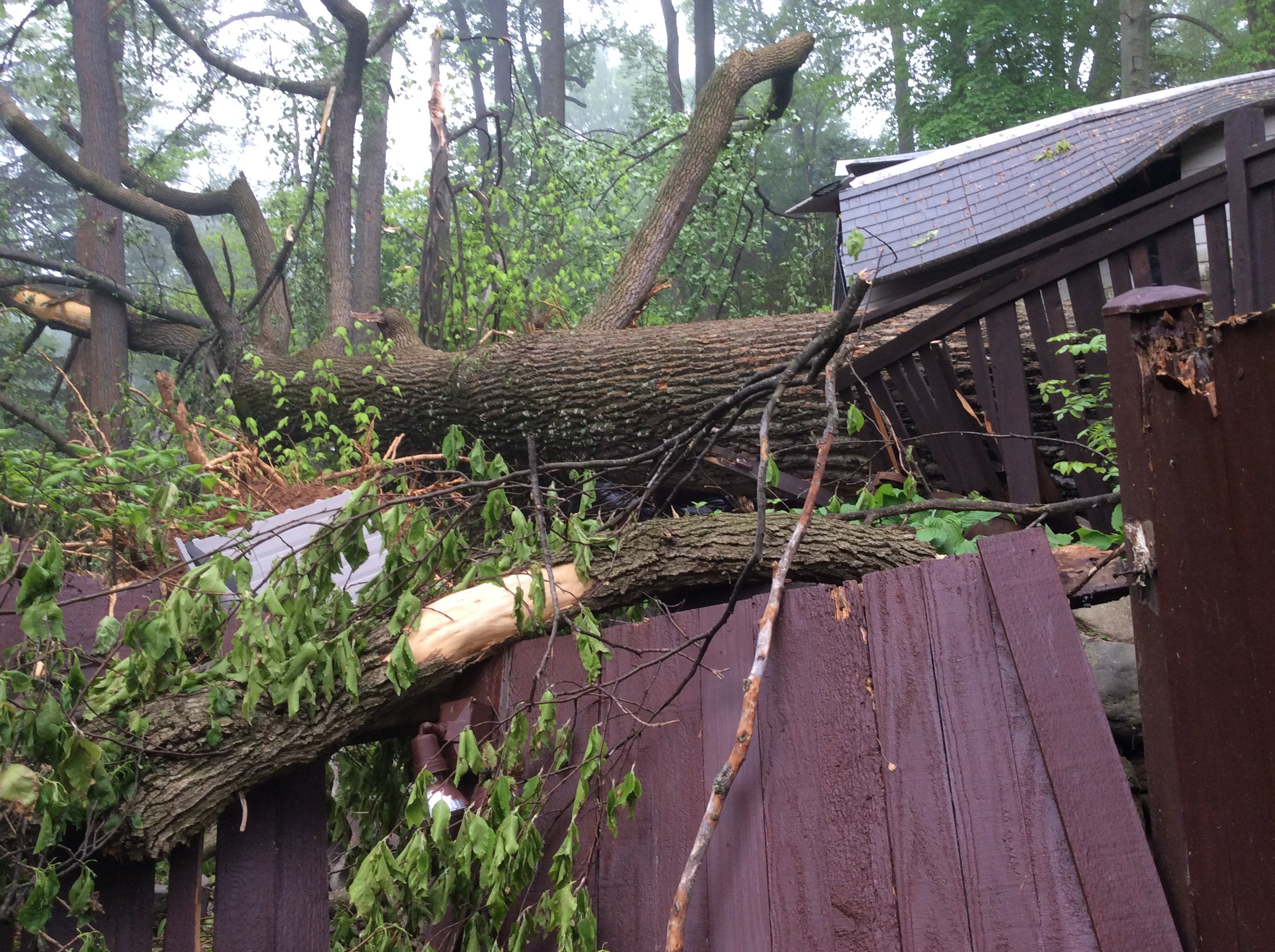
Sharon Burke
Human resilience is another matter. One neighbor is still
waiting for the insurance company to make an assessment and authorize work.
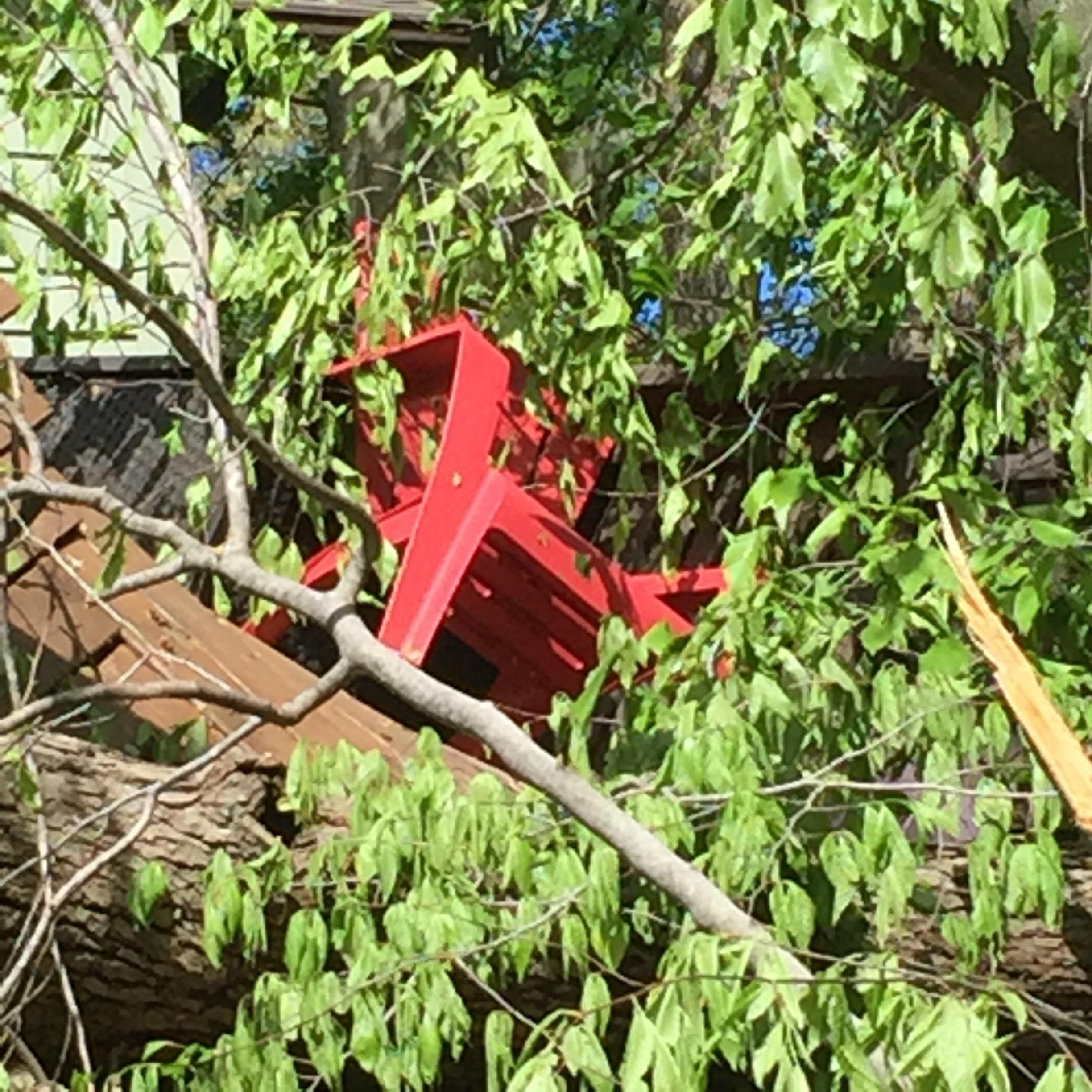
They have a massive tree inches from the house, their deck crushed underneath –
you can see a child’s red plastic deck chair peeking out of the wreckage. They have
no choice but to look at the tree, snaking through their yard like some giant
sea serpent, every day. I think the lingering physical evidence has made it
hard for some of us not to dwell on the terrible things that almost happened.
It’s also hard not to feel some larger sadness about the
loss of so many trees. That may seem goofy, given that we could have lost human lives, but these trees were White Oak, Red Oak, and several
other long-lived species, already more than 100 years old. They sprouted on
this spot before my father, who passed away more than a decade ago, was born,
and even before my grandparents at the turn of the last century. And they
should have still been here after I die someday.
Instead, there’s just a blank spot on my lawn. And I don’t
even know why.
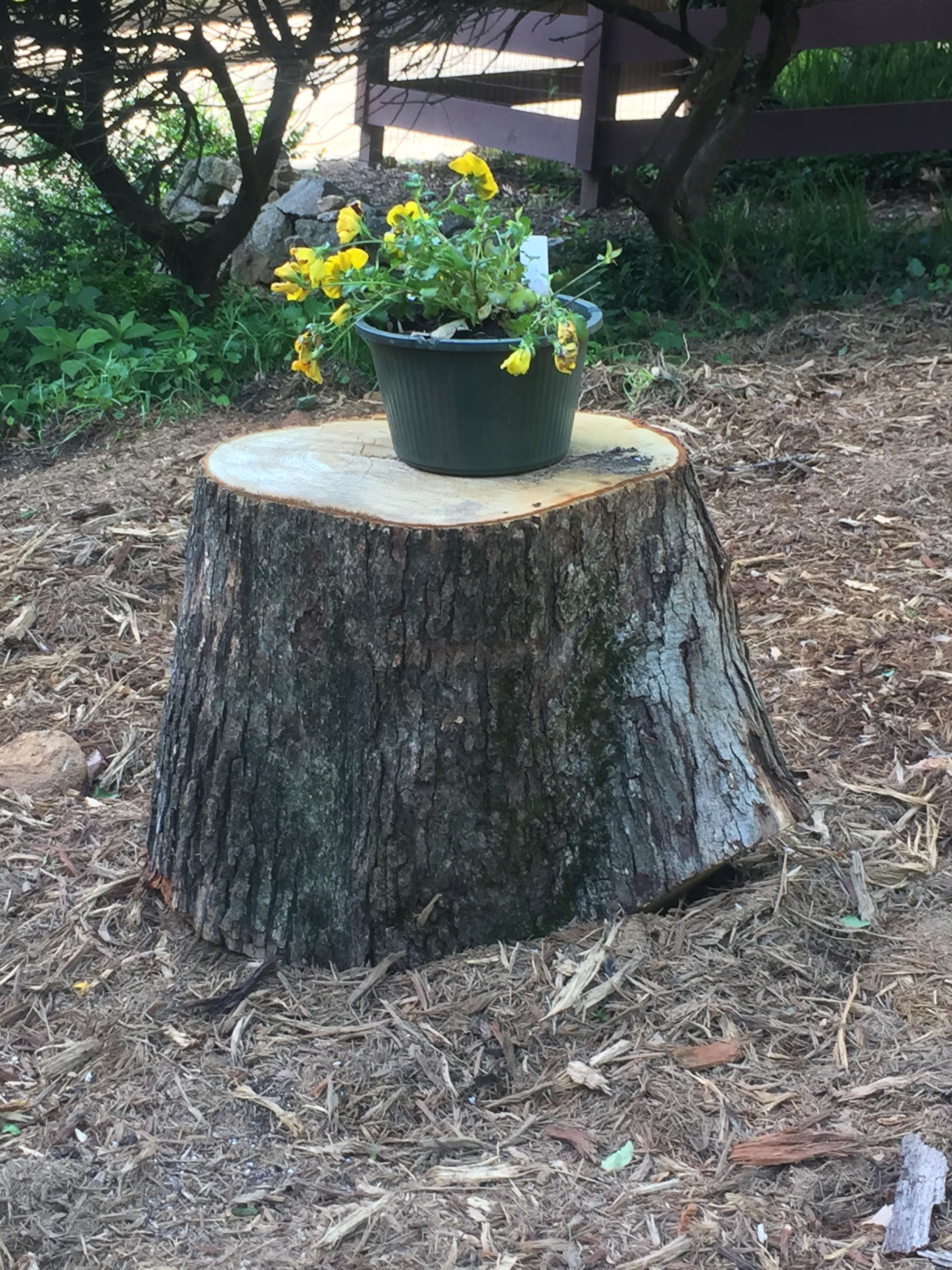
Sharon Burke
More About the Author
Issues
Programs/Projects/Initiatives
Topics
Related
Dutch Flood Experts Come to Help Protect Galveston
How Texas Is Trying to Pioneer a Disaster Preparedness Path
For Boston Climate Resilience, It’s Full Steam Ahead