The Promise of OER: More Equitable Education For All
“We
really appreciate that the whole world is here, and that we are all supporting
OER development,” Dr. Maja Makovec Brenčič, Slovenia’s minister of education, science and
sport, said to me recently at the Second
World OER Congress.
It was
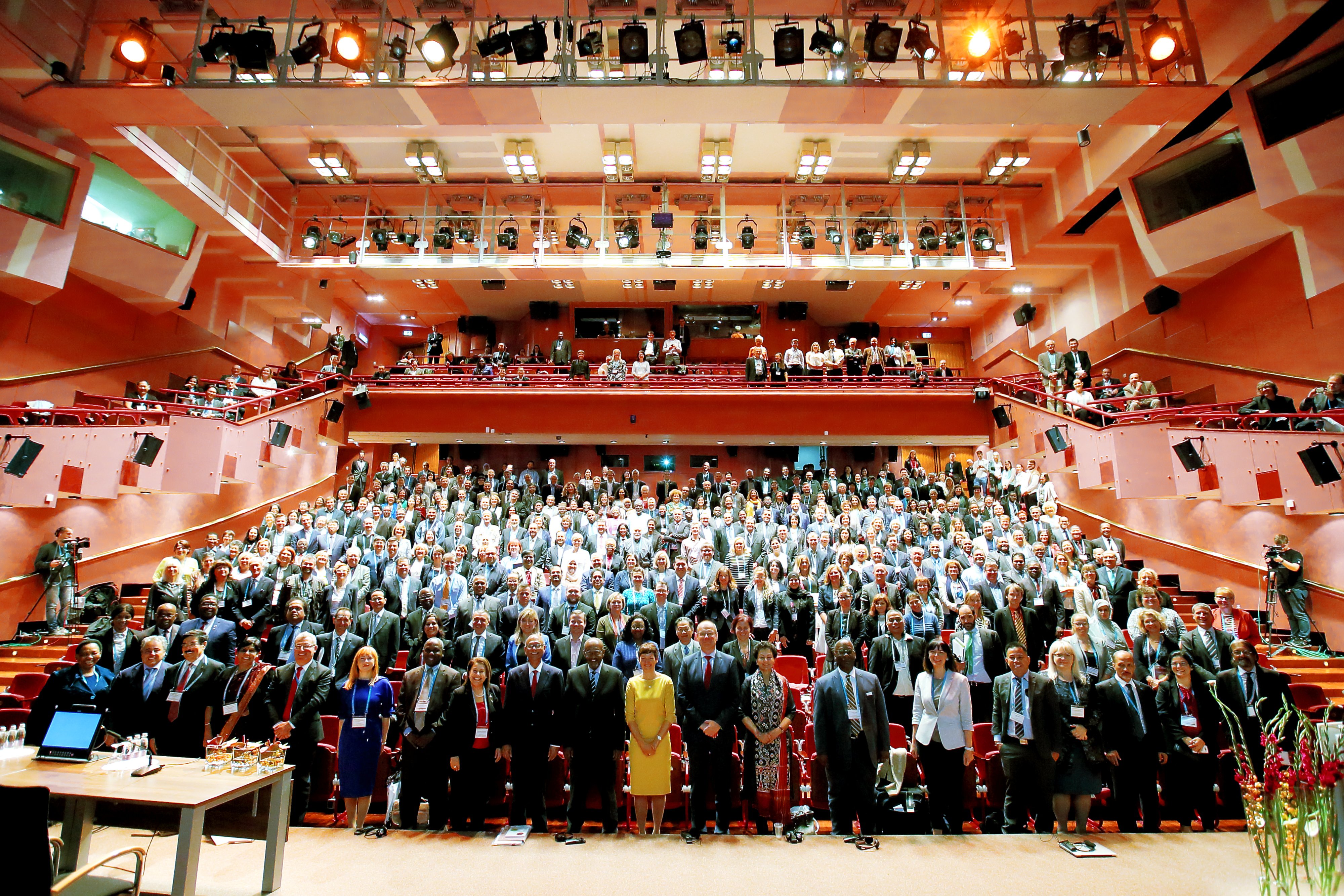
the second morning of a three-day convening held in Ljubljana, Slovenia, which
drew over 550 government leaders, policy experts, practitioners, and advocates
from more than 140 countries. Dr. Makovec Brenčič was enthusiastic about the growing
commitment to action from those in attendance.
The
event—hosted by the government of Slovenia and United Nations Educational,
Science and Cultural Organization (UNESCO)—was organized to draw attention to
the role that open educational resources can play in achieving one of the UN sustainable
development goals to ensure inclusive and equitable quality education for all.
Over the
past 15 years, interest in OER—freely available educational materials that can
be downloaded, edited and shared—has steadily grown as promising new practices
and examples come to light. Those gathered celebrated the wide range of
innovative efforts currently underway, and began to outline solutions to the many challenges that need to be
addressed in order to see this work to move forward and scale.
From the
very beginning, UNESCO has been involved with the OER movement. In an opening
video at the Congress, Irina Bokova, deputy general of UNESCO, highlighted how
her organization helped to coin the term back in 2002. Five years later, a
small group of open education advocates convened in Cape Town called upon
educators, authors, publishers and institutions to share their educational
resources and develop supporting policies.
These
initial efforts culminated in UNESCO’s convening of the First World OER
Congress in 2012, where the organization called upon governments around the world to promote more equal
access to information.
According
to the Commonwealth of Learning’s new 2017 global report, more governments have expressed
interest in adopting policies to promote the development and use of OER. During
that first convening in 2012, four ministers of education spoke of the
potential benefits from openly licensed resources.
Now, five
years later, this Second Congress featured a panel discussion with over a dozen
ministers. Each minister spoke to the ways in which OER factors into their
strategy for expanding access to content learning, as well as the critical
challenges for implementation.
To date,
however, much of the progress has been made on a smaller scale outside of
governments. One promising initiative that drew significant attention was the African Storybook Project, developed by the South African
Institute for Distance Education (Saide), a nonprofit based in Johannesburg,
South Africa.
Getachew
Engida, deputy director-general for UNESCO, spoke of the tremendous need for
books in primary schools across Sub-Saharan Africa. The African Storybook
website features openly licensed, illustrated stories that are free to use,
copy, translate, adapt and print. The website features 843 storybooks that are
available in more than 100 languages. As Engida said, “the capability to
translate into local languages and contexts make these resources more
relevant.”
Projects
like this demonstrate the promise of OER, but government representatives and
policy experts gathered highlighted several challenges that have made it
difficult to bring this work to scale. One such challenge is the continued
confusion over the meaning of “open.” For many, it was still difficult to
distinguish between digital resources that were available for free, and those
that were openly licensed to provide users with the permission to keep, reuse
and adapt the materials to meet their own needs.
A second
key challenge that has confronted many countries is developing the necessary
expertise to find, use and share OER.
Ryan
Merkley, chief executive officer of Creative Commons—the nonprofit responsible
for developing and maintaining the most widely used open content licenses—sees
a role for his organization in helping to build this capacity. “We think there
will be a much higher demand for expertise in how you work openly, how you
build open communities, how you collaborate,” Merkley said to me. To address
this need, his organization is developing a CC Certificate that will allow
users to gain the knowledge and skills they need, and show their expertise.
Despite
these difficulties, those gathered saw a clear line of progress over the last
decade. “It’s no longer about justifying the existence of OER,” said Tibor
Navracsics, European commissioner for education, culture, youth and sport.
Instead, he said, it is now about how to effectively and sustainably use OER on
the ground.
To
Merkley, a critical part of making this work sustainable includes widespread
government adoption of open policy. “What we’d like to see is more of the
systemic, structural change where every country has an oar in the water on an
open policy, and sees that as a meaningful lever toward a process of changing
the way they do education,” he said.
There is
a real case to be made for embracing new strategies and approaches in
education. While literacy rates continue to climb around the world, more than
750 million adults and 264 million young people who are not currently in school
aren’t equipped with basic literacy skills—that is, more than one eighth of the
global population cannot read or write. To meet the needs of the global
community, educators and learners around the world must be able to access the
necessary resources to develop these foundational skills.
For Makovec Brenčič, the
Slovenian education minister, this was the most important reason for
hosting the Second World OER Congress: “OER is one of the ways to make
education really inclusive, accessible, and open to everyone.”
This post originally appeared on the Hewlett Foundation website.
Issues
Related
Five Things Principals Can Do to Protect Kindergarten’s Three Indispensables

Out of School…and Out of Luck?