Spandana Singh
Policy Analyst, Open Technology Institute
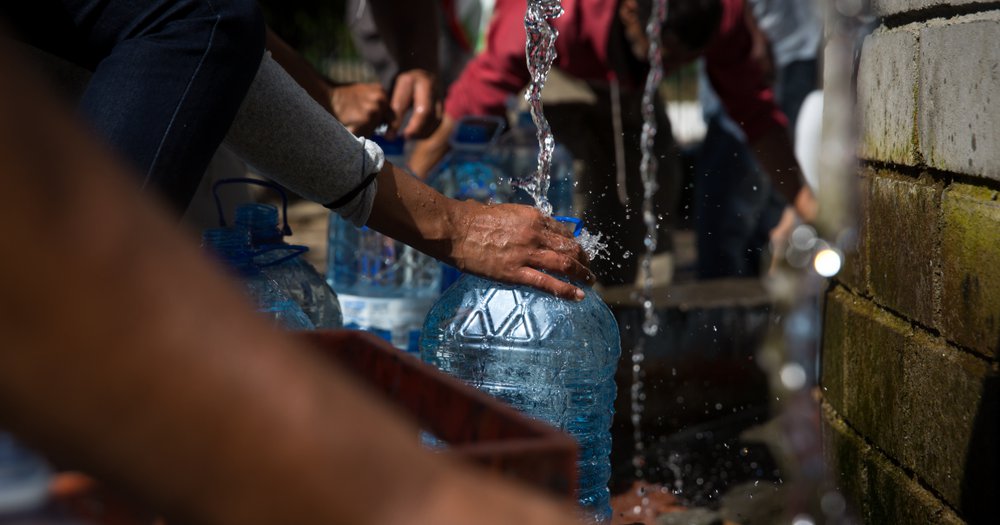
April 16th was supposed to be Day Zero for Cape Town, South Africa — the day the city would run out of water. But Day Zero didn’t happen, largely because the residents of the city responded to the very real threat of going dry. That response, however, only postponed the day of reckoning, rather than solving the underlying problems.
Cape Town may be the first city projected to run out of water, but it will not be the last. Climate change, increased flooding and droughts, urbanization, and poor governance and management of resources are combining to threaten the water sources and resource resilience of communities around the world, from California to Jakarta and Melbourne to Mongolia. In many of these places, poor and vulnerable communities are likely to be disproportionately affected, particularly in so-called “megacities.”
For these communities, water shortages are often already a way of life, only exacerbated by climate change. In 2015, for example, São Paulo, Brazil experienced a water crisis similar to that of Cape Town. Unsurprisingly, already vulnerable and resource-insecure communities, such as people living in favelas, faced the most dramatic shortages as they were often at the end of weak and limited distribution networks. In addition, these communities often lacked access to water tanks, and as a result were unable to store water for days in which supplies ran completely dry.
Increased hydrological poverty has also threatened the financial resilience of already vulnerable communities. In Cape Town, following the outbreak of the water crisis, the city government established a water police force responsible for ensuring residents did not exceed their daily water restrictions. Police fined those they caught exceeding their daily limits between $41-$248, a negligible amount for a wealthy resident but a damaging sum for a member of one of Cape Town’s poorer communities. Such high penalties run the risk of further marginalizing these populations. Moreover, wealthier residents generally can afford to leave the area and return once the crisis has been resolved. Poorer residents, on the other hand, cannot afford such mobility. Furthermore, Cape Town’s water crisis has significantly tarnished its tourism and agricultural industries, with widespread economic impacts, including job loss for approximately 30,000 seasonal farm workers.
In addition, water shortages come with a range of public health concerns. Basic acts such as hand washing, showering, and washing food can become challenging and illnesses such as dehydration and heat strokes become more prevalent. Decreased water supplies also put a significant strain on sanitation systems and augment the risk of dangerous diseases, such as dysentery and salmonella. Treating these diseases with limited water supplies further strains already struggling healthcare systems, particularly for vulnerable communities that lack access to services.
There is also a link between water scarcity and crime, including water theft, smuggling, price-gouging, and water mafias. In Bangalore, India’s Silicon Valley, which is predicted to become unlivable due to water shortages and pollution by 2025, a group of water tanker owners have gained substantial social power as they serve as the primary water source for marginalized communities that are not integrated into civic water systems. The group has resorted to price-gouging and has managed to maintain its considerable power over time through systems of political patronage and violence. There are similar water mafia groups in Mumbai and Karachi, where water supplies are gradually becoming more sparse and unequally distributed. In Cape Town, a black market for water has emerged as panic has spread across the city. This illicit trade has also sparked secondary public health risks as much of this water is not potable.
According to the World Resources Institute, more than one billion people currently live in water-insecure regions, and by 2025 this number could grow to 3.5 billion. Resource insecurity has the potential to spark violence and human misery, both of which tend to disproportionately impact already insecure communities. The dramatic case of Cape Town has called attention to this looming danger, and it has also highlighted that cities are not helpless in the face of water scarcity. Although there are many reasons for water challenges, such as severe weather events and natural geographical characteristics, poor water infrastructure and management practices are usually a contributing factor. Positive culture changes around resource management and utilization, as well as collaboration among communities, city planners, and governments, can go a long way toward creating more sustainable and equitable water solutions.
Policy Analyst, Open Technology Institute