#CCRewind: A New Report and A National Call for Moral Revival

As they near the end of their fellowship, the 2017-18 Millennial Fellows have each chosen a piece from the Direct Message archives to reflect on. Here’s Aaron on why he picked this particular article:
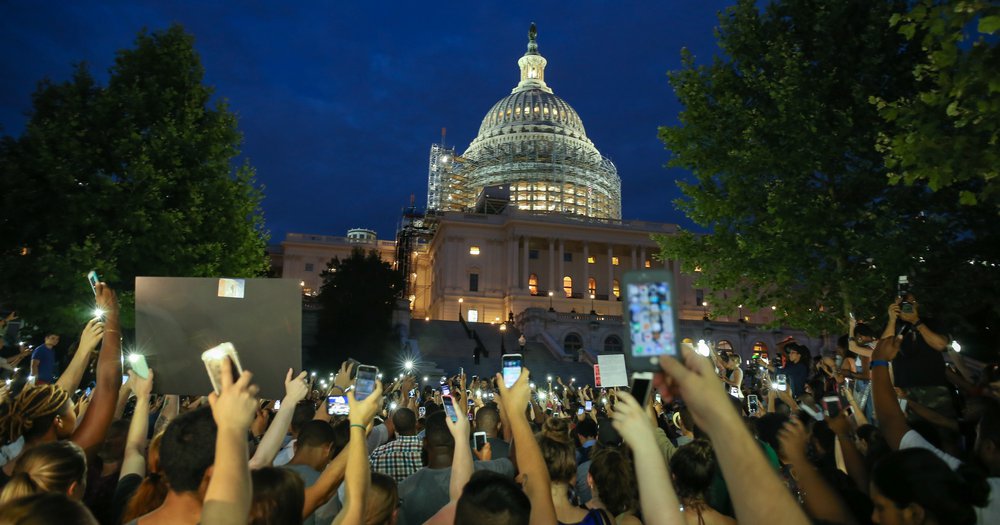
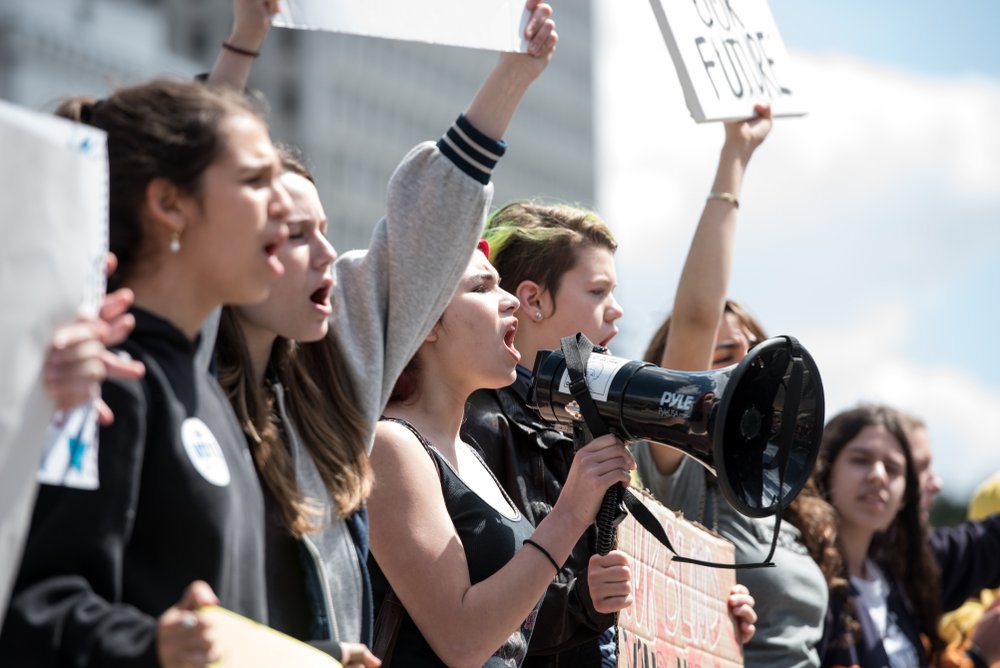
The Poor People’s Campaign: A National call for Moral Revival continued last week with a set of congressional actions. On June 23rd, the campaign will head to the US Capital for the Rally to Fight Poverty action, capping off its #40DaysOfAction and launching the next phase of it’s movement for the long-haul. The rally will begin at 10am (ET). You can read my April blog-post for a review of the Campaign’s national report below.
The Poor People’s Campaign details 50 years of poverty, racism, militarism, and environmental devastation in America.Pundits and journalists alike have turned to recent Democratic wins in special elections as predictors of what’s to come in American politics. From John Ossoff’s defeat in Georgia to last month’s Pennsylvania Congressional race, we are informed that these special elections carry national implications, despite evidence that underscores individual candidates and local context as the primary factors in special election outcomes.
Perhaps special elections receive so much attention because they appear to provide a straightforward, numeric answer to the question of how political views are changing in America. Though hyper-partisanship in American politics gives credit to the argument that elections are disputes between distinct ideological positions, the focus on elections ignores political mobilization that occurs outside the realm of electoral politics, even when they contain profound national implications.
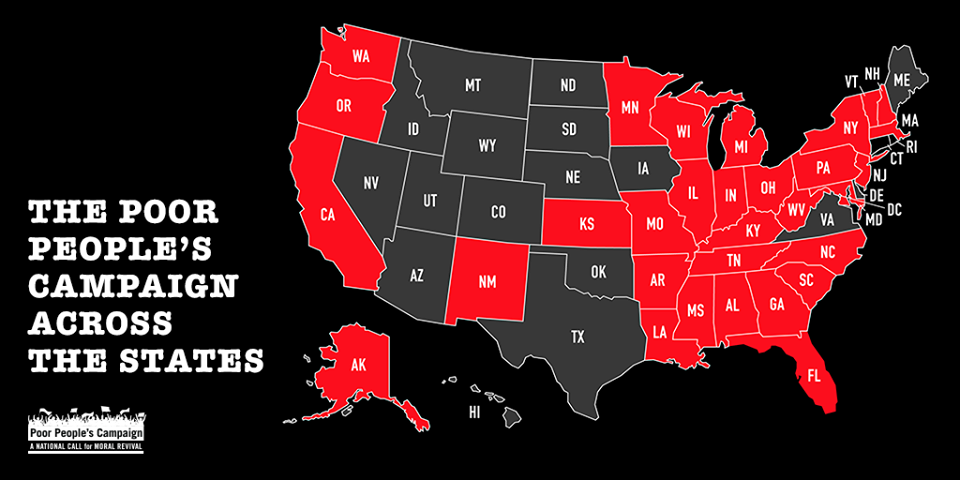
The Poor People’s Campaign: A National Call for Moral Revival, an organization I’ve been working with over the past few months, is one such example. The campaign has been steadily building support through convening mass meetings attended by thousands in over 30 states, forming state-committees, and preparing for 40 days of coordinated, non-violent direct action. What the campaign has not done is direct energy towards promoting candidates or party platforms. At an event earlier this year, the co-chair of the Poor People’s Campaign, Reverend William Barber, explained why: “Some issues are not left or right or liberal versus conservative; they are right versus wrong.”
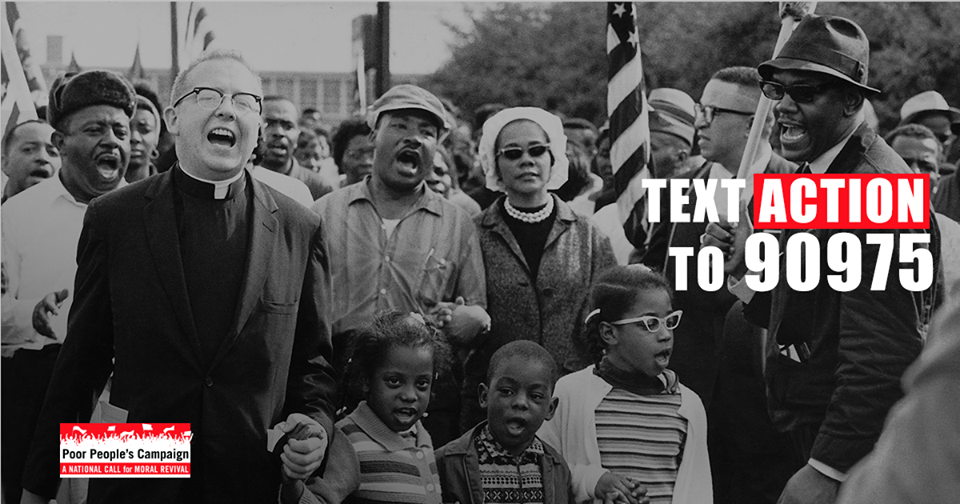
As a part of their campaign, the Poor People’s Campaign released “The Souls of Poor Folk” report, a fifty-year assessment on the trends and conditions of racism, poverty, militarism, and environmental devastation in America. Due to its longitudinal focus, the report connects the 1968 Poor People’s Campaign – lead by Dr. King, Peggy Terry, Reies Tijerina, Johnnie Tillmon, and a broad coalition of anti-poverty and civil rights groups – to present day movement-building organizations. The report also articulates a moral agenda irrespective of partisan loyalties, rooted in the experiences of poor and marginalized communities across the United States.
Declaring poverty a national crisis, the Poor People’s Campaign is directing it’s attention towards issues that rarely receives attention on the traditional campaign trail. This is to be expected, as the label of poverty carries a tremendous social stigma. Consider the American welfare system, which has historically distinguished a set of “deserving” poor from those who are “undeserving.” Early 20th century welfare reform incorporated eugenics in the administration of aid to families. President Johnson’s War on Poverty in the 1960s emphasized children and teenagers at the expense of adults. And the 1980s conjured an American underclass that acutely pathologized poor Black mothers. In each of these iterations, family-structure, race, and occupation relegated people into categories of moral deservedness. The popularity of these narratives has promoted beliefs that suggest poverty affects a select few, that it reflects individual decision-making, and that its existence has little to say about the failures of American institutions.
And yet, over 140 million Americans are designated as poor or low-income – roughly 43 percent of the total population. While indefensible, this statistic alone cannot sufficiently explain the extent to which poverty pervades America; income rates themselves do not accurately represent the millions of Americans who are both without basic needs and withheld basic human rights. The measurements that fully form the contours of suffering are numerous: the health effects from living without adequate, affordable healthcare; the fear and experience of deportation; the threat of violence from militarized police forces; and the exposure to toxic air conditions caused by oil refineries to name a few.
Grappling with this complexity, “The Souls of Poor Folks” challenges the notions that poverty only affects a small percentage of Americans, and that it’s largely the result of individual decision-making. In doing so, the report makes the point that poverty is also more than just an income; its causes and effects are inextricably linked to racism, militarism, and environmental devastation. From this perspective, the Poor People’s Campaign offers a stirring moral and political call: a commitment to advance a national moral agenda in the contemporary moment.
The report repeatedly rebuts assumptions of continual, widespread national prosperity. Despite increased worker productivity, wage rates have stagnated since 1973. Poverty rates for families and individuals living in deep poverty (under 50% of the federal poverty line) have increased. Low-wage industry growth accounts for the majority of new jobs in the past decade. The top 10 percent of income earners now take in nearly 50 percent of all total income – the highest it’s ever been in the past hundred years. Meanwhile, 19 percent of all households have zero or negative net wealth, while student debt has increased by nearly 500 percent since 1999.
These measurements are directly related to federal cuts in housing, education, healthcare, and welfare spending. Economic policies that promoted industrial expansion, full employment, and an increased standard of living through empowered labor unions have been exchanged for policies promoting geopolitical interests, corporate profits, and tax cuts for the wealthy.
And while the majority of Americans have felt the effects of these federal cuts and policies, disparate impact across lines of race, gender, class, and sexual identification continue to shape life in America. “The Souls of Poor Folk” makes it clear that problems of injustice cannot be tackled separately. In fact, poverty, racism, militarism, and environment devastation are mutually constituted.
For example, consider the Flint water crisis. After mounting municipal debt, statewide legislation was passed to remove its voting representation, installing an emergency manager instead. Once in power, the city was directed to switch to a lead-contaminated water source in an attempt to save five million dollars in municipal expenses.
The median household income in Flint is under 25,000 dollars. The city is 57 percent Black and 37 percent white. Its water crisis exposes a nexus of voting suppression, fiscal austerity, and environmental injustice. Flint’s water could not be poisoned without the removal of basic democratic rights through emergency management – a policy that’s in effect targeted majority Black cities in Michigan, but with negative outcomes for all residents that live under such rule.
The rise in unemployment in Flint resulted in a shrinking tax base, triggering its fiscal problems. This rise is partially the result of changing industrial and fiscal policy during the latter half of the 20th century, indicating the structural causes of economic decline. However, it’s also the result of decades of housing exclusion for Black families (an apt example of how racism and poverty historically link together). And as Flint residents continue to grapple with the challenges of fewer jobs and poisoned water, they find their neighborhoods increasingly policed with strategies and tactics borrowed from overseas military operations. Genesee County, where Flint is located, received over three million dollars of military equipment in the eight years preceding the water crisis.
Ultimately, “The Souls of Poor Folks” identifies poverty, racism, militarism, and environmental devastation as both political and moral problems. From this standpoint, a basis for solidarity in America can be built. A moral basis exists in the growing awareness that human suffering, while shaped by our differences, is caused by political and economic systems that we are all accountable to. A political basis exists in the possibility for creating new laws and institutions that could challenge the intersecting forces of poverty, racism, militarism, and environmental injustice – forces that impact the majority of lives in America.
This basis does not mean that a new Poor People’s Campaign will necessarily be successful. What Dr. King hoped for as “a revolution of values” in 1968 can only come from coordinated, collective action. It takes people engaging in political struggle to create trust across communities, a shared sense of moral duty, and a national political agenda. As such, the campaign has announced a schedule of 40 days of civil disobedience, beginning May 14th.
Perhaps this is the test of America’s moral and political values that we’ve been seeking.
Issues
Programs/Projects/Initiatives
Related

Online, Vulnerable Groups Only Become More Vulnerable

One Year Later: Reflecting on the Millennial Public Policy Fellowship