Lisa Guernsey
Senior Director, Birth to 12th Grade Policy; Co-Founder and Director, Learning Sciences Exchange
Every month, in laboratories and on-the-ground experiments around the world, scientists are uncovering insights about how to help children learn and develop. But as we have noted before, too often new findings are either left to languish in inaccessible academic journals, contorted by splashy headlines, or too complicated to lead to real policy changes.
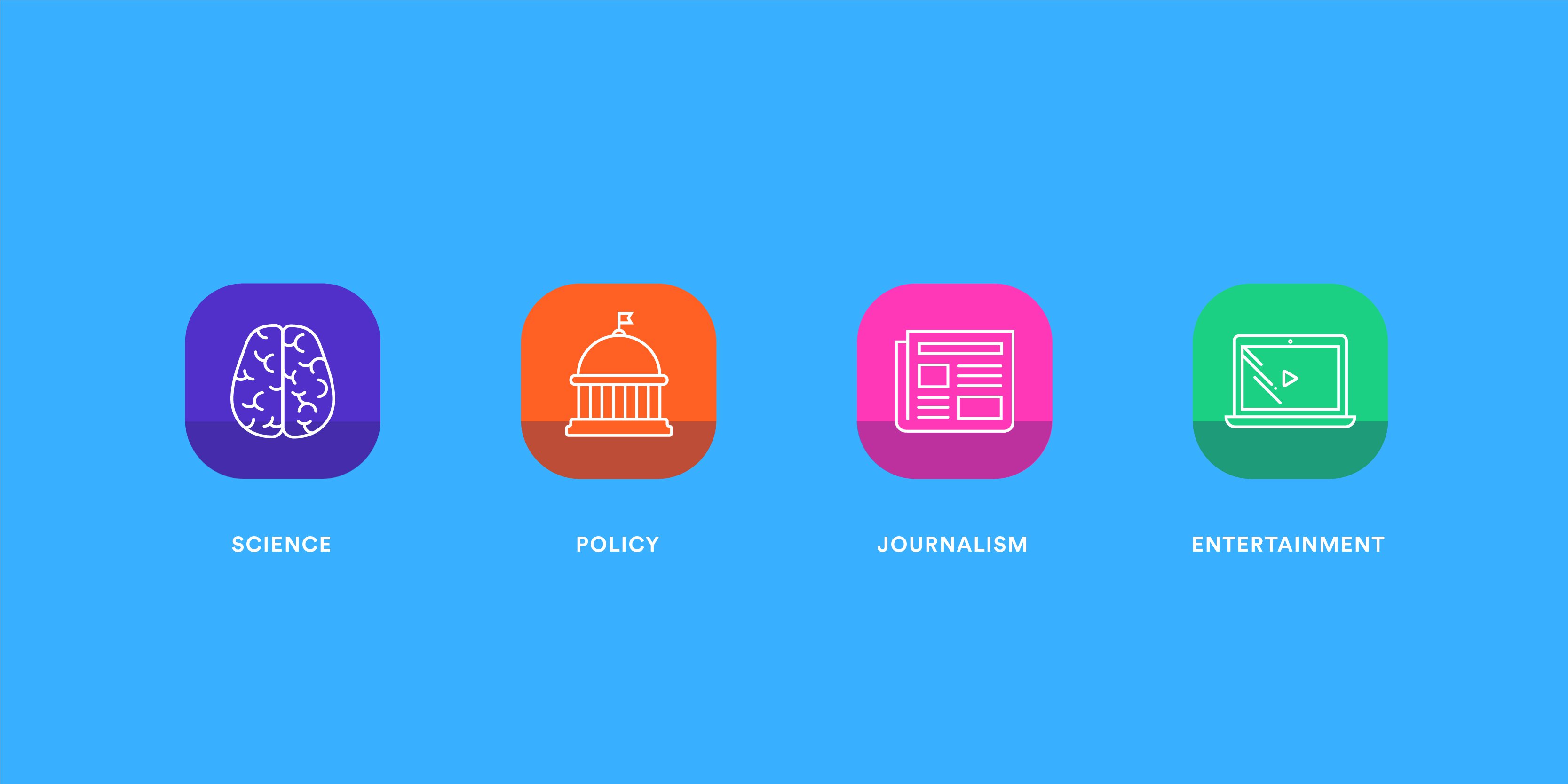
The Learning Sciences Exchange program was designed as a counterweight to these problems. For the past nine months, the 12 fellows in the program—three each from four different sectors, including science, journalism, policy, and entertainment—have been learning from each other and working collaboratively to gain a deeper understanding of each others’ fields and to consider new approaches to communicating. In July, they met for the first time at the International Congress of Infant Studies in Philadelphia; in November, they met at at the Jacobs Foundation’s headquarters in Zurich, and last week, at the biennial meeting of the Society for Research in Child Development, the fellows came together for a third in-person gathering in Baltimore.
The convergence of different perspectives at these meetings is energizing and full of promise. But the discussion at these meetings is also helping to clarify exactly why it can be so difficult to communicate science to a broader audience. That’s not because it is difficult for the fellows to talk to each other—on the contrary, there is a wonderful camaraderie among them. But instead, fellows and organizers are now able to pinpoint more precisely what barriers will need to be overcome to help parents, teachers, politicians, and everyday people gain a better understanding of the learning sciences.
One of the key reasons for the trouble communicating is that incentives are not aligned. What does that mean exactly? Consider the following four examples of misalignment, drawn from conversations among the fellows and advisory board members at our meetings:
These four areas of disconnection can seem daunting. The good news is that the problems are becoming better understood and that there are new initiatives underway to bridge these gaps.
Our LSX program, which is a partnership between New America, the International Congress on Infant Studies, and the Jacobs Foundation, is breaking new ground by bringing disparate professionals together not only to exchange ideas but also to work and write collaboratively. In June of 2020, they will present what they have learned and built. Progress is also appearing in the development of networks such as the Jacobs Foundation Network, which brings together researchers, social entrepreneurs, journalists, and public policy professionals, and which just recently announced a new group of journalism fellows. The Society for Research on Child Development is increasing its investment in communications personnel and outreach to new organizations in policy and media. Workshops and degree programs are now available through the Alan Alda Center for Communicating Science, at Stonybrook University, and John Hopkins University’s Science of Learning Institute, including courses from the online editor of Science David Grimm. And the National Academies of Science, Engineering, and Medicine put forth a consensus report a few years ago, Communicating Science Effectively: A Research Agenda, calling for new research on how to communicate science, including how to debunk myths and use narrative and storytelling to help people understand concepts that touch their lives in hidden but powerful ways.
These efforts can’t come soon enough. “Citizens are left to their own devices as they struggle to determine whom to trust and what to believe about science-related controversies,” the National Academies authors wrote in the brief that accompanied their report. “This is the new—and not entirely understood—media environment with which science communicators must cope.” As the authors said in a presentation on their recommendations, “Society’s need for science communication has never been greater.”
Enjoy what you read? Subscribe to our newsletter to receive updates on what’s new in Education Policy!
Senior Director, Birth to 12th Grade Policy; Co-Founder and Director, Learning Sciences Exchange