
Amir Nasr
Policy Analyst, Open Technology Institute
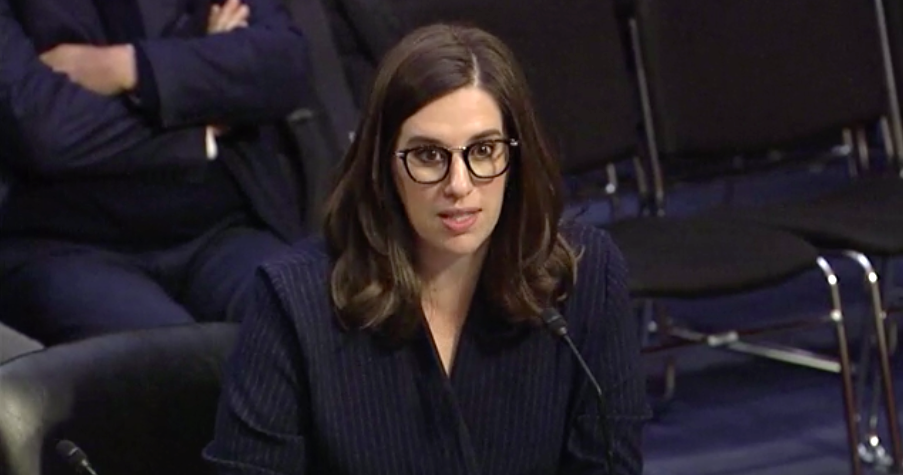

On December 5, OTI Director Sarah Morris testified before the Senate Commerce Committee’s Subcommittee on Communications, Technology, Innovation, and the Internet to discuss the evolution of next-generation wireless technologies, the implementation of the MOBILE NOW Act, and how best to address the digital divide. The recommendations from that testimony are summarized below.
The United States has a deeply troubling connectivity challenge. Ensuring that everyone has access to internet service that is robust and affordable requires a multifaceted approach that takes into account varying circumstances and needs. Wireless access is part of that approach, but it is not the entire solution; and mobile 5G networks do not represent the full range of ways to deliver wireless service. And affordability remains a critical barrier to broadband adoption, even where infrastructure exists.
Amid these persistent challenges to ubiquitous broadband access, the U.S. is moving toward a new era of connectivity with next-generation Wi-Fi and mobile 5G services. It is crucial for lawmakers and the FCC to adopt a broad framework for connectivity that incorporates:
Mobile 5G could play a role in improving speed and capacity in certain areas—high-density urban areas in particular. However, it is not a panacea for addressing the rural and low-income digital divides. Both the business models for 5G deployment and the characteristics of the technology itself make it ill-suited for rural deployment, and beyond the reach of poor internet users. Policymakers cannot rely on 5G alone to effectively bridge the digital divide, and absent thoughtful guidance it is likely to exacerbate the digital divide that already exists.
To support a robust internet ecosystem that is accessible to all internet users—whether urban, suburban, or rural—policymakers need to pursue a forward-looking and balanced approach that recognizes the importance of substantial increases in mid-band spectrum on a licensed, unlicensed, and shared basis for both mobile and fixed wireless service. The MOBILE NOW Act is an important component of that approach. However, more needs to be done, such as opening up the entire 6 GHz band for low-power unlicensed use, and reallocating part of the 5.9 GHz band for unlicensed use, ultimately creating a high-capacity Wi-Fi “superband” that enables multiple contiguous channels of gigabit-fast connectivity in every home and business. In addition, the C-Band presents an opportunity for two things: first, to reallocate at least 200 megahertz at the bottom of the band to flexible-use terrestrial broadband, using a public auction, with proceeds being used to close the digital divide, as suggested by the “America’s Digital Infrastructure Act”, introduced by Sens. Brian Schatz (D-HI), Ed Markey (D-MA), and Maria Cantwell (D-WA). And second, to coordinate shared access to underutilized spectrum in the upper portion of the band for rural point to multipoint broadband providers.
Despite so much attention focused on next-generation networks, it is troubling that we continue to lack adequate information about current broadband networks in the United States. Internet users and would-be subscribers are left particularly in the dark when it comes to basic information about the cost of internet service. Policymakers should consider ways to revisit, for example, the Broadband Nutrition Label, and put pressure on the FCC to collect pricing information as part of its Form 477 process.
Finally, even where broadband service is available, it remains beyond the reach of many people in all areas—from rural to urban—because of cost. Wireless solutions for connectivity should be aimed at alleviating this divide, not exacerbating it. A well-functioning and fully-supported Lifeline Program is key to making internet accessible for low-income households. Rather than work on ways to increase participation in this successful but underutilized program, the FCC has undertaken multiple efforts to weaken the program under Chairman Pai’s leadership, causing enrollment nationwide to drop by 2.3 million people—about 21%—since 2017. We must do better to ensure that low-income families, veterans, tribes, and other marginalized communities aren’t left on the wrong side of the digital divide.
Policy Analyst, Open Technology Institute