Haughton, Louisiana, a small town not far from Shreveport, started the new year with unseasonably pleasant weather. That changed at 1:24 a.m. on Jan. 11, when a rare winter tornado touched down and plowed a 40-mile line of destruction through Bossier Parish, killing two people and snapping off hundreds of trees, including at nearby Barksdale Air Force Base.
The Haughton tornado was part of a two-day storm spree that became 2020’s first billion-dollar disaster in the United States. Already, 2020 is the seventh year in a row with 10 or more billion-dollar disasters, even though the costs of the August derecho in Iowa, the wildfires in the West, and Hurricanes Laura, Sally, and Delta on the Gulf Coast are still being tallied. And that doesn’t even count COVID-19 in the United States, estimated to cost $16 trillion over the next 10 years.
2020 is a harbinger of things to come. Such disasters will be more common in the coming years and will grow worse if industrial nations fail to make significant cuts in greenhouse gas emissions within the next decade. The urgency of climate action runs up against a granite reality, however: More than 80 percent of the global economy still runs on fossil fuels, and to date, aggregate world greenhouse gas emissions are not declining.
This conundrum, that the fuel that powers the modern economy is killing the future, makes climate change a knotty, difficult governance challenge—what scientists call a “wicked problem.” And it’s an important issue in this year’s U.S. presidential election. And while candidates tend to talk in terms of plans, they don’t usually have a chance to talk about how they’re going to turn those plans into facts on the ground.
Over the past year, New America’s Resource Security team has sampled some of that ground truth about climate governance by talking to aldermen, city managers, civil society actors, business executives, bureaucrats from both federal and local government, and scholars around the country about how they are meeting this collective challenge now. We will be publishing pieces with Slate about the stories we heard.
By way of introduction, the experts we spoke with said there is no single prescription when it comes to climate change, which is an economic development imperative and an environmental crisis, but also a transportation problem and a security risk. It is an equity and fairness priority and a research and development gap. It’s about energy, but also food, land, water, biodiversity, and weather, and how all those factors affect each other. It is a 50-state problem that is at once national in its scope and international in its redress, yet highly localized in how it manifests. Coming up with public policies that both reconcile and meet all of those urgent needs and the stakeholders behind them requires creativity, dedication, and fierce collaboration at all levels of government and across sectors.
Every part of the United States faces climate challenges. For the American Southwest, for example, heat is often a defining problem. Phoenix, AZ, for example, broke the record for number of days over 100 degrees Fahrenheit in 2020 – and also for number of days over 105, 110, and 115. Many of the Midwestern states are focused on how changes in precipitation may affect agriculture and cause flooding. Oil and gas producing states, such as Alaska, Louisiana, and Oklahoma, face huge job and revenue loss in a clean energy transition, even as they struggle with an increase in natural disasters.
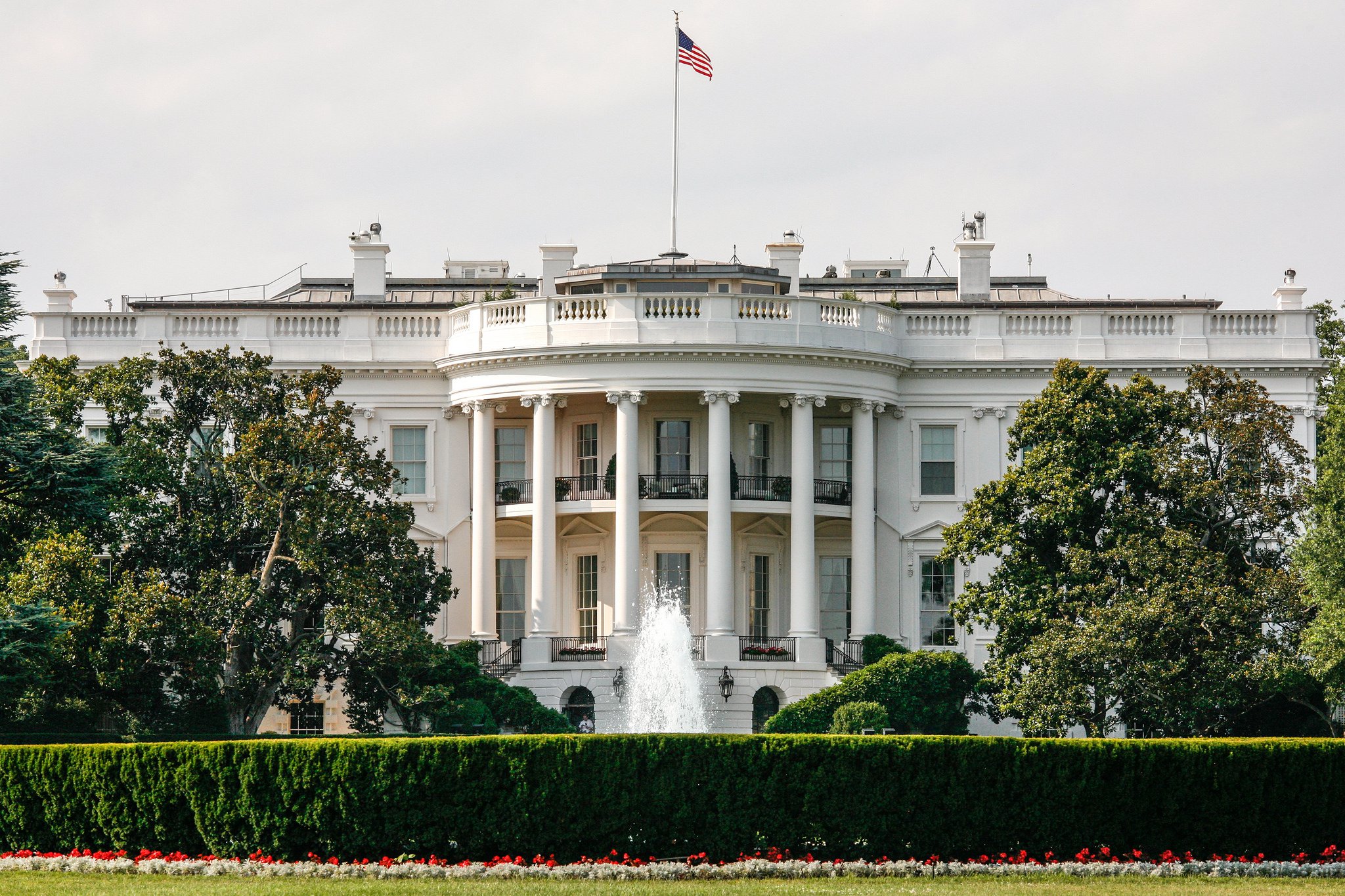
If the next president is Donald Trump, it seems safe to assume that he will not be much help. Unless he changes his position that climate change is a “hoax,” too expensive to solve, or temporary, the country will have to look outside the White House for climate change leadership, as it has with pandemic response.
While that would be tragic, it is not entirely new: The political climate in Washington, D.C., has hampered U.S. policy on global warming ever since the Senate unanimously opposed the Kyoto Protocol back in 1997. The decades since have brought with them a huge partisan gap on the issue. It’s hard to believe today that as recently as 2008, a Republican candidate for president (John McCain) called for action on global warming. Today, almost all Democratic voters consider climate change a serious problem for the nation, while only one-third of Republicans think so. Despite diplomatic breakthroughs in recent years, such as the Paris Agreement under the Obama White House, partisan rancor has blocked material progress in Congress and made the term “climate change” a hot button in the culture wars.
That is changing, however. Recent polling shows that younger Republicans do not share the skepticism on climate change and there is evidence that the party is rethinking its implacable opposition. Florida Rep. Matt Gaetz, for example, one of President Trump’s more flamboyant supporters, has offered his own plan for dealing with climate change. While it’s not clear Gaetz’s plan would actually cut emissions, he has urged his party to change its tune. If this new Republican willingness to engage continues or more to the point, if Democrats take control of both chambers, given the commitments that party has made to climate action, the U.S. Congress may play a more active legislative role.
In the absence of federal leadership, cities, states, and the private sector have been making their own plans, and they should expect more of the same if President Trump is re-elected, even if Congress plays a more constructive part. The philanthropic sector has been a leader in climate governance for decades, as well, such as the 29 foundations that committed to $4 billion in climate change programming by 2022. They should also consider ramping up concerted efforts if Trump is re-elected, given the elevated importance of civil society and cities.
The sad truth is, however, that there is no real substitute for leadership out of the White House and the Executive Branch, especially when it comes to international policy—we heard this repeatedly in our interviews. If the president does not lead on climate change, it will harm U.S. policy at home and abroad—and the future for all Americans.
On the other hand, if the next president is Joe Biden, he will be the first to enter the White House with a clear commitment to climate action. He will also have his hands full with a public health crisis, collapsing economy, and agitated population. He will have to think about how to retool a federal government not set up well for cross-cutting challenges such as climate change, and how to honor the critical role of cities, states, and other non-federal actors.
The conversations we had across the country suggest that progress on climate change will not be easy, even with good leadership, from the White House to city hall. It will take the hard, bureaucratic slog of town council debates, stakeholder engagement, budget battles, negotiations, and collaboration across agency battle lines. It will take a vast network of people in cities, statehouses, boardrooms, laboratories, and inside the Beltway working together to create jobs and growth while cutting emissions and building the country’s resilience to disasters. This is hard work, and it’s not always glamorous, but it is how we change the world.
More About the Author
Issues
Programs/Projects/Initiatives
Topics
Related
Climate Security: Building a Community of Practice
Climate Change, Peace and Security, and the UN Group of Friends

Infrequently Asked Questions